 By Meghna Sharma
At the edge of Andhra Pradesh’s fertile Godavari delta, where the Vasishta branch of the Godavari approaches the Bay of Bengal, lies the sacred settlement of Antarvedi. Its principal shrine, Sri Lakshmi Narasimha Swamy Temple, is known for the rare combination of coastal pilgrimage, Vaishnava worship and a long local mythology centred on Sage Vasishta. The surrounding river channels, coconut groves and sea-facing landscape give the journey a character quite different from the great inland temples of South India.
Pilgrims come to honour Lord Narasimha with Goddess Lakshmi and often combine darshan with a visit to the nearby Sagar Sangamam, the meeting of river and sea. Local religious tradition calls Antarvedi a place of liberation and a sacred site for remembrance of ancestors. Its history includes episodes from the Puranic storytelling tradition and more recent temple reconstructions recorded by patrons. Families planning a visit should allow time for road travel through the delta and should treat boat trips, beaches and river bathing as separate activities that depend on conditions and official permission.
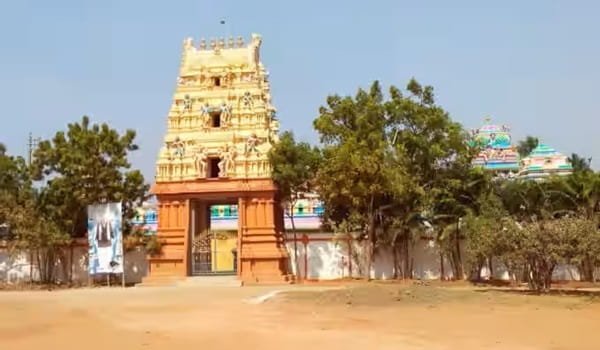
Antarvedi Temple Timings, Entry Fees and Pujas
A published local temple guide gives a usual morning darshan period from 6:00 AM to 12:30 PM and an evening period from 3:30 PM to 7:30 PM. A fully current schedule directly posted by the temple administration was not available to independently verify these exact windows, so use them as planning guidance and reconfirm locally, especially during Brahmotsavam.
| Activity | Indicative timings |
| Morning darshan | 6:00 AM–12:30 PM |
| Afternoon ritual break | Around 12:30/1:00 PM–3:30 PM |
| Evening darshan | 3:30 PM–7:30 PM |
| Abhishekam or special seva | Depends on daily programme |
| General darshan | Usually free |
| Festival arrangements | Changes possible |
Worship at Lakshmi Narasimha Temple
The principal deity is Lakshmi Narasimha, the protective form of Vishnu worshipped with Goddess Lakshmi. Devotees request archana, abhishekam and other sevas at the authorised temple counter. A local guide also mentions free Annadanam during daytime hours, but exact serving times and eligibility should be confirmed rather than assumed. Avoid presenting unverified priority passes or seva rates as established facts.
Visitors should dress modestly and observe restrictions around sanctum photography. The coastal environment can be hot and humid even outside summer. Carry drinking water, but follow rules about bringing food or bags into the inner temple.
Antarvedi Temple History and Religious Significance
Sage Vasishta and the Place between Waters
The temple’s traditional narrative begins with Sage Vasishta, one of the celebrated sages of Hindu sacred literature. According to the *sthala purana* reproduced by the district administration, Vasishta established an ashram near the point where a branch of the Godavari meets the sea. The name Antarvedi is explained in the tale through a sacrificial site or *vedika* created in the area.
The meeting of river and ocean has shaped the region’s religious imagination for generations. Pilgrims see the waters as spiritually important, but the ritual significance of the sangam must be distinguished from the practical hazards of strong currents, changing sandbars and monsoon seas.
The Narasimha Legend and Raktavilochana
In the story told on the district government’s temple page, a demon named Raktavilochana gained a boon that each drop of his blood falling on the ground would generate further demons. He caused suffering and attacked the hermitage associated with Vasishta. The sage appealed to Lord Narasimha, who appeared with Goddess Lakshmi and defeated the demon using the Sudarshana Chakra while divine power prevented the blood from multiplying his forces.
This account explains the temple’s association with Raktakulya, Chakra Tirtham and other sacred places. Devotees regard the story as part of the divine protection promised by Narasimha. It is not evidence of a datable historical battle, and a responsible guide should not blend mythology with documented temple-building history.
Rediscovery, Rebuilding and Patronage
Another local legend describes a cow that repeatedly shed milk over an anthill or concealed sacred image. A cowherd named Kesavadasu investigated, and the deity appeared to him in a dream. A shrine was restored at the site. This familiar South Indian motif expresses the belief that divine presence survives even when structures fall into disrepair.
The district history also records later episodes of rebuilding through local merchants, patrons and families. A major reconstruction effort is associated with the early twentieth century, and the account refers to an inscription recording work begun around 1923. This historically specific phase should be distinguished from legends that place the shrine’s first consecration in the age of the sages. The present complex reflects restoration, continuing community offerings and the needs of a modern pilgrimage centre.
Architecture and Ritual Geography
The temple is built in a South Indian style with an entrance tower, courtyards and a central sanctum. Its importance is enlarged by surrounding sacred locations: the Vasishta Godavari, the sea, the sangam and the tradition of Chakra Tirtham. Many pilgrims make donations or remember ancestors in the area. Such observances are matters of religious practice and should be arranged only through authorised priests or facilities, not through unsolicited touts.
How To Reach Antarvedi Temple
| Transport | Access point | Approximate distance |
| Rail | Rajahmundry / Rajamahendravaram | Around 100–120 km by road |
| Air | Rajahmundry Airport | Around 115–135 km |
| Road | Amalapuram | Around 60–70 km |
| Road | Kakinada | Around 125–140 km |
| Road | Razole / Razolu | Around 30–40 km |
| Regional roads | Sakhinetipalle area | Local approach to Antarvedi |
By Air and Train
Rajahmundry provides the nearest useful airport and major railway links for many visitors. Because the Godavari delta has several waterways and bridges, route choice affects mileage; a local map should be checked before setting a departure time. There is no long-distance railway station at the shrine itself.
By Road
APSRTC and local transport connect major Konaseema towns, but service frequency for the final village approach may be limited. A prearranged taxi is often convenient for families planning to visit the sea confluence and return the same day. Weather-related road or boat restrictions should be obeyed.
Best Time To Visit Antarvedi Temple
| Season | Months | Conditions |
| Winter | November–February | Most comfortable for temple and coastline |
| Summer | March–May | Hot and humid; favour morning visits |
| Monsoon | June–September | Heavy rain, high river levels and rough sea possible |
| Post-monsoon | October | Pleasant at times; monitor storms |
The annual Kalyanotsavam and Brahmotsavam celebrations draw large crowds. Narasimha Jayanti and Vaishnava Ekadasi observances are also important. Festival dates follow the Hindu calendar and should be confirmed separately for each year.
Nearby Attractions
Antarvedi Sagar Sangamam is the principal excursion beyond the temple, offering a view of the river-sea meeting when accessible. The Antarvedi coastal beach is scenic but not a place to swim without safety clearance. Appanapalli Balabalaji Temple is another notable Konaseema pilgrimage stop. Coconut-lined villages and waterways are part of the region’s appeal, though travel times between them can be longer than straight-line distances suggest.
Accommodation and Essential Travel Tips
Pilgrim facilities and small lodges may be available around Antarvedi, but wider accommodation choices are found in Amalapuram or Rajamahendravaram. Arrange the return journey in advance if relying on public transport. The sea and estuary are not safe for casual swimming; a sacred designation does not remove currents or tidal risk. Treat any proposal for paid rites, special-entry passes or boat journeys as valid only when confirmed by an official counter or authorised operator.
Frequently Asked Questions About Antarvedi Temple
1. Why is Antarvedi associated with a river-and-sea confluence?
The Vasishta branch of the Godavari meets the Bay of Bengal nearby. The meeting of fresh and salt water is central to local ritual geography and is remembered in the temple’s traditions about Sage Vasishta.
2. What is the story behind the name Raktakulya?
The shrine’s mythology connects it with the defeated demon Raktavilochana, whose blood was believed to produce further demons. The name appears in the sacred narrative; it should not be treated as proof of a literal battle.
3. Can visitors safely bathe at Sagar Sangamam?
Do not assume so. Currents, tides and sandbars can be dangerous. Bathe only if a designated area is open and local authorities explicitly consider conditions safe; a respectful shoreline visit is sufficient for many pilgrims.
4. Does the temple have a connection with ancestor-remembrance rituals?
Yes, local pilgrimage tradition regards the confluence as spiritually significant for prayers and offerings to ancestors. Procedures differ by family custom, and arrangements should be made through reputable local priests without accepting unsolicited pressure.
5. Is Antarvedi’s founding date historically established?
No single verified early foundation date covers the full tradition. Accounts about Vasishta and Kesavadasu belong to sacred narrative, while later reconstruction efforts are tied to more recent patronage and reported inscriptions.
6. Can a family combine this shrine with a sea outing in one afternoon?
It is possible if road and weather conditions cooperate, but rushing is unwise. Leave sufficient time for the temple’s ritual break and for safe access to the coastline, and avoid making sunset boat travel a necessary part of the plan.