 By Meghna Sharma
The road into Barsana rises towards a hill crowned by Shri Radha Rani Temple, a shrine known affectionately throughout Braj as Shriji Mandir or Ladli Ji Temple. Its red-and-yellow stonework, courtyards and views over the town create a setting unlike the larger Krishna temples of nearby Mathura and Vrindavan. Here Radha is honoured as the beloved daughter of Barsana and the spiritual centre of the town’s identity.
In devotional tradition, Barsana was the home of Vrishabhanu and Kirtida, Radha’s parents. The local landscape is filled with places associated with Radha and Krishna’s playful encounters, while the annual Lathmar Holi brings an exuberant performance of Braj custom to the streets below the hill. The temple’s surviving architecture, however, belongs mainly to later centuries, and its legends and dated construction history should be understood separately.
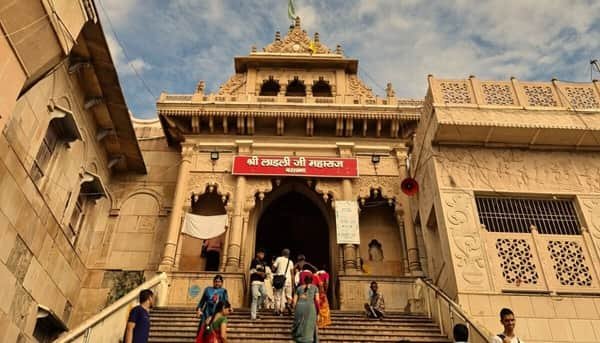
For a satisfying pilgrimage, it helps to know the hill approach, the summer and winter darshan sessions, and the meaning of the festivals. This guide covers those essentials along with the area’s historic shrines, local travel arrangements and family-friendly visiting advice.
Barsana Radha Rani Temple Timings, Entry Fees and Pujas
The main public darshan windows and ritual breaks are listed below. These are planning hours, not a promise of uninterrupted viewing; special festivals, weather and temple notices can alter the normal schedule.
Barsana Radha Rani Temple Darshan Timings
| Session | Seasonal planning hours |
| Summer morning | About 5:00 AM – 1:30/2:00 PM |
| Summer evening | About 4:30/5:00 PM – 9:00 PM |
| Winter morning | About 6:00 AM – 1:00 PM |
| Winter evening | About 4:30 PM – 8:00 PM |
| General entry | Free; festivals may differ |
Published schedules vary with summer, winter and festival observances; these are planning windows, not an official guarantee. Confirm locally, especially for Radhashtami or Lathmar Holi.
Important Daily Pujas and Sevas
Mangla, Shringar, Bhog and Sandhya aarti are part of worship. Short ritual closures are normal, so a visitor arriving just before a published end time may not be admitted for a full darshan.
General darshan is free. The temple’s season-dependent opening times vary between published schedules, and festival days can replace ordinary viewing sessions. Do not assume any private guide’s claim of a compulsory paid fast-track ticket is genuine; confirm optional offerings and queue arrangements at an authorised counter.
Dress Code and Visitor Rules
Modest clothes are appropriate. Avoid unofficial fast-entry offers; photography policies can change during busy aartis.
Wear clothing suitable for a crowded place of worship and footwear with good grip for the outdoor approach. Remove shoes at the designated point and follow signs about photography inside. During major festival processions, keep children and elderly relatives away from the densest crowd areas.
Barsana Radha Rani Temple History and Religious Significance
Radha’s town, the four hills and devotional memory
The heart of Barsana’s religious identity is the belief that Radha grew up here as the daughter of Vrishabhanu and Kirtida. In Braj devotional literature she is not simply a companion of Krishna: she embodies the highest form of loving devotion. The town’s popular names for her—Shriji, Ladli Ji and Ladli Sarkar—express a personal relationship between the Goddess and worshippers. The temple is therefore imagined as her royal residence, and many local prayers begin with her name. These beliefs belong to living religious tradition rather than a recoverable chronology of Radha’s life.
Barsana is surrounded by four hills traditionally associated with the four faces of Brahma. Bhanugarh, crowned by Shriji Mandir, is the most important for pilgrims. Other hills and nearby groves are connected with episodes of Radha and Krishna’s play, including affectionate sulking, teasing and reconciliation. The landscape is part of the religious experience: paths, ponds and small shrines are interpreted through the stories recited by local guides and singers. This gives Barsana a distinct character within the wider Braj pilgrimage circuit.
Temple patronage, hilltop architecture and Braj celebrations
Tradition sometimes credits a very early shrine to Vajranabha, a descendant of Krishna, but no surviving fifth-millennium structure can be established from that account. The standing temple developed much later. Local histories associate its revival with the spread of the sixteenth-century Braj bhakti movement and with figures such as Narayan Bhatt. The present temple is commonly dated to the seventeenth century, often around 1675, although sources differ on which rulers and patrons were responsible for successive phases. Attributions to Raja Bir Singh Deo or other courtly supporters should therefore be treated cautiously rather than as a universally settled builder list.
Architecturally, the shrine has a palace-like effect: arches, decorated pillars, stone courtyards and a commanding position above the old town. Its identity becomes especially vivid during Radhashtami, when the town celebrates Radha’s appearance, and during Lathmar Holi, when Barsana and Nandgaon enact their playful ritual rivalry. The crowds at these events are part of the experience, but the narrow lanes and hillside steps demand patient planning. A quieter weekday visit offers more space to appreciate how devotion and landscape have grown together.
How To Reach Barsana Radha Rani Temple
Barsana lies in the Braj region northwest of Mathura. Travellers normally come by road from Mathura or Vrindavan; the final section approaches a hilltop shrine through crowded local lanes. Allow extra time for the ascent, and ask locally about any current vehicle arrangements for visitors with limited mobility.
| Mode | Practical access point |
| By air | Agra and Delhi airports; onward journey by road |
| By train | Mathura Junction, around 45–50 km |
| By road | Buses or taxis from Mathura, Govardhan and Vrindavan |
By Air
Agra and Delhi airports; onward journey by road. Flights, connections and transfer times vary. Confirm that the selected airport has a convenient onward taxi or bus link rather than judging suitability by map distance alone.
By Train
Mathura Junction, around 45–50 km. Check whether the train stops at the stated station and arrange local transport for the final leg, especially if arriving after dark or with elderly relatives.
By Road
Buses or taxis from Mathura, Govardhan and Vrindavan. Roads near religious sites are sometimes pedestrianised or subject to temporary diversions on festival days. A drop-off point within walking distance can be more practical than trying to drive to the main gate.
Best Time To Visit Barsana Radha Rani Temple
The most comfortable general travel season is October to March, except when seeking festival celebrations. Temperatures, rainfall and daylight conditions affect queueing outdoors, walking between attractions and using public transport. Devotees specifically seeking a festival experience may prefer a busier season, provided they allow time for crowds and altered schedules.
| Season | Visitor conditions |
| October–March | Pleasant to cool, suitable for longer walks |
| April–June | Very hot days; choose early worship |
| July–September | Rain and humidity; road disruption possible |
Major Festivals
Important annual occasions include Radhashtami, Lathmar Holi and Janmashtami. Such celebrations change the atmosphere considerably: decorated deities, processions or extended worship may be a highlight, but queues and room prices can rise. Families wanting a relatively quiet darshan should prefer an ordinary weekday outside the main festival period.
Nearby Attractions
A visit to Barsana Radha Rani Temple can be combined with several nearby places. Pick attractions according to the time available rather than trying to cover every stop after a long darshan queue.
- Kirti Mandir in Barsana
- Rangeeli Mahal and the old lanes
- Nandgaon and Govardhan pilgrimage sites
Before adding a distant attraction, check opening times and the driving route. A religious journey is usually more comfortable when one significant site is explored properly instead of several being rushed.
Accommodation and Essential Travel Tips
The climb can be tiring in summer. Wear comfortable footwear, plan drinking water, and leave time for steps and crowded passages; traffic restrictions are common during Holi.
Book a room in a convenient town rather than choosing accommodation only by the lowest displayed price. Ask about check-in rules, parking, accessibility and the last local bus. Carry identification, drinking water, essential medicines and a modest amount of cash for small purchases. Where official booking facilities exist, use the genuine temple or church channels rather than agents who promise guaranteed priority access.
Frequently Asked Questions About Barsana Radha Rani Temple
Q. Why is Radha Rani called Ladli Ji or Shriji in Barsana?
Ladli Ji conveys the affection with which worshippers regard Radha as Barsana’s beloved daughter, while Shriji is a respectful devotional title. Both names refer to the same revered Goddess at the principal hilltop temple, not to separate shrines.
Q. What makes Barsana’s Lathmar Holi different from ordinary Holi celebrations?
The festival recalls the playful exchange between the people of Barsana and Nandgaon in Braj tradition. Women ceremonially strike shields held by men with sticks, accompanied by singing and colour. It is a managed cultural-religious celebration, not an invitation for visitors to push into processions.
Q. Is the hill climb suitable for people with knee problems?
The traditional approach involves many steps and can be tiring in heat or crowds. Road access and local assistance arrangements change, so enquire before arriving rather than assuming a vehicle reaches the sanctum. People with limited mobility may prefer a quiet weekday and a slower schedule.
Q. Are Shriji Temple and Kirti Mandir the same place?
No. Shriji Temple is the historic Radha Rani hilltop shrine on Bhanugarh. Kirti Mandir, at Rangeeli Mahal, honours Radha with her mother Kirtida and belongs to a different temple establishment. Both can be visited during a longer Barsana stay.
Q. Why do pilgrims also visit Nandgaon during a Barsana trip?
The neighbouring town is traditionally associated with Krishna’s foster father Nanda and with the childhood of Krishna. A visit to Nand Bhawan makes the paired cultural setting of Radha’s Barsana and Krishna’s Nandgaon easier to understand, especially during the Holi season.
Q. Can visitors photograph the deity during Radhashtami?
Do not assume so. Festival crowd-control rules and sanctum photography policies can be more restrictive than on ordinary days. Exterior courtyard photographs may be permitted, but always obey posted rules and avoid obstructing the priest’s rituals or other devotees.