 By Meghna Sharma
Near Vishram Ghat in Mathura’s old city, narrow streets lead to a temple where Krishna is revered not as the playful child of Gokul but as Dwarkadhish, the sovereign of Dwarka. The black-stone image of Lord Dwarkanath, worshipped alongside Radharani, occupies the heart of a richly decorated nineteenth-century shrine. Bells, flower sellers and the movement of pilgrims give the surrounding neighbourhood a distinctly Braj character.
Mathura’s Dwarkadhish Temple is not the Dwarkadhish Temple at Dwarka in Gujarat, nor is it Shri Krishna Janmabhoomi elsewhere in Mathura. Its importance lies in its particular devotional tradition. In the Pushtimarg form of Krishna worship, the deity is treated as a beloved guest and royal presence, with short periods of darshan arranged around dressing, meals and rest. A visitor who misses one opening may therefore face a long wait.
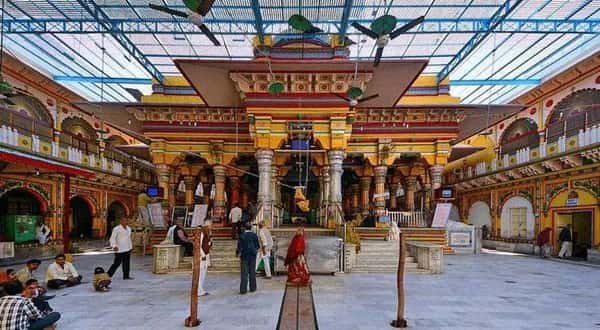
The guide below separates the temple’s seasonal viewing windows from its rituals, traces its documented construction and distinctive architecture, and explains how to combine a visit with the nearby Yamuna ghats and Mathura’s other pilgrimage sites.
Dwarkadhish Temple Mathura Timings, Entry Fees and Pujas
The main public darshan windows and ritual breaks are listed below. These are planning hours, not a promise of uninterrupted viewing; special festivals, weather and temple notices can alter the normal schedule.
Dwarkadhish Temple Mathura Darshan Timings
| Session | Seasonal planning hours |
| Summer morning | 6:30 AM – 10:30 AM |
| Summer evening | 4:00 PM – 7:00 PM |
| Winter morning | About 6:30/7:00 AM – 10:30/11:00 AM |
| Winter evening | About 3:30 PM – 6:00/6:30 PM |
| General entry | Free; individual jhankis have shorter windows |
The temple closes for the midday rest and Rajbhog period. Winter closing times differ slightly between published schedules, so check the noticeboard before arrival.
Important Daily Pujas and Sevas
Mangla, Shringar, Gwal, Rajbhog, Utthapan, Sandhya and Shayan are important stages of daily worship. Devotees should not assume the deity is visible continuously throughout the advertised session; curtains may close between the brief jhankis.
General darshan is free. The temple’s Pushtimarg viewing windows are not a continuous public session, and no dependable official tariff for a guaranteed priority pass was located. Treat unsolicited offers of paid shortcuts cautiously; if you wish to sponsor an offering, ask an authorised temple representative about the correct counter and receipt.
Dress Code and Visitor Rules
Dress modestly, remove footwear where instructed, and ask before using cameras. Do not buy supposedly mandatory VIP tickets from people approaching you in the lanes.
Dress respectfully, remove footwear at the permitted point, and keep phones silent. Inner-sanctum photography may be prohibited or restricted even if visitors take photographs outside. The route passes through busy market lanes, so carry only a small bag and avoid displaying cash or jewellery.
Dwarkadhish Temple Mathura History and Religious Significance
From Krishna’s royal image to an 1814 temple
The name Dwarkadhish means Lord of Dwarka, recalling Krishna’s role as ruler of the western coastal city after his youth in Braj. For worshippers in Mathura, this title joins two chapters of the Krishna tradition: the divine child born in the region and the royal figure honoured in later episodes of his life. The shrine is not presented as the place of Krishna’s birth. It belongs to Mathura’s wider sacred geography, with Vishram Ghat and the old bazaar forming part of its historic setting.
The standing temple is relatively recent compared with the antiquity of Krishna devotion. The Mathura district administration dates its construction to 1814 and names Seth Gokul Das Parikh, treasurer of the Scindia-ruled Gwalior State, as its patron. Later family support helped maintain the establishment. That clear nineteenth-century history matters: claims that today’s entire building survives from the Mahabharata era confuse devotional belief with the age of the visible masonry. Its prominence reflects the role of wealthy patrons in supporting temples at the beginning of the colonial period.
Pushtimarg worship, painted interiors and festival life
Inside, the shrine resembles a richly appointed haveli rather than a simple freestanding sanctum. Carved stonework, decorated pillars, painted ceilings and a courtyard create an intimate devotional setting. The principal dark image of Dwarkanath is accompanied by a lighter image of Radharani. Their pairing reflects the Braj emphasis on Radha-Krishna devotion even though the Lord is addressed by his royal title. Visitors should look carefully at the artwork without blocking worshippers or assuming photography is permitted inside.
The temple is particularly associated with the Pushtimarg, the devotional path connected with Vallabhacharya. Worship is organised around several daily ‘jhankis’, or brief glimpses of the deity, corresponding to awakening, adornment, meals and rest. This explains the unusual opening pattern more accurately than calling it a continuously open museum. During Shravan the Hindola or Jhulan festival brings elaborately decorated swings; Janmashtami, Holi and Annakut add another layer of music, food offerings and ornament. It is this living ritual calendar, as much as the building’s age, that gives the temple its identity.
How To Reach Dwarkadhish Temple Mathura
The temple stands in central Mathura close to Vishram Ghat. Although Mathura is readily accessible by rail and highway, the last stretch is through narrow lanes that may be closed to four-wheelers. A short walk or e-rickshaw transfer is often unavoidable.
| Mode | Practical access point |
| By air | Agra airport (flight availability limited); Delhi airports are alternatives |
| By train | Mathura Junction, roughly 3–4 km |
| By road | Road links from Agra, Delhi and Vrindavan; walk the final narrow market lanes |
By Air
Agra airport (flight availability limited); Delhi airports are alternatives. Flights, connections and transfer times vary. Confirm that the selected airport has a convenient onward taxi or bus link rather than judging suitability by map distance alone.
By Train
Mathura Junction, roughly 3–4 km. Check whether the train stops at the stated station and arrange local transport for the final leg, especially if arriving after dark or with elderly relatives.
By Road
Road links from Agra, Delhi and Vrindavan; walk the final narrow market lanes. Roads near religious sites are sometimes pedestrianised or subject to temporary diversions on festival days. A drop-off point within walking distance can be more practical than trying to drive to the main gate.
Best Time To Visit Dwarkadhish Temple Mathura
The most comfortable general travel season is October to March. Temperatures, rainfall and daylight conditions affect queueing outdoors, walking between attractions and using public transport. Devotees specifically seeking a festival experience may prefer a busier season, provided they allow time for crowds and altered schedules.
| Season | Visitor conditions |
| October–March | Pleasant to cool, suitable for longer walks |
| April–June | Very hot days; choose early worship |
| July–September | Rain and humidity; road disruption possible |
Major Festivals
Important annual occasions include Janmashtami, Holi, Hindola/Jhulan during Shravan and Annakut. Such celebrations change the atmosphere considerably: decorated deities, processions or extended worship may be a highlight, but queues and room prices can rise. Families wanting a relatively quiet darshan should prefer an ordinary weekday outside the main festival period.
Nearby Attractions
A visit to Dwarkadhish Temple Mathura can be combined with several nearby places. Pick attractions according to the time available rather than trying to cover every stop after a long darshan queue.
- Vishram Ghat on the Yamuna
- Shri Krishna Janmabhoomi complex
- Gita Mandir and other Mathura shrines
Before adding a distant attraction, check opening times and the driving route. A religious journey is usually more comfortable when one significant site is explored properly instead of several being rushed.
Accommodation and Essential Travel Tips
Vehicles cannot usually reach the temple doorway. Plan a short walk from the closest e-rickshaw drop-off; elderly visitors should avoid the busiest afternoon market period.
Book a room in a convenient town rather than choosing accommodation only by the lowest displayed price. Ask about check-in rules, parking, accessibility and the last local bus. Carry identification, drinking water, essential medicines and a modest amount of cash for small purchases. Where official booking facilities exist, use the genuine temple or church channels rather than agents who promise guaranteed priority access.
Frequently Asked Questions About Dwarkadhish Temple Mathura
Q. Why are there several short darshan periods instead of one continuous opening?
The temple follows a Pushtimarg seva routine in which Krishna is awakened, dressed, served food and allowed to rest. The doors open for distinct jhankis between these services. Arriving during a broad morning or evening period does not guarantee the deity will be visible immediately.
Q. Is this the same shrine as Dwarkadhish Temple in Gujarat?
No. The Mathura shrine is a nineteenth-century Krishna temple near Vishram Ghat. Gujarat’s Dwarkadhish Temple, also known as Jagat Mandir, stands in Dwarka beside the Gomti River. The names and principal deity overlap, but the history, administration, architecture and travel arrangements differ.
Q. What makes the Hindola festival special here?
During the Shravan season, the deities are associated with richly decorated ceremonial swings. Different themes and textiles may be presented on successive days, reflecting the temple’s tradition of intimate service to Krishna. Festival queues and daily darshan windows may differ considerably from ordinary dates.
Q. Can pilgrims combine Dwarkadhish Temple with a Yamuna aarti?
Yes. Vishram Ghat is nearby, making an evening riverfront visit a natural addition. Treat the temple and ghat aarti as separate observances, however: their schedules are managed independently, and crowd controls or weather can change what is possible on a particular day.
Q. What is the significance of the black and white marble images?
The darker image is worshipped as Lord Dwarkanath, while the lighter image represents Radharani. Their presence together expresses the central place of Radha-Krishna devotion within Braj. It is not an indication that the Mathura temple and Krishna Janmabhoomi are one complex.
Q. What should families know about the final approach to the temple?
The surrounding old-city lanes can be packed with shoppers, vendors and pilgrims, and vehicles may stop some distance away. Arrange a meeting point, hold children’s hands and use suitable footwear for the approach. Leave extra time if anyone in the group walks slowly.