 By Meghna Sharma
Varanasi’s sacred geography is filled with shrines dedicated to Lord Shiva, but Shri Kaal Bhairav Temple occupies a particularly powerful position in the city’s religious imagination. Here Shiva is worshipped as Kaal Bhairav, the stern yet protective guardian of Kashi, traditionally known as the city’s Kotwal or divine watchman. Pilgrims often seek his blessings alongside their visit to Kashi Vishwanath, recognising that the holiness of Varanasi includes both spiritual liberation and the discipline of righteous conduct.
Located in the old-city lanes near Bhaironath, the temple is more intimate than the grand riverfront ghats but equally rich in atmosphere. Bells, lamps, sacred threads and chanting create a lively setting in which residents and travellers worship together. Its customs are distinctive: many devotees offer mustard oil, flowers and black sesame, while some seek a protective Bhairav Raksha Sutra. Understanding what belongs to the temple’s devotional tradition—and what is an optional commercial service—helps visitors approach this important Kashi shrine with confidence and respect.
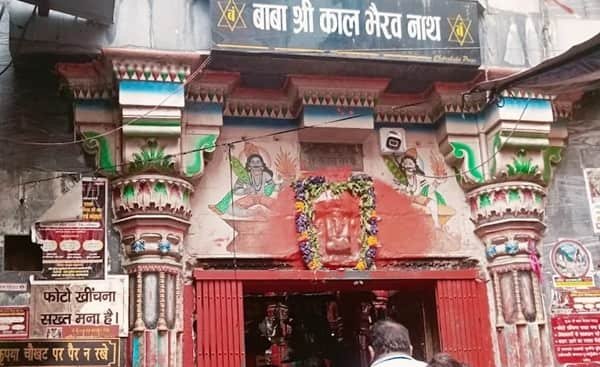
Kal Bhairav Temple Timings, Entry Fees and Pujas
The official Kashi web portal lists visiting hours from 5:00 AM to 9:30 PM. Temple worship continues through the day, but individual ritual breaks and crowd-control measures may interrupt access. Tuesdays and Sundays are especially popular, while Bhairav Ashtami can bring heavy crowds.
| Activity | Published or practical schedule |
| Temple visiting hours | 5:00 AM–9:30 PM |
| Morning worship | Begins around opening, subject to daily ritual |
| Evening aarti | Timed by temple priests; verify on arrival |
| General entry | Usually free |
| Optional offerings | Paid separately through authorised channels |
| Heavy-crowd days | Tuesdays, Sundays and major festivals |
Pujas, Oil Offerings and Sacred Thread
Offerings commonly associated with Kaal Bhairav include mustard oil, black sesame, flowers and incense. The Bhairav Raksha Sutra, a protective thread, is also part of the shrine’s devotional life. None of these offerings should be represented as compulsory for every pilgrim. Ask at the authorised counter whether there is a charge for any selected service, and avoid assuming that a priest or intermediary who approaches you outside the shrine is officially appointed.
Entry Rules and Useful Precautions
Wear modest clothing and keep personal belongings secure in the crowded lanes. Phone and photography instructions may differ between the outside lane and inner sanctum; follow notices and attendants. The temple is in a densely built historic neighbourhood where larger vehicles cannot necessarily reach the doorway. Expect some walking from the nearest permitted drop-off point.
Kal Bhairav Temple History and Religious Significance
The Guardian of Kashi
In the religious traditions of Varanasi, Kaal Bhairav is Shiva in a fierce guardian form who protects sacred order. Devotees affectionately call him the Kotwal of Kashi, a title evoking a city official charged with keeping peace and enforcing law. The idea does not mean that Kaal Bhairav serves as a historical civil officer; it conveys the belief that even a city celebrated for liberation has a protector against wrongdoing.
The shrine’s importance is embedded in the wider network of Shiva temples and pilgrimage routes. Many people visit Kaal Bhairav before or after Kashi Vishwanath. This is a cherished customary route, not a universal compulsory rule that invalidates worship at other temples.
The Story of Brahma’s Fifth Head
The Kashi Khanda of the *Skanda Purana* and other Bhairava traditions narrate a confrontation involving Lord Brahma and Shiva. In one widely told version, Shiva manifested Bhairava to punish Brahma’s pride, and Bhairava severed Brahma’s fifth head. The act brought the burden of Brahmahatya, an intense form of ritual guilt, symbolised by the skull attached to Bhairava’s hand.
He wandered until the burden was released in Kashi. The episode expresses powerful themes of accountability, purification and humility. It should be explained as a mythological and philosophical narrative rather than as an event whose date can be established through archaeology.
Temple History and the City that Rebuilt Itself
Varanasi’s religious structures have undergone repeated change through centuries of political transformation, patronage and urban rebuilding. Kaal Bhairav worship appears within the long development of Kashi’s sacred geography, but the exact founding year of the present standing temple cannot be confidently inferred from the antiquity of the Bhairava legend. The visible shrine reflects maintenance and rebuilding in a living city where streets, houses and temples have repeatedly changed.
The temple’s enduring place in local life is evident in the way residents speak of Bhairav as protector of neighbourhoods, tradespeople, journeys and moral order. Its importance is therefore sustained not only by ancient texts but also by the everyday religious practices of the city.
Iconography and the Meaning of Fearlessness
Kaal Bhairav is commonly represented with formidable attributes associated with time, death and the removal of fear. At this temple, the deity’s image is associated with a silver-faced representation and ritual adornment. Devotees do not understand the fierce aspect as an invitation to violence; it signifies the capacity of divine authority to restrain evil and protect the vulnerable.
Bhairav Ashtami, the celebration of Bhairava’s manifestation, and the weekly devotional importance of Tuesday and Sunday show how these ideas remain part of Kashi’s religious calendar. The experience is best approached respectfully, without treating the old city’s temple culture as a theatrical attraction.
How To Reach Kal Bhairav Temple Varanasi
| Transport | Access point or connection | Approximate distance |
| Rail | Varanasi Junction | About 3–5 km |
| Rail | Banaras Railway Station | Around 6–8 km |
| Air | Lal Bahadur Shastri Airport | About 24–28 km |
| Road | Godowlia area | Short city drive, then possible walk |
| Road | Kashi Vishwanath corridor area | Around 2–3 km, depending on route |
| Local travel | E-rickshaw / auto and final walk | Varies with restrictions |
By Air and Train
Varanasi Airport has connections to several Indian cities. Varanasi Junction is a convenient rail arrival point for many pilgrims. Book a local vehicle toward Bhaironath or the nearest authorised access point, then continue on foot if traffic restrictions prevent direct drop-off.
By Road
The shrine lies inside the historic city rather than beside an unrestricted highway. Traffic and one-way regulations may change during festivals. If visiting several central Varanasi temples, a local e-rickshaw combined with short walks is often more practical than driving and searching repeatedly for parking.
Best Time To Visit Kal Bhairav Temple
| Season | Months | Conditions |
| Winter | November–February | Best for combining multiple old-city temples |
| Summer | March–June | Very hot afternoons; choose morning |
| Monsoon | July–September | Humid with showers and wet lanes |
| Post-monsoon | October | Comfortable on many days, with festive activity |
Bhairav Ashtami (Kalabhairav Jayanti) is the main annual celebration, generally falling in the late autumn or early winter religious calendar. Mahashivaratri also brings extra activity to Varanasi’s Shiva shrines. On regular Tuesdays and Sundays, expect higher demand for darshan and offerings.
Nearby Attractions
Kashi Vishwanath Temple is the principal Shiva shrine of Varanasi. Annapurna Devi Temple is associated with the goddess of nourishment and forms part of the local devotional circuit. Manikarnika Ghat has a solemn religious importance and should be approached with cultural sensitivity; intrusive photography is inappropriate. Dashashwamedh Ghat, known for the evening Ganga Aarti, is another major stop, though large crowds and traffic diversions need planning.
Accommodation and Essential Travel Tips
Visitors can stay near Godowlia, Cantt or other parts of Varanasi according to walking ability and budget. A hotel close to the old city may save travel time but can be noisier and less accessible by car. Carry small change for voluntary offerings without allowing anyone to pressure you into buying an expensive puja package. Senior visitors should select a route with a manageable final walk and plan separate rest time between temple visits.
Frequently Asked Questions About Kal Bhairav Temple
Q1. Why is Kaal Bhairav called the Kotwal of Kashi?
The title means the city’s divine guardian. Devotees believe he protects the moral and spiritual order of Varanasi, much as a kotwal traditionally protected a town. It is a devotional title, not an official historical job description.
Q2. Must a visitor worship Kaal Bhairav before Kashi Vishwanath?
Many pilgrims follow that order as a sacred custom, but no universal rule makes the visit invalid if the sequence differs. Travellers can follow family practice, time constraints and advice from trusted religious teachers.
Q3. What is the meaning of the Bhairav Raksha Sutra?
It is a thread worn by devotees as a sign of seeking Bhairava’s protection. It is a matter of faith, not a guarantee against accidents or harm, and it should not be sold as a mandatory service.
Q4. Why are oil and black sesame offered?
They are part of common Bhairava worship traditions, associated by devotees with discipline, protection and the removal of obstacles. Specific permitted offerings are determined by local temple practice.
Q5. Is this the same as Batuk Bhairav Temple in Varanasi?
No. Batuk Bhairav is a different shrine and form of Bhairava. Travellers should check the full temple name and locality before hiring transport or booking a guide.
Q6. Can visitors photograph the deity inside the sanctum?
Do not assume permission. Photography rules around the deity and worship area are controlled by temple authorities; ask staff and respect other pilgrims rather than attempting covert pictures.