 By Meghna Sharma
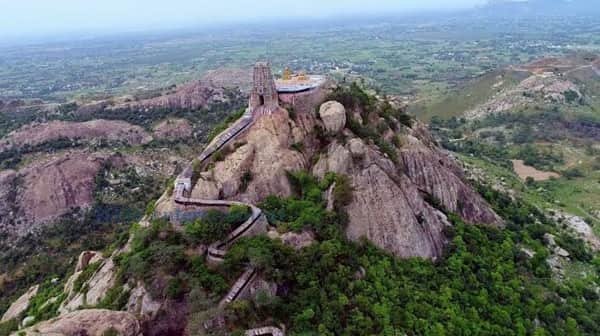
Rising above the plains of Ranipet district in Tamil Nadu, Sholingur’s twin sacred hills are among the most distinctive Narasimha pilgrimage sites in South India. The larger hill houses Sri Yoga Narasimha Swamy, depicted in meditation rather than in the familiar fierce posture of his avatar. Across from it, a smaller hill is associated with Yoga Anjaneya. Together they form a landscape where climbing, contemplation and Vaishnava tradition have become inseparable.
Known in sacred literature as Thirukkadigai, Sholingur is a revered *Divya Desam*, one of the 108 Vishnu temples praised by the Alwars. Its hilltop shrines draw pilgrims from Chennai, Vellore, Tirupati and beyond. The town shrine below has different opening hours from the hill temples, a distinction that matters when planning an afternoon or evening visit. While a journey to Sholingur can be completed in one day, the steps, midday heat and possible rope-car queues deserve careful attention, particularly for children and senior citizens.
Sholingur Temple Timings, Entry Fees and Pujas
Tamil Nadu’s HR&CE department publishes separate visiting hours for the two hill shrines and the town temple. The Periya Malai and Chinna Malai shrines generally operate during daylight, while the town temple also has evening darshan. Ritual services can temporarily interrupt public access.
| Shrine or activity | Published timings |
| Periya Malai (Yoga Narasimha) | 8:00 AM–6:00 PM |
| Chinna Malai (Yoga Anjaneya) | 8:00 AM–6:00 PM |
| Town temple, morning | 7:00 AM–12:00 noon |
| Town temple, evening | 5:00 PM–8:30 PM |
| Temple-office enquiries | 04172-291903 |
| General darshan | Usually free; selected sevas are charged |
Worship and Paid Offerings
Devotees visit Yoga Narasimha to pray for mental steadiness, courage and protection. The HR&CE listing includes offerings such as Thirumanjanam, Swathi Thirumanjanam, sweet pongal and puliyodarai. Published seva charges include ₹600 for one Thirumanjanam category, but do not assume that every charge or service is available at all times; consult the temple counter before paying. Special queues, transport tickets and seva tickets should never be confused with an ordinary admission fee.
Dress, Steps and Rope-Car Planning
Modest clothing and practical walking footwear are recommended for the approach; shoes must be removed before entering sanctums. The larger hill is traditionally reached by approximately 1,300 steps, and the smaller by several hundred steps. A rope-car facility has been reported for the main hill, but its service hours, fare, maintenance status and eligibility can change. Confirm its operation locally rather than building an itinerary around a guaranteed ride.
Sholingur Temple History and Religious Significance
Why Thirukkadigai Is Sacred
Sholingur’s older name, Thirukkadigai, preserves the belief that even a *kadigai*—a brief traditional unit of time—spent in heartfelt meditation here has unusual spiritual merit. The Vaishnava tradition associates the site with the sages who performed penance to gain a vision of Lord Vishnu. Their spiritual discipline is remembered through the unusual meditative iconography of Yoga Narasimha.
In the wider Narasimha story, Lord Vishnu assumes a man-lion form to protect Prahlada and defeat Hiranyakashipu. At Sholingur, however, the focus is on the calm that follows divine intervention. The image is seated in yogic composure, directing worshippers toward inward concentration rather than spectacle.
Alwar Hymns and the Divya Desam Tradition
The site appears in the Tamil Vaishnava devotional tradition and is linked with the hymns of Alwars, especially Thirumangai Alwar and Peyalwar in temple accounts. The shrine’s standing as a Divya Desam places it in a network of temples that became foundational to Sri Vaishnava identity. Pilgrims often connect a visit with other important Vishnu temples in northern Tamil Nadu and Andhra Pradesh.
The town’s religious inheritance also reflects the work of later teachers and local patrons who sustained worship, improved pathways and maintained festival traditions. The surviving complex has undergone repairs over time. Claims about a precise founding year should therefore be treated cautiously unless tied to a specific inscription or historical record.
Yoga Anjaneya and the Two-Hill Pilgrimage
The second hill is dedicated to Yoga Anjaneya, a form of Hanuman associated with meditative devotion to Lord Narasimha. Local tradition connects him with the protection of sages and the spiritual practices of Thirukkadigai. Visiting both hills expresses the bond between divine protection and disciplined service.
The relationship is also reflected in the physical setting: two heights, two sanctums and a town shrine below. A pilgrim who reaches the major hill but cannot manage the smaller one has not failed a religious obligation; accessibility and health should come first.
Architecture, Pilgrim Routes and Sacred Landscape
Sholingur’s significance is not confined to a single elaborate gopuram. The hilltop shrines, stone steps, mandapams and views over agricultural plains together create the sacred landscape. Architecture here serves pilgrimage movement: visitors ascend from a modern town into quieter worship spaces, then return for town-temple darshan or prasadam.
The temple is administered under Tamil Nadu HR&CE, which publishes operational details and some seva charges. This makes its own listing the best starting point for verifying the different opening hours.
How To Reach Sholingur Temple
| Transport | Access point or route | Approximate distance |
| Rail | Sholinghur Railway Station | About 12–15 km from temple town |
| Rail | Arakkonam Junction | Around 25–30 km |
| Road | Chennai | Around 105–120 km |
| Road | Vellore | Around 50–60 km |
| Road | Tirupati | Around 70–85 km |
| Air | Chennai International Airport | Around 105–120 km |
By Train and Air
The station called Sholinghur is not directly beside the hill entrance, so arrange a taxi or local bus for the final stretch. Arakkonam is another important rail connection. Chennai International Airport is the practical option for travellers arriving from outside the region.
By Road
Approach the town through Arakkonam, Walajah or the relevant district roads. Local buses, taxis and private vehicles serve Sholingur. Arrive early if you plan both hills; do not assume the town temple’s later evening hours apply to the hilltop sanctums.
Best Time To Visit Sholingur Temple
| Season | Months | Visiting conditions |
| Winter | November–February | Best weather for the approach and steps |
| Summer | March–June | Hot rock surfaces and demanding climbs |
| Monsoon | July–September | Occasional slippery steps; check weather |
| Post-monsoon | October | Greener scenery and improving temperatures |
The Karthigai period and Narasimha-related observances can draw large crowds. Swathi Nakshatra days are especially significant to devotees of Lord Narasimha. Festival arrangements may affect seva timing, hillside transport and crowd circulation.
Nearby Attractions
The Yoga Anjaneya shrine on the smaller hill is an integral part of the pilgrimage. The town Lakshmi Narasimha temple provides an accessible alternative when hill access is difficult. Travellers with time may also visit Ratnagiri Balamurugan Temple near Vellore, Vellore Fort or temples around Arakkonam, but these require separate road journeys rather than a short walk from the hills.
Accommodation and Essential Travel Tips
Basic lodges may be available locally, while Arakkonam, Vellore and Chennai offer wider hotel choices. Carry drinking water for the outside approach, take regular breaks and avoid climbing in the harshest afternoon sun. People with heart, knee or mobility problems should inquire about rope-car access and the remaining walking distance. Temple services are subject to changes during festivals and maintenance; verify directly with the HR&CE temple office.
Frequently Asked Questions About Sholingur Temple
Q1. Why is Yoga Narasimha shown in a peaceful posture?
The shrine highlights Lord Narasimha after the restoration of cosmic order. The meditative form places emphasis on discipline, contemplation and inner calm instead of the dramatic moment of the Hiranyakashipu episode.
Q2. Do the two Sholingur hills have the same deity?
No. The larger hill honours Yoga Narasimha, a form of Vishnu; the smaller honours Yoga Anjaneya, a meditating form of Hanuman. They belong to one sacred pilgrimage landscape but have separate sanctums.
Q3. Is the rope car a guaranteed alternative for someone unable to climb?
No. Although a rope-car service has been reported, it may be affected by maintenance, queue limits or operational changes. Confirm same-day operation and how much walking remains after the ride before travelling with someone who cannot manage steps.
Q4. What does the name Thirukkadigai mean for devotees?
It reflects the local belief that even a short period of concentrated worship here brings great spiritual benefit. That belief belongs to the temple’s devotional tradition, not to a measured historical or scientific claim.
Q5. Are children expected to complete both hill climbs?
No. Families may choose only the accessible sections. Carry water, allow rest breaks and avoid expecting young children to climb hundreds of steps in summer heat.
Q6. Can a pilgrim complete both hills without hiring a guide?
Usually, yes: the routes are established pilgrimage paths. However, it is sensible to follow signed pathways and the temple staff’s advice. Guides are not a substitute for verifying rope-car or darshan arrangements at the authorised counter.