 By Santosh Kumar
 It is true that there once was a time when India used to rank as the top black pepper producer in the entire world, but things have changed now, and as of 2025, India’s rank is fourth in black pepper production. The top rank is held by Vietnam at the moment. Still, the black pepper production is pretty significant in the country, and also, there is a good demand for Indian black pepper, specifically in many countries. On that very note, with this list of the Top 5 Black Pepper Producing States in India 2025, we’re trying to figure out and show you where all this black pepper is produced, specifically in India.
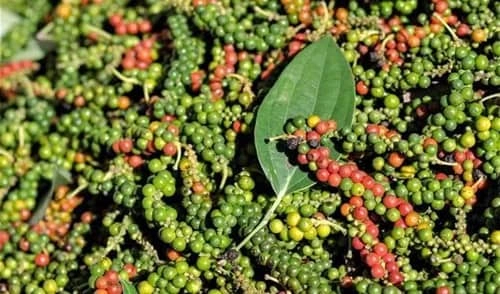
1. Kerala
It could very well be that not a lot of people in India don’t even know that the biggest producer of black pepper in India is Kerala, but that’s factually true. And we aren’t talking about some small numbers here, nah, Kerala is known to produce almost 60% of the total black pepper produced in India in one fiscal year. And just in case you’re wondering like what works so well for the production of black pepper in Kerala, then just know that places like Idukki, Wayanad, Kottayam, and Kozhikode are equipped with that perfect combination of tropical heat and rain that is just right for pepper vines. These two types of pepper, Malabar and Tellicherry, are world-famous, and they are actually from here.
2. Karnataka
Runner up? Oh, well, it is true that Karnataka has been rapidly catching up and that is the reason why we have ranked it just after Kerala on this list. In fact, the state is responsible for almost 32% of the total Indian pepper production and manufactures about 81,000 metric tons of pepper annually, making it pretty much a strong runner-up in this regard. To be more specific, see, the major pepper-producing areas are the districts of Kodagu, Dakshina Kannada, Chikkamagaluru, and Udupi. The best kinds like Panniyur 1 and Panniyur 2 are almost entirely grown in the area, and the total yield is going up year after year, no doubt.
3. Assam
Assam is among such states whose pepper production was not that significant, but few years have passed and its growth turned out to be quite mind-boggling in our opinion, so that’s why it is listed third today. Talking specifically about the production amount, oh, the state is now responsible for 3% of the whole Indian pepper production. Here, see, areas like Karbi Anglong, Dima Hasao, and Cachar are the ones that have been majorly influencing this growth year after year. And if you’re asking like what works so well here, see, there is this humid climate and rich soil of the region, which is just perfect for black pepper growth.
4. Tamil Nadu
It is true that Tamil Nadu can do super good in this segment, but for now, as of 2025, Tamil Nadu is at number four with a contribution of about 1.4% of the total black pepper production in India. The state-wise cultivation of pepper is generally in the districts of Kanyakumari, Coimbatore, Nilgiris, and Dindigul. Here though, Farmersinitely, pepper is one of the main crops they plant. They usually plant pepper along with cardamom and coffee, which is good for the soil and also gives nice yields.
5. Meghalaya
And last? Oh, see, Meghalaya is the state that occupies the fifth place on our list of black pepper-producing states in India. How and why? Well, that’s just because this state accounts for almost 0.8% of the total production in India, but that’s not the surprising part, and we know it. See, it is actually the purity of the black pepper grown in Meghalaya that makes it super special, and that’s why there is specific demand for it in the Indian market.
Conclusion
There you have it. We bet many of you didn’t know these intricate details about the black pepper production, like which states lead in this regard, what makes them the top producers, and things like that. That’s pretty much what we do here. So, for posts like these where you want to know the production number of different crops, things, or anything like that, just keep on following.