 By Meghna Sharma
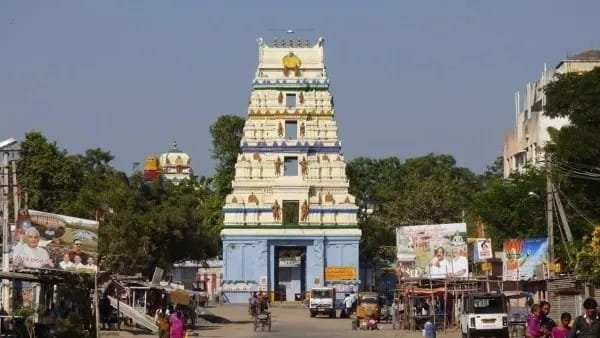
At a bend of the Krishna River in Andhra Pradesh, Sri Amareswara Swamy Temple at Amaravathi brings together two remarkable chapters of Indian religious history. The town is associated with an ancient Shiva pilgrimage tradition, while a short distance away stands the archaeological site of Amaravati Mahachaitya, one of early India’s great Buddhist monuments. This meeting of traditions gives Amaravathi a depth that goes well beyond an ordinary temple visit.
The shrine, also called Amaralingeswara Temple, is one of the five sacred Pancharama Kshetras of Andhra Pradesh, each associated with a revered Shiva linga. Devotees come for darshan of Lord Amareswara and Goddess Bala Chamundika, particularly during Maha Shivaratri and the Karthika season. The temple’s tall linga, historic river setting and carved gateways make it a meaningful stop for families travelling through Guntur district. Amaravathi village should not be confused with the Maharashtra city of Amravati or with every development area described as Andhra Pradesh’s modern capital region.
Amaravathi Temple Timings, Entry Fees and Pujas
India’s Ministry of Tourism publishes a morning session beginning at 6:00 AM and an evening session from 4:00 PM to 8:00 PM. Its page prints the morning end as “12:00 AM,” evidently inconsistent with the separate evening reopening; most practical listings interpret this as 12:00 noon. Until the temple publishes a clearer daily schedule, treat the noon closure as an approximation rather than a guaranteed minute-by-minute timetable.
| Activity | Typical or published schedule |
| Morning darshan | About 6:00 AM–12:00 noon |
| Afternoon closure | Around 12:00 noon–4:00 PM |
| Evening darshan | About 4:00 PM–8:00 PM |
| General temple entry | Normally free |
| Special abhishekam or archana | Charged according to temple counter |
| Special-festival schedule | Subject to change |
Abhishekam, Archana and Temple Etiquette
Shiva worship at Amaravathi involves abhishekam, flowers, bilva leaves, archana and daily food offerings. Selected paid rituals can be requested through authorised temple channels. The linga’s unusual height means that worship has historically required a distinctive arrangement of the sanctum; devotees should not assume they may perform direct abhishekam themselves. Festival days may involve longer queues and controlled entry.
Dress conservatively, remove shoes at the designated place and follow current rules on cameras and phones. General darshan should not be confused with special puja tickets. Do not rely on unverified online agents for an “instant” darshan promise.
Amaravathi Temple History and Religious Significance
A Shiva Shrine beside an Ancient Cultural Centre
Amaravathi is a place where the archaeological and devotional past intersect. The Krishna valley was a major centre of trade and religious patronage during the Satavahana period. Nearby, the Amaravati Buddhist stupa developed into an important centre of Buddhist worship and artistic production. The Shiva temple stands within the same long-inhabited landscape, but its precise earliest date cannot be established merely from legends associating it with antiquity.
The existing Amareswara complex reflects periods of renovation and support from successive regional rulers and local communities. This layered development explains why its architecture does not fit neatly into the style of a single dynasty. Pilgrims can appreciate the temple as both an active Shiva shrine and part of the wider heritage of the Krishna River region.
The Pancharama Tradition and Tarakasura
According to a well-known Telugu Shaiva legend, the demon Tarakasura possessed a powerful Shiva linga that made him difficult to defeat. During the conflict, Lord Subrahmanya broke the linga, and its pieces fell at five places. These became the Pancharama sacred sites: Amararamam at Amaravathi, Draksharamam, Somaramam at Bhimavaram, Ksheeraramam at Palakollu and Kumararamam at Samalkot.
Amaravathi is identified with Amararamam, traditionally associated with worship by Indra, the king of the gods. This narrative explains the shrine’s religious relationship with other major Shiva temples across Andhra Pradesh. It is part of sacred tradition, not a literal archaeological account of how the stones originated.
Lord Amareswara and Goddess Bala Chamundika
The presiding deity is a tall Shiva linga worshipped as Amareshwara or Amaralingeswara. The name conveys Lord Shiva’s association with the immortals or celestial beings. The temple also honours Bala Chamundika, the divine mother, linking its Shaiva worship with Shakta devotion.
The linga’s height is one of the site’s most striking characteristics. Visitors should observe the carved mandapams and courtyards, but they should not confuse modern restoration features with material dating to the earliest Satavahana age. The worship tradition has continuity of faith while the visible buildings have changed with time.
Architecture and the Krishna River
The temple’s gateways, pillars and inner mandapams have been altered and maintained over generations. Its proximity to the Krishna River shapes its identity as a pilgrimage site. Riverbank areas can become particularly crowded during religious baths and festival days; bathing should be undertaken only where local authorities confirm safe access.
A visit offers an opportunity to see how Shaiva worship, regional craftsmanship and river-based pilgrimage coexist in a historic Andhra settlement. It is best approached slowly, with time also reserved for the nearby Buddhist remains and museum.
How To Reach Amaravathi Temple
| Transport | Access point or route | Approximate distance |
| Air | Vijayawada Airport | About 55–70 km by road |
| Rail | Guntur Junction | About 35–40 km |
| Rail | Vijayawada Junction | Roughly 45–55 km |
| Road | Guntur to Amaravathi | About 38 km |
| Road | Vijayawada to Amaravathi | About 45–55 km |
| Regional bus | APSRTC from Guntur | Services available; confirm timetable |
By Air and Train
Vijayawada is the nearest major airport, with taxis available for onward travel. For trains, Guntur Junction is a practical option; Vijayawada Junction offers a wider range of routes. Road distance depends on the crossing and bank of the Krishna River used, so a route planner is preferable to relying on a fixed journey time.
By Road
APSRTC lists buses from Guntur serving the Amareswara pilgrimage route, though quoted fares and schedules can become outdated. Private vehicles and taxis are also available. Park in authorised spaces, especially when large crowds assemble for Shivaratri.
Best Time To Visit Amaravathi Temple
| Season | Months | Travel conditions |
| Winter | November–February | More comfortable for temple and archaeological visits |
| Summer | March–May | Very hot; plan morning darshan |
| Monsoon | June–September | Humid, with river-level and weather considerations |
| Post-monsoon | October | Suitable when rainfall has eased |
Maha Shivaratri is the main pilgrimage highlight, with special Shiva worship and large crowds. Karthika Masam, generally in October–November, brings lamps, prayers and devotional activity. Visiting outside festival peaks may be better for travellers wanting time to explore the archaeological sites.
Nearby Attractions
Amaravati Mahachaitya, the remains of the famous Buddhist stupa, is a short journey from the temple. The Amaravati Archaeological Museum displays sculptures and exhibits connected with the region’s Buddhist history; confirm museum closing days independently. The Dhyana Buddha statue provides another landmark, and the Krishna riverbank offers a scenic view where access is permitted. These are significant heritage experiences, not minor temple annexes, and deserve separate visiting time.
Accommodation and Essential Travel Tips
Amaravathi has limited accommodation compared with larger cities. Many visitors stay in Guntur or Vijayawada and visit on a day trip. Carry drinking water, sun protection and footwear suitable for the archaeological grounds. If travelling with older relatives, keep the riverbank and museum visits optional rather than rushing them into a tight darshan schedule. Ask the temple counter about current archana and abhishekam charges; do not publish old price lists as current.
Frequently Asked Questions About Amaravathi Temple
Q1. Is this Amaravathi Temple the same as a temple in Amravati, Maharashtra?
No. This article concerns Sri Amareswara Swamy Temple in Amaravathi, Andhra Pradesh, on the Krishna River. Maharashtra’s Amravati is a different city with its own shrines.
Q2. Why is Amareswara included among the Pancharama temples?
In Shaiva tradition, Amaravathi preserves one of five sacred fragments associated with the linga of Tarakasura. The other four sites are elsewhere in Andhra Pradesh. Pilgrims sometimes visit all five as a dedicated religious circuit.
Q3. Does the nearby Buddhist stupa belong to the Shiva temple?
No. Amaravati Mahachaitya is a separate major Buddhist archaeological monument. Its proximity shows the region’s long multi-religious history, but the Buddhist site and Amareswara shrine have distinct traditions and visitor rules.
Q4. Can devotees touch the tall Shiva linga or pour water directly on it?
Do not assume direct physical access. Sanctum rituals and offerings are managed by temple priests; ask the authorised counter which abhishekam services permit participation and how they are conducted.
Q5. Is it practical to include all five Pancharama shrines in one day?
It is usually too ambitious for a relaxed family pilgrimage because the temples lie across several districts. A multi-day circuit is more comfortable and allows for darshan delays and road travel.
Q6. Is bathing in the Krishna River part of mandatory darshan?
No general requirement obliges every visitor to bathe. River rituals are a personal devotional choice and should be attempted only at designated safe locations, especially during high water.