 By Meghna Sharma
In the green villages of Palakkad district, the Meenkulathi Bhagavathi Amman Temple at Pallassana preserves a remarkable connection between Kerala’s Bhagavathy worship and the Meenakshi tradition of Tamil Nadu. Its low, traditional roofs, temple tank and intimate sacred precinct stand in marked contrast to the monumental gateway towers of major Tamil pilgrimage centres. Yet the shrine carries a rich identity of its own, sustained by local families and annual festivals.
The name Meenkulathi is commonly linked with a pond associated with fish, while local tradition explains how devotees who migrated from Tamil Nadu brought their worship of Goddess Meenakshi to Pallassana. That story is remembered alongside a distinctive arrangement of guardian deities around the sanctum and several ceremonies not widely known outside the region. The site is a living village temple, not merely a smaller version of Madurai’s famous shrine.
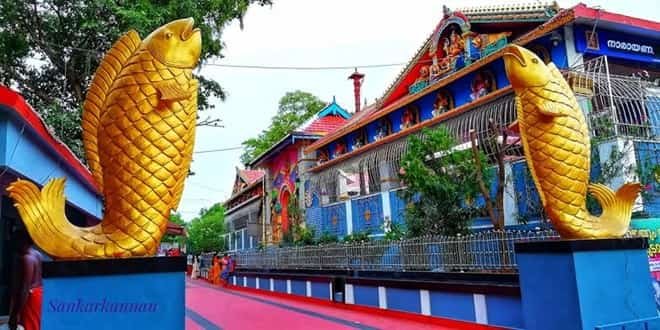
Visitors from Palakkad or Kollengode should check the short morning and evening darshan sessions carefully. This guide also examines the temple’s local history, the customs surrounding its sanctum, important seasonal rituals and the practical details that make a rural pilgrimage easier.
Meenkulathi Bhagavathi Amman Temple Timings, Entry Fees and Pujas
The main public darshan windows and ritual breaks are listed below. These are planning hours, not a promise of uninterrupted viewing; special festivals, weather and temple notices can alter the normal schedule.
Meenkulathi Bhagavathi Amman Temple Darshan Timings
| Activity / session | Typical local schedule |
| Ordinary morning darshan | 5:30 AM – 10:30/11:00 AM |
| Sunday, Tuesday and Friday mornings | May extend to 12:30 PM; confirm |
| Afternoon closure | After morning worship until about 5:30 PM |
| Evening darshan | 5:30 PM – 7:30 PM |
| General entry | Usually free |
Local sources differ over weekday morning closings and whether evening closes at 7:30 or 8:00 PM. For reliable access arrive by 10:00 AM or between 5:30 and 7:00 PM.
Important Daily Pujas and Sevas
Usha puja, daily Devi worship and evening deepa aradhana structure the routine. Special offerings may include forms of kumkumarchana and local temple sevas. Confirm any special family ritual in advance.
General darshan is usually free. Local schedules commonly give an early 5:30 AM opening and an evening session from about 5:30 PM, while the end of morning darshan varies by weekday. One temple directory lists 10:30 AM and 7:30 PM as typical closings; confirm extended-day service and paid offerings with the local temple office.
Dress Code and Visitor Rules
Kerala temples may have stricter traditional dress expectations. Check the sanctum-entry policy for men and women locally.
Traditional modest clothing is recommended. The compound includes shrines and a sacred tank, so avoid treating the grounds as a public recreation area. Some devotees follow a restricted circumambulation route around the Goddess because of the guardian-deity arrangement; take instructions from temple staff.
Meenkulathi Bhagavathi Amman Temple History and Religious Significance
The Mannadiyar migration legend and the Meenakshi connection
According to the temple’s local sthala tradition, a group of Mannadiyar families originally connected with Tamil Nadu migrated into the Palakkad region. Goddess Meenakshi of Madurai was their family deity, and they continued to honour her while settling in Kerala. One version of the story tells of an elder who carried a small sacred stone from Madurai, treating it as a focus of worship during the journey. As he grew older, repeated travel back to Madurai became increasingly difficult, giving rise to the episode remembered as the origin of Pallassana’s shrine.
The elder is said to have placed the stone and his umbrella beside a pond while bathing. When he returned, neither could be lifted. Ritual consultation was understood to reveal that the Goddess had chosen to remain at that spot. The pond became part of the name and religious identity of the place. This account is a community legend, not a dated inscription proving the exact founding year. The present temple developed through the long patronage of local families, who maintained a form of Goddess worship that reflects cultural exchange across the Kerala–Tamil Nadu border.
Sacred tank, guardian deities and distinctive village festivals
The sanctuary’s architecture is recognisably Kerala in scale and form: low sloping roofs, enclosed worship space and a strong relationship with the temple tank. Around the central Goddess are associated guardian deities often described collectively in local accounts as the Sapta Matrikas, or Mother Goddesses, along with other shrines. Certain traditions restrict ordinary circumambulation of the central sanctum because of this arrangement. Visitors should follow the authorised pathway instead of assuming that a full pradakshina is possible as it is in many other temples.
Beyond daily Devi worship, the temple preserves a varied ritual calendar. Navaratri, Karthigai and Mandala Vilakku are important, while Pallivettai and special sword-and-lamp processions reflect local Bhagavathy forms of worship. Community accounts also describe leather-puppet shadow performances, often associated with the Ramayana, and less frequent ceremonies that bring villagers and returning families together. Not every event occurs annually, and dates may depend on the Malayalam calendar. Understanding these traditions reveals why the temple functions as a centre of community memory as well as a place for individual prayers.
How To Reach Meenkulathi Bhagavathi Amman Temple
The temple is in Pallassana near Kollengode, away from the main urban transport hubs. Travellers typically approach from Palakkad, Kollengode or the Palakkad–Pollachi side; a prearranged return taxi or reliable local bus plan is especially useful if visiting near evening closing time.
| Mode | Practical access point |
| By air | Coimbatore International Airport, roughly 55–70 km |
| By train | Palakkad Junction or Palakkad Town, around 25–35 km |
| By road | Road through Kollengode and Pallassana |
By Air
Coimbatore International Airport, roughly 55–70 km. Flights, connections and transfer times vary. Confirm that the selected airport has a convenient onward taxi or bus link rather than judging suitability by map distance alone.
By Train
Palakkad Junction or Palakkad Town, around 25–35 km. Check whether the train stops at the stated station and arrange local transport for the final leg, especially if arriving after dark or with elderly relatives.
By Road
Road through Kollengode and Pallassana. Roads near religious sites are sometimes pedestrianised or subject to temporary diversions on festival days. A drop-off point within walking distance can be more practical than trying to drive to the main gate.
Best Time To Visit Meenkulathi Bhagavathi Amman Temple
The most comfortable general travel season is November to February. Temperatures, rainfall and daylight conditions affect queueing outdoors, walking between attractions and using public transport. Devotees specifically seeking a festival experience may prefer a busier season, provided they allow time for crowds and altered schedules.
| Season | Visitor conditions |
| November–February | Comfortable for temple visits and outdoor travel |
| March–May | Warm or hot; early visits advisable |
| June–October | Monsoon or post-monsoon conditions vary locally |
Major Festivals
Important annual occasions include Navratri, Karthigai, Mandala observances and annual Bhagavathy festival. Such celebrations change the atmosphere considerably: decorated deities, processions or extended worship may be a highlight, but queues and room prices can rise. Families wanting a relatively quiet darshan should prefer an ordinary weekday outside the main festival period.
Nearby Attractions
A visit to Meenkulathi Bhagavathi Amman Temple can be combined with several nearby places. Pick attractions according to the time available rather than trying to cover every stop after a long darshan queue.
- Kollengode village and heritage
- Malampuzha Dam and gardens
- Palakkad Fort
Before adding a distant attraction, check opening times and the driving route. A religious journey is usually more comfortable when one significant site is explored properly instead of several being rushed.
Accommodation and Essential Travel Tips
Return taxis may be easier to arrange than spontaneous transport from the village. Early visits also avoid the long midday closure.
Book a room in a convenient town rather than choosing accommodation only by the lowest displayed price. Ask about check-in rules, parking, accessibility and the last local bus. Carry identification, drinking water, essential medicines and a modest amount of cash for small purchases. Where official booking facilities exist, use the genuine temple or church channels rather than agents who promise guaranteed priority access.
Frequently Asked Questions About Meenkulathi Bhagavathi Amman Temple
Q. Is Meenkulathi Bhagavathy the same deity as Madurai Meenakshi?
The temple’s founding story connects its Goddess with Meenakshi worship brought from Tamil Nadu by migrating families. Yet Meenkulathi has a distinct local ritual system, temple layout and festival calendar. The Pallassana shrine should not be confused with Madurai’s Meenakshi Amman Temple.
Q. Why do some visitors avoid walking completely around the sanctum?
Local custom associates the central shrine with surrounding guardian deities, including the Sapta Matrikas. Because of this sacred arrangement, unrestricted circumambulation may not follow the pattern seen in other temples. Use only the route permitted by the temple administration.
Q. What is the story behind the sacred stone and umbrella?
In the local migration legend, an elderly worshipper placed the stone used for Meenakshi worship and an umbrella beside a pond. Both were believed to become fixed to the earth, signalling the Goddess’s wish to remain there. It is a devotional founding account, not a historically dated incident.
Q. Are the temple’s shadow-puppet performances held every week?
No. Regional accounts associate the shrine with traditional leather-puppet performances linked to the Ramayana during specific ritual periods. Such events depend on the festival calendar and local organisation. Visitors should ask the temple office for a programme rather than expecting daily shows.
Q. Can families arrange a special Devi puja during a short visit?
Some special offerings are available by prior arrangement, but the permitted days, donation amounts and booking notice vary. Contact the temple office before travelling, especially for ceremonies involving several family members. Do not rely on generic online ticket prices from unrelated shrines.
Q. Is the temple tank open for recreational swimming?
No visitor should assume that a sacred tank is a public swimming facility. Bathing customs, if observed, are governed by local rules and water conditions. Families should supervise children and follow any restrictions posted around the tank.