 By Santosh Kumar
 A 2013 Nissan Leaf and a 2013 Tesla Model S. Same decade, same basic lithium-ion chemistry, similar mileage. One holds under 70% of its original capacity today. The other still sits close to 90%.
Why the gap? Not the cells. The electronics managing them.
Most people shopping for an EV never hear the term “battery management system.” They compare range numbers and 0-60 times instead — understandable, but it skips the one component that actually decides whether a pack ages gracefully or turns into an expensive paperweight by year five.
What a Battery Management System Actually Does
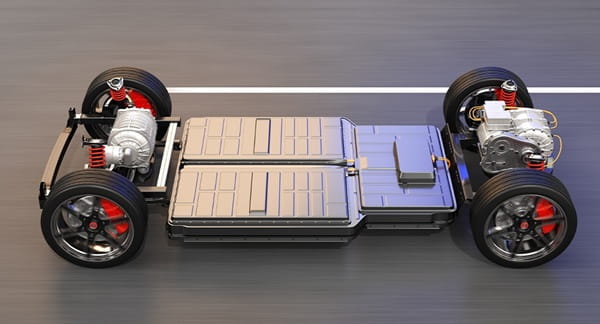
Picture a pack with 96 cells wired in series. If even one cell drifts slightly out of balance, overcharging a touch, or discharging a bit too deep, it drags the whole pack down. Left alone for months, that single weak cell can bottleneck the entire pack’s usable range.
A battery management system exists to stop that from happening. It watches every cell’s voltage and temperature, corrects small imbalances before they compound, and decides in real time how hard the pack can be pushed without damage.
This isn’t a spec-sheet feature. Some early EV batteries needed replacement well before 100,000 miles. Better-managed packs from the same era are still on the road.
Bigger Packs, Bigger Problems
EV batteries have grown from 24 kWh in the first Leaf to well over 100 kWh in some SUVs now. More cells. More places for something to drift out of tolerance. More load on the system trying to keep it all in check.
A U.S. Department of Energy report noted that thermal management and cell balancing account for a meaningful share of total battery lifecycle costs — poor management shortens usable pack life and drives up warranty claims. Automakers eat that cost somehow. Higher prices, thinner warranties, one or the other.
Fast charging raises the stakes further. Push 350 kW into a pack in fifteen minutes and you generate real heat. The battery management system has to decide, cell by cell, how much current is safe. Get it wrong, you risk a fire. Get it right, drivers get charging times that finally feel like a fuel stop.
Three Jobs, Running at Once
State of charge estimation comes first — knowing, at any moment, roughly how much usable energy remains. Temperature matters here. Age matters. How hard the pack got driven that morning matters. This number drives the dashboard range estimate, and cold weather throws it off more than most drivers realize.
Then there’s cell balancing, running quietly in the background nobody notices. Passive balancing bleeds excess charge off stronger cells as heat. Active balancing redistributes that energy instead of wasting it. You won’t see the difference on day one. You’ll see it in year three, when a poorly balanced pack starts losing range faster than it should.
Fault detection rounds things out. Abnormal voltage drop, a sudden temperature spike — the system isolates the cell or shuts the pack down before one failure cascades into something worse. Most drivers never think about this safety net. That’s the point.
Where the Research Is Actually Heading
Universities working on next-gen EV platforms are shifting money away from raw battery chemistry and toward smarter control algorithms. Some labs are training machine learning models to predict cell degradation before it even shows up in voltage readings — catching problems ahead of time instead of reacting to them.
Solid-state batteries are still a few years out. But they’ll need entirely new management approaches, since their failure modes don’t match today’s lithium-ion cells. Labs building test platforms for this kind of research need equipment that simulates real charge and discharge cycles under repeatable conditions. This breakdown of what a battery management system does, and how it gets tested in an actual lab setup, covers that ground well.
Engineering students entering this field increasingly need hands-on exposure here, not just electrochemistry theory. Cell balancing logic, thermal modeling, fault protection — that’s becoming as important to a graduate’s job prospects as knowing what’s inside the cell itself.
The Part Nobody Puts on a Billboard
Range anxiety gets the headlines. Battery longevity is the quieter worry.
A pack losing 20% capacity in three years feels like a bad deal, even if the range number looked great in the showroom. Manufacturers know this. It’s why R&D money keeps shifting toward control systems instead of chemistry alone.
The next real jump in EV performance probably won’t come from a flashy new battery material. It’ll come from small, unglamorous improvements in how packs get managed, cell by cell, cycle by cycle — work that happens inside the battery management system, not in a press release.
Whether you’re buying an EV, studying automotive engineering, or building test infrastructure for a lab, understanding this layer explains a lot about why some cars age like that Model S, and others don’t.