 By Meghna Sharma
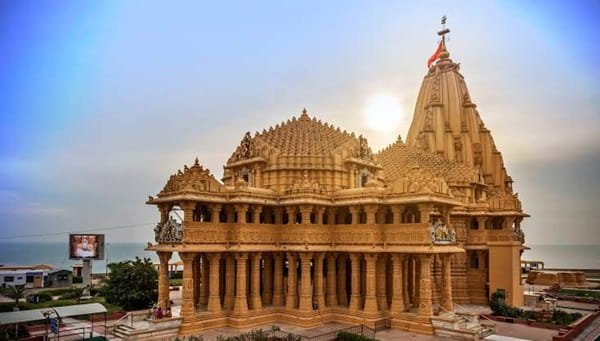
On the western coast of Gujarat, where the sacred Gomti River meets the Arabian Sea, stands one of India’s most revered Krishna temples. Dwarkadhish Temple, also known as Jagat Mandir, is dedicated to Lord Krishna in his royal form as the King of Dwarka. Its towering stone spire, ancient religious traditions and centuries of devotion make it an important destination for Hindu pilgrims.
Dwarka occupies a special place in Hindu religious history. It is counted among the four sacred Char Dham destinations and the seven holy cities called Sapta Puri. According to Mahabharata tradition, Lord Krishna established his kingdom here after leaving Mathura. Visitors come for darshan, traditional aartis, the sacred temple flag and the historic coastal setting.
Dwarkadhish Temple Timings, Entry Fees and Aarti
Dwarkadhish Temple follows a daily schedule of worship, including Mangla Aarti, Shringar, Rajbhog and evening prayers. Public darshan is available in morning and evening sessions, with a midday closure for rituals.
Dwarkadhish Temple Darshan Timings
| Activity | Timings |
| Morning darshan | 6:30 AM – 1:00 PM |
| Midday closure | 1:00 PM – 5:00 PM |
| Evening darshan | 5:00 PM – 9:30 PM |
| General entry | Free |
| Opening days | All days of the week |
These broad timings are published by India’s Ministry of Tourism. Viewing may pause during offerings and aartis. Festival schedules can change.
Important Aartis and Daily Rituals
The temple treats Lord Krishna as a divine king. Mangla Aarti welcomes the day, followed by Shringar Darshan when the deity is adorned with fine garments and flowers. Gwal Bhog is a food offering linked with Krishna’s pastoral life. Rajbhog is the main midday offering, while Sandhya Aarti and Shayan Aarti mark evening worship and ceremonial rest. Exact ritual times should be confirmed at the temple because published schedules differ.
Entry Fees and Special Darshan
General darshan is free, without an admission ticket. Some third-party websites advertise paid VIP passes, but a currently authorised paid priority programme could not be verified through official sources. Confirm special arrangements with the administration and avoid unofficial agents.
Dress Code and Temple Rules
Wear clean, modest clothing. Full-length trousers and shirts or dhoti-kurta suit men; sarees, salwar kameez and other respectful outfits suit women. Avoid shorts, sleeveless clothing and revealing garments. Mobile phones, cameras and photography are restricted. Deposit prohibited items in designated storage outside and avoid carrying valuables.
Dwarkadhish Temple History and Religious Significance
The Legend of Lord Krishna’s Kingdom
According to Hindu tradition, Krishna left Mathura and founded the prosperous fortified city of Dwarka on India’s western coast. Religious texts describe impressive palaces, gateways and maritime activity. The kingdom is traditionally believed to have been submerged following Krishna’s departure from earthly life. Archaeological explorations have identified historic maritime activity and underwater remains in the area, although these findings do not establish every detail of the legendary city.
Who Built Dwarkadhish Temple?
Temple tradition attributes the original shrine to Vajranabha, Lord Krishna’s great-grandson, on a site associated with Krishna’s residence. The site is popularly described as more than 2,500 years old, while the present building reflects construction and restoration in different historical periods. Dwarka is also associated with the Char Dham tradition of Adi Shankaracharya and the Sharada Peeth monastic institution.
Architecture and the 52-Yard Flag
Jagat Mandir is an outstanding western Indian stone temple with Chalukya-style influences. Its five-storeyed structure stands on 72 carved pillars, and the richly sculpted shikhara rises approximately 43 metres. Pilgrims traditionally enter through Swarga Dwar, the Gate to Heaven, and depart through Moksha Dwar, the Gate to Liberation. A flight of 56 steps leads toward Gomti Ghat.
A striking feature is the Dhwaja, a sacred flag about 52 yards long carrying Sun and Moon symbols. Its ceremonial replacement is among Dwarka’s most cherished living traditions.
How To Reach Dwarkadhish Temple
The temple stands in Dwarka town, Devbhumi Dwarka district, Gujarat. It is accessible by air, rail and road.
| Transport | Access point or route | Approximate distance |
| Air | Porbandar Airport | 100–110 km |
| Air | Jamnagar Airport | 130–145 km |
| Rail | Dwarka Railway Station | 2–3 km |
| Road | Jamnagar | 130–140 km |
| Road | Rajkot | 220–240 km |
| Road | Ahmedabad | 430–450 km |
| Road | Somnath | 230–250 km |
By Air
Porbandar and Jamnagar are the nearest airports, but travellers should check current flight services before booking. Ahmedabad offers additional connections, followed by a longer drive or rail journey.
By Train
Dwarka Railway Station (DWK) is around 2–3 km from the shrine. Auto-rickshaws and taxis provide short transfers to the temple area. Confirm direct trains and schedules through Indian Railways before departure.
By Road
GSRTC and private buses serve Dwarka from Jamnagar, Rajkot, Ahmedabad and other Gujarat cities. Somnath and Dwarka can be combined on a multi-day road pilgrimage. Drivers should use designated parking since lanes near the temple can be congested.
Best Time To Visit Dwarkadhish Temple
October to February is generally most comfortable for darshan and sightseeing. Summers can be hot and the monsoon brings humidity and rougher coastal weather.
| Season | Months | Travel conditions |
| Winter | October–February | Pleasant; best for sightseeing |
| Summer | March–June | Hot; visit early or late |
| Monsoon | July–September | Humid; occasional heavy rain |
| Festival periods | Janmashtami and Diwali | Vibrant but crowded |
Major Festivals
Janmashtami is Dwarka’s foremost celebration, bringing elaborate decorations, devotional singing, special rituals and midnight festivities for Krishna’s birth. Holi reflects Krishna’s association with joy and colour. Diwali and Annakut feature special offerings and decorations; Sharad Purnima is another meaningful observance. Book accommodation well in advance for Janmashtami and major holidays.
Nearby Attractions in Dwarka
Rukmini Devi Temple
Around 2–3 km from Jagat Mandir, this shrine dedicated to Krishna’s consort is admired for its beautifully carved stone exterior.
Nageshwar Jyotirlinga Temple
Approximately 16–18 km from Dwarka, this revered Shiva shrine is traditionally counted among the twelve Jyotirlingas.
Bet Dwarka
This sacred island associated with Krishna’s residence is now reachable by road across Sudarshan Setu, connecting it with the Okha mainland.
Gomti Ghat
Located next to the temple, the holy riverbank attracts pilgrims for ritual bathing, prayer and views of Jagat Mandir.
Accommodation and Essential Travel Tips
Dwarka offers hotels, guesthouses, dharamshalas and budget lodging around the temple. Book early during festivals, school holidays and long weekends. Carry valid identification for check-in and plan shorter walks for elderly travellers. Morning darshan allows time for other sights later. Keep a buffer for security checks and queues. A two-day visit comfortably covers Dwarkadhish, Gomti Ghat, Rukmini Devi Temple, Nageshwar and Bet Dwarka.
Frequently Asked Questions About Dwarkadhish Temple
Q. What are Dwarkadhish Temple opening and closing timings?
The broad public darshan schedule is 6:30 AM–1:00 PM and 5:00 PM–9:30 PM. Timings may differ during rituals and festivals.
Q. Is there an entry fee or VIP darshan ticket?
General darshan is free. An official paid VIP programme could not be confirmed, so do not buy passes from unauthorised sellers.
Q. What is the temple dress code?
Choose modest clothing covering shoulders and knees. Full-length trousers or traditional garments are suitable; avoid shorts and sleeveless outfits.
Q. Are mobile phones and cameras allowed?
Phones, cameras and photography are restricted inside. Follow security directions and use designated outside storage.
Q. How far is the temple from Dwarka Railway Station?
Approximately 2–3 km. Auto-rickshaws and local taxis are normally available.
Q. Can senior citizens receive priority darshan?
Ask temple staff about assistance on the day. Priority access is not guaranteed, so allow extra time for walking and queues.