 By Meghna Sharma
On the banks of the Valapattanam River in Kerala’s Kannur district stands a shrine where devotion takes an unusually personal form. At Parassinikadavu Muthappan Temple, also known as Parassini Madappura, the principal act of worship is not simply a glimpse of a stone idol. Devotees encounter Muthappan Theyyam, a richly costumed ritual performer through whom they traditionally seek the deity’s blessings, speak of their worries and receive words of reassurance. The temple welcomes worshippers across caste and religious backgrounds, an openness that has become central to its identity.
The shrine also preserves the distinctive food traditions of North Malabar. Fish and toddy feature in customary offerings, dogs are treated with affection as Muthappan’s companions, and pilgrims are welcomed with food. These customs should not be mistaken for the rituals of an ordinary Kerala Krishna or Shiva temple: they belong to a living folk-religious tradition with its own stories and community roles. Set about 20 km from Kannur, Parassinikadavu is rewarding for pilgrims and travellers interested in the cultural history of Theyyam.
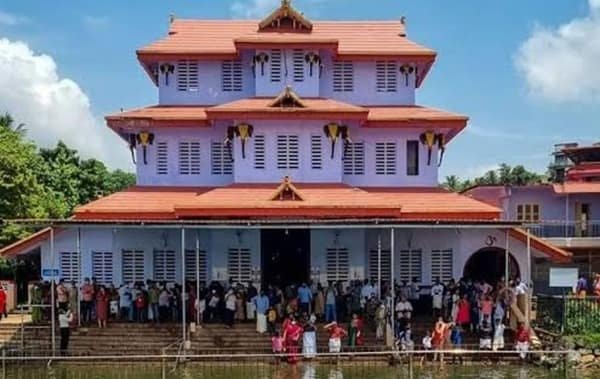
Parassinikadavu Temple Timings, Entry Fees and Rituals
Unlike temples with a single fixed sanctum-viewing schedule, Parassinikadavu’s central experience depends on Vellattam and Thiruvappana Theyyam performances. Early morning is traditionally important for Thiruvappana, while other rituals and offerings occur at different times. The temple’s official website publishes precise meal-service hours but does not display a complete guaranteed daily Theyyam timetable. Check the day’s performance programme with the administration before making a long journey solely for a particular ritual.
| Activity | Published or practical schedule |
| Early-morning Thiruvappana and Vellattam | Usually before or around the morning worship period; confirm daily |
| Other Theyyam and offering ceremonies | Vary with temple calendar and booked offerings |
| Prasadam service | 7:30 AM–8:00 PM |
| Free lunch | 12:30 PM–2:30 PM |
| Free dinner | 8:30 PM–9:30 PM |
| General entry | Traditionally free; offerings are separate |
Offerings and the Way Devotees Worship
Thiruvappana and Vellattam embody two complementary expressions of Muthappan, commonly linked with Vishnu and Shiva respectively. Devotees may also enquire about Payamkutti, Ottum Vellattam, Karimkalasam and the child’s Choroon ritual. The traditional interaction with a Theyyam performer is a revered act of devotion, not a staged tourist show. Wait patiently, respect local instructions and avoid interrupting a performance to take photographs.
The temple’s customary food offerings include preparations rarely seen at other Hindu shrines. Do not assume that ordinary rules concerning vegetarian offerings apply here, and do not bring food to the ritual space without permission. Dress modestly and ask before using a camera. The shrine’s official contact is 0497-2780722; the administration can confirm the current performance programme and arrangements for special offerings.
Parassinikadavu Temple History and Religious Significance
The Foundling Child and the Ayyankara Family
The temple’s origin is preserved in a long North Malabar legend rather than an exact founding inscription. According to the narrative recorded by the Madappura, Padikutty Antharjanam, the childless wife of Ayyankara Devan, heard an infant crying after bathing near Thiruvankadavu. She brought the child home, and the couple raised him with affection. As he grew older, he resisted conventional expectations: he hunted in the forests, shared food with marginalised people and refused to recognise social boundaries that separated communities.
His parents were troubled by these unconventional habits. When challenged, the child revealed a divine form, convincing them that he was no ordinary son. The account celebrates Muthappan as an accessible protector of common people rather than a distant royal deity. It also helps explain why hospitality and social inclusion are essential to worship at Parassinikadavu today.
Kunnathoor Padi and the Journey to Parassini
The legend continues with Muthappan leaving his home and travelling through the forests. At Kunnathoor Padi, he encountered a toddy tapper named Chandan. When Chandan’s wife pleaded for help, Muthappan blessed the family; offerings of boiled gram, coconut, fish and toddy became part of the lasting tradition. The deity eventually fired an arrow from Kunnathoor, and it landed at Parassini, identifying the riverside location as his abode. The tale expresses the spread of devotion through Malabar’s rural communities, although it should not be presented as a dated historical event.
Theyyam, Community Memory and Architecture
Muthappan worship has grown within Theyyam, North Kerala’s elaborate combination of ritual dance, sacred costume, oral song and community memory. The performer is approached as the immediate manifestation of the deity. This gives the temple a different religious atmosphere from shrines where priests alone mediate worship through an image. The two principal manifestations, Valiya Muthappan (Thiruvappana) and Cheriya Muthappan (Vellattam), are honoured together.
Parassini Madappura’s simple riverside building is also distinct from Kerala’s more familiar ornate temple complexes. The shrine’s prominence rests on living performance, inherited ritual duties and the inclusive hospitality maintained by its devotees. The sacred regard shown to dogs reflects Muthappan’s identity as a hunter; worshippers should never disturb or mistreat the animals in the grounds.
How To Reach Parassinikadavu Temple
| Transport | Nearest connection | Approximate distance |
| Air | Kannur International Airport | 35–45 km by road |
| Rail | Kannur Railway Station | 18–22 km |
| Rail | Kannapuram or Valapattanam area | Check onward local transport |
| Road | Taliparamba | About 10 km |
| Road | Kannur city | About 20 km |
| Road | Kozhikode | Roughly 110–125 km |
By Air and Train
Kannur International Airport is the nearest major airport. Pre-booked cabs are convenient for a direct transfer. Kannur Railway Station is the simplest long-distance railway option; continue by taxi or local bus. Confirm the last return bus if you intend to stay for an evening ritual.
By Road
Parassinikadavu lies inland from the Kannur–Taliparamba corridor. Buses, taxis and private cars serve the area. The final riverside approach may be busy during festivals; elderly pilgrims should be dropped near the permitted entrance rather than walking unnecessarily from distant parking.
Best Time To Visit Parassinikadavu Temple
| Season | Months | What to expect |
| Winter | November–February | Pleasant weather and important ritual activity |
| Summer | March–May | Hot and humid afternoons; arrive early |
| Southwest monsoon | June–September | Heavy rain and potentially slippery riverside approaches |
| Post-monsoon | October | Greener surroundings with lingering showers |
Puthari Thiruvappana, the annual harvest celebration, begins around the sixteenth day of the Malayalam month of Vrischikam, normally in early December. Harvested rice, communal hospitality and special Theyyam ceremonies form the centre of the festival. Ritual dates follow the Malayalam calendar; verify the annual announcement instead of treating a particular Gregorian date as permanent.
Nearby Attractions
Vismaya Water Theme Park is a family attraction in the Parassinikadavu area; plan it separately from religious activities. Taliparamba Rajarajeshwara Temple, a historic Shiva shrine, provides an interesting contrast in ritual traditions. St Angelo Fort in Kannur preserves the area’s maritime and colonial history, while Muzhappilangad Drive-in Beach is a popular coastal stop subject to beach conditions and driving restrictions. Together they make a comfortable one- or two-day Kannur itinerary.
Accommodation and Essential Travel Tips
The Madappura says it provides free basic sleeping-hall accommodation for devotees, with separate facilities for men and women. Availability and suitability are not guaranteed, and families wanting privacy may prefer guesthouses or hotels in Kannur or Taliparamba. Confirm meal times, parking and any special offerings directly with the temple. Heavy monsoon rain can change local conditions quickly; protect footwear and clothing and do not enter the river where swimming or bathing is unsafe.
Frequently Asked Questions About Parassinikadavu Temple
Q1. What makes Muthappan worship different from conventional temple puja?
The principal devotional encounter occurs through a Theyyam performer believed to embody Muthappan. Personal appeals, blessing rituals, dance, music and oral tradition are central. This is why checking the actual performance schedule matters more than relying only on general gate-opening hours.
Q2. Can people of different religions visit the temple?
Yes. Kerala Tourism and the temple’s own account describe Parassinikadavu as open to people regardless of caste or religion. Visitors are expected to respect the worshippers and follow the same practical instructions as other guests.
Q3. Why are dogs treated as sacred here?
Dogs are traditionally regarded as companions of Muthappan, whose iconography recalls a hunter. Some festival customs involve feeding a dog before other distribution of prasadam. Visitors should allow the animals to move undisturbed.
Q4. Why are fish and toddy associated with the offerings?
Their use is rooted in the origin legend and the customs of North Malabar’s folk communities. They signal that Muthappan’s worship does not follow every convention of a Sanskritic vegetarian temple; individual ritual offerings remain subject to temple rules.
Q5. Can devotees speak directly to the Theyyam performer?
Personal conversation and blessings are characteristic of Muthappan worship, but access depends on the ceremony, crowd and instructions from temple attendants. Do not interrupt the dancer or insist on a private audience.
Q6. Is a free stay comparable to a reserved hotel room?
No. The temple describes basic communal accommodation, not an assured private room. Travellers requiring an attached bathroom, accessibility features or guaranteed family accommodation should make separate hotel arrangements.