 By Meghna Sharma
At the foothills of the Kodachadri range in coastal Karnataka, Kollur Mookambika Temple welcomes devotees seeking the blessings of Adi Shakti, the Divine Mother. The temple stands near the Sowparnika River in Udupi district, surrounded by the forests and misty hills of the Western Ghats. It is an important pilgrimage destination not only for Karnataka residents but also for families from Kerala, Tamil Nadu and beyond.
Goddess Mookambika is worshipped as a unified manifestation of Mahakali, Mahalakshmi and Mahasaraswati. The shrine is especially associated with the beginning of a child’s education, and many families visit for *Vidyarambham* or *Aksharabhyasa*, the ceremonial introduction to letters. Its ancient religious tradition, striking stone sanctum and daily worship create an atmosphere that feels distinct from the busy coastal towns nearby.
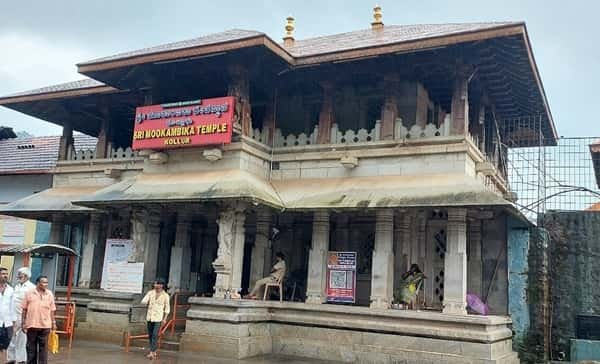
Here are the temple timings, worship arrangements, history, transport options and the best months to plan a pilgrimage to Kollur.
Kollur Mookambika Temple Timings, Entry Fees and Pujas
The temple opens at 5:00 AM and normally closes at 9:00 PM, with a definite break in the early afternoon. General darshan is available in several windows around the day’s elaborate rituals; a visitor should not interpret the full opening span as uninterrupted viewing time.
Kollur Mookambika Temple Darshan Timings
| Activity | Temple schedule |
| Temple opens | 5:00 AM |
| Early darshan | 5:00 AM – 7:15 AM |
| Main morning darshan | 7:45 AM – 11:30 AM |
| Noon darshan windows | 12:00–12:20 PM; 12:45–1:30 PM |
| Midday closure | 1:30 PM – 3:00 PM |
| Afternoon darshan | 3:00 PM – 6:30 PM |
| Evening darshan and rituals | 6:30 PM – 9:00 PM, with interruptions |
| Closing Kashaya Mangalarathi | Around 9:00 PM |
The temple’s published routine specifies these windows. On ordinary afternoons, 3:00–5:00 PM is for darshan only, with no sevas performed. Navratri and other festival days can follow a different schedule.
Main Pujas and Seva Arrangements
Abhishekam to the sacred Linga begins at approximately 5:15 AM. Ganahoma follows around 5:30 AM, morning worship starts at 6:30 AM, and Panchamritha Abhisheka is listed at 7:30 AM. The midday Maha Mangalarathi is around 12:30 PM. Pradosha worship begins at about 6:30 PM, followed by evening offerings, Bali Utsava and the closing Kashaya Mangalarathi.
Devotees can enquire about Kumkumarchana, Chandika Homa, Sahasranamarchana and Vidyarambham at authorised counters. Seva availability and ticket costs differ by ritual. General darshan does not require a paid ticket. Ask for an official receipt instead of paying touts.
Dress Code and Temple Rules
Kollur follows traditional temple customs. Published instructions prohibit men from entering wearing shirts, vests, shorts and certain other garments in designated temple areas; a dhoti or mundu is the safest choice. Women should wear a saree or modest traditional salwar outfit with a dupatta. Visitors should remove footwear before entering.
Photography inside the temple premises is prohibited under the published rules. Mobile phones should remain put away, and visitors should follow any current restrictions on devices and bags. Families attending special sevas should check dress requirements when booking.
Kollur Mookambika Temple History and Religious Significance
The Legend of Mookasura
According to the *Skanda Purana* tradition, the Goddess appeared to defeat the demon Mookasura, whose actions had disturbed sages engaged in spiritual practice. After the victory, the deity came to be revered as Mookambika. The story represents the triumph of wisdom and divine power over ignorance and oppression.
The shrine’s sacred identity also centres on an Udbhava Linga, regarded as a naturally manifested symbol of Shiva and Shakti. Tradition describes a golden line dividing the Linga into two aspects, reflecting their inseparable power. Goddess Mookambika is thus worshipped both through the Linga and through the decorated idol in the sanctum.
Connection with Adi Shankaracharya
A widely cherished tradition associates Kollur with Adi Shankaracharya. He is believed to have meditated on the nearby Kodachadri hills and established the worship of the Goddess in her present form. The shrine also has a longstanding connection with the study of sacred knowledge and music, helping explain its popularity among parents bringing children for their first writing ceremony.
These are religious traditions rather than independently established dates for the temple’s founding. Written records do show that the temple has received royal support over many centuries.
Architecture and Royal Patronage
Stone walls and pillared spaces combine with copper-clad roofs and a gold-plated crest, creating a temple design suited to the coastal climate. The complex includes the inner sanctum, subsidiary shrines and spaces used for festival observances.
A temple-history record refers to an inscription dated 1481 CE and to later support from the Keladi Nayakas, including rulers Sankanna Nayaka and Shivappa Nayaka. Their patronage contributed to repair, ritual provision and the continued importance of this pilgrimage centre.
How To Reach Kollur Mookambika Temple
Kollur is a small inland town near the Karnataka coast. Road travel is required for the final leg, whether arriving by flight or train. The closest practical railway options are on the Konkan Railway.
| Transport | Access point or route | Approximate distance |
| By air | Mangaluru International Airport | 130–140 km |
| By train | Mookambika Road Byndoor Station | 28–32 km |
| By train | Kundapura Railway Station | 38–40 km |
| By train | Udupi Railway Station | 75–80 km |
| By road | Udupi to Kollur | Around 75–80 km |
| By road | Kundapura to Kollur | Around 40 km |
| By road | Bengaluru to Kollur | Around 440–460 km |
By Air
Mangaluru International Airport is the main air gateway. Travellers can hire a cab or reach Udupi and Kundapura before changing to local road transport. Allow several hours for the journey because the route passes through coastal traffic and winding hill approaches.
By Train
Mookambika Road Byndoor is a convenient option for passengers using suitable Konkan Railway services. Kundapura and Udupi may offer more choices depending on the train. Taxis and local buses connect the railway towns to Kollur; check late-evening connections before arrival.
By Road
KSRTC and private buses operate between Kollur and regional destinations such as Udupi, Kundapura and Mangaluru. Overnight options from Bengaluru may also be available. Road trippers should drive cautiously during heavy rains because sections near Kodachadri can be slippery, foggy and affected by temporary restrictions.
Best Time To Visit Kollur Mookambika Temple
October to February is generally the most comfortable period, with cooler weather for darshan and sightseeing. The rainy Western Ghats look beautiful in monsoon, but a pilgrimage is easier when roads and walking paths are dry.
| Season | Months | Travel conditions |
| Winter | October–February | Pleasant; recommended for most families |
| Summer | March–May | Warm and humid at lower elevations |
| Monsoon | June–September | Heavy rain; green scenery but difficult drives |
| Festival periods | Navratri and Vijayadashami | Special worship and long queues |
Major Festivals
Sharad Navratri, generally held in September or October, is the best-known festival season. The temple hosts special alankaras, music, homas and daily celebrations. Vijayadashami is especially important for Vidyarambham, when young children are initiated into learning. Families should enquire well in advance about ceremonies and expect substantial crowds. Rathotsava and other annual religious observances also attract devotees.
Nearby Attractions in Kollur
Sowparnika River: The sacred river passes near the temple and is part of Kollur’s spiritual landscape. Observe local warnings; river conditions change sharply after rainfall.
Kodachadri Hill: A scenic and spiritually significant Western Ghats peak, popular for trekking and jeep excursions. Access is weather-dependent, and this is not an easy excursion for visitors with mobility difficulties.
Mookambika Wildlife Sanctuary: The surrounding protected forest is home to rich biodiversity. Sightseeing requires respect for forest rules and designated routes.
Maravanthe Beach: A worthwhile coastal stop on a longer itinerary, especially for pilgrims travelling onward through Kundapura and Byndoor.
Accommodation and Practical Travel Tips
Kollur has lodges, guesthouses, pilgrim accommodation and a modest selection of hotels. Festival weekends fill quickly. Reserve accommodation in advance through reputable channels, keep cash for small local purchases and carry a light rain jacket outside winter. For an unhurried visit, stay overnight and attend early darshan the following morning. Confirm seva procedures through authorised temple counters or the Karnataka temple services portal.
Frequently Asked Questions About Kollur Mookambika Temple
Q1. What are Kollur Mookambika Temple opening hours?
The temple ordinarily opens at 5:00 AM and closes around 9:00 PM. It closes between 1:30 PM and 3:00 PM and has shorter pauses for rituals.
Q2. Is there an entry fee for normal darshan?
General darshan is free. Optional special sevas require paid tickets, with the charge depending on the ritual.
Q3. What is the dress code at Kollur Temple?
Modest traditional dress is expected. Men should carry a dhoti or mundu and be ready to remove upper garments in designated areas. Women can wear a saree or suitable salwar outfit.
Q4. Which railway station is closest to Mookambika Temple?
Mookambika Road Byndoor is one of the nearest practical stations, roughly 28–32 km away. Kundapura is another useful option.
Q5. Why is Vidyarambham important at Kollur?
Goddess Mookambika is associated with Saraswati and learning. Families visit for a child’s ceremonial introduction to writing, particularly during Vijayadashami.
Q6. Can I visit Kodachadri on the same trip?
Yes, with enough time and suitable transport. The hill trip requires separate planning and may be affected by rain or forest access restrictions.