 By Saurav Mehra
 No, Nepal is not part of India. Nepal is an independent sovereign country located in South Asia. It has its own government, constitution, military, flag, currency, and international identity.
However, because Nepal and India share deep cultural, religious, historical, and geographical ties, some people become confused about their relationship. The two countries are very close neighbors and maintain one of the most open borders in the world, but Nepal has always remained a separate nation.
Where Is Nepal Located?
Nepal is a landlocked country situated between two giant Asian nations:
- India in the south, east, and west
- China in the north
The country lies in the Himalayas and is home to Mount Everest, the highest mountain in the world.
The capital city of Nepal is Kathmandu.
Nepal Is an Independent Country
Nepal has all the features of an independent country. It has:
- Its own elected government
- A separate constitution
- Its own army called the Nepal Army
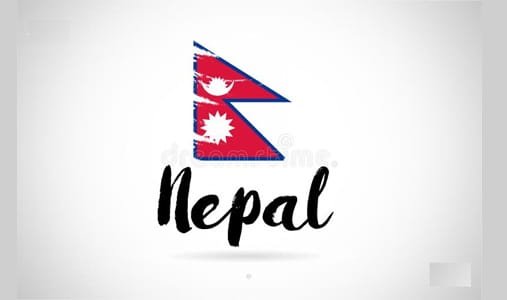
- A unique national flag
- Its own currency, the Nepalese Rupee
- Membership in the United Nations
Nepal also conducts its own foreign policy and maintains diplomatic relations with countries around the world.
This clearly shows that Nepal is not governed by India and is not part of Indian territory.
Historical Relationship Between Nepal and India
Nepal and India have shared close ties for centuries. The people of both countries have interacted through trade, religion, pilgrimage, and migration for a very long time.
Unlike many South Asian regions, Nepal was never fully colonized by the British Empire. During British rule in the Indian subcontinent, Nepal remained an independent kingdom, although it signed treaties and maintained political relations with British India.
After India gained independence in 1947, Nepal and India continued friendly relations as neighboring countries.
Why Do Some People Think Nepal Is Part of India?
There are several reasons why this confusion exists.
Cultural Similarities
Nepal and India share many cultural traditions. Hinduism and Buddhism are widely practiced in both countries. Festivals such as Diwali, Holi, and Dashain are celebrated across the region.
Many people in Nepal speak Nepali and Hindi, and there are strong similarities in food, clothing, music, and traditions.
Open Border
India and Nepal have an open-border agreement. Citizens of both countries can cross the border without a passport or visa in many cases.
People often travel freely for:
- Work
- Education
- Tourism
- Business
- Religious pilgrimages
This level of openness is rare between two separate countries and sometimes leads outsiders to think Nepal is connected politically to India.
Geographic and Economic Dependence
Nepal relies heavily on India for trade and transportation because it is landlocked. Many goods entering Nepal pass through Indian ports and roads.
India is also one of Nepal’s biggest trading partners.
But economic cooperation does not mean political control. Many independent countries depend on neighboring nations for trade access.
Differences Between Nepal and India
Even though the two nations are close, Nepal has its own distinct identity.
Language
The official language of Nepal is Nepali, while India has Hindi and English as major official languages along with many regional languages.
Flag
Nepal has the world’s only non-rectangular national flag, making it unique globally.
Political System
Nepal is a federal democratic republic. It abolished its monarchy in 2008.
India is also a democratic republic, but both countries have separate governments and political systems.
Currency
Nepal uses the Nepalese Rupee, while India uses the Indian Rupee.
India-Nepal Relations Today
India and Nepal continue to maintain strong relations in areas such as:
- Trade
- Tourism
- Defense cooperation
- Energy projects
- Education
- Religious tourism
Places like Pashupatinath Temple and Janakpur attract many Indian visitors every year.
At the same time, Nepal maintains its own independent relations with China, the United States, and many other nations.
Final Answer
So, Nepal is not part of India. It is a fully independent country with its own government, identity, and sovereignty. The confusion mainly comes from the close cultural ties, open borders, and strong historical connections between the two neighboring nations.
 Santosh Kumar