 By Saurav Mehra
 Yes, Greenland is officially part of the Denmark through the Kingdom of Denmark. However, Greenland is not simply a normal region of Denmark. It is a highly autonomous territory with its own government, parliament, and control over many internal affairs.
Because Greenland has a unique political status and a strong independence movement, many people become confused about whether it fully belongs to Denmark or functions like a separate country. The reality is more complex than a simple yes or no answer.
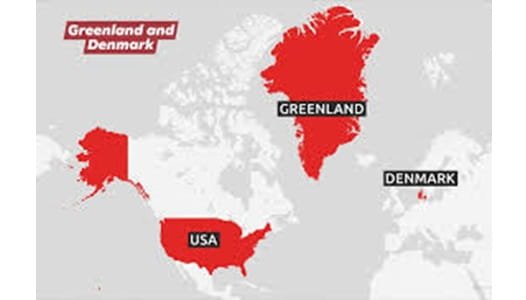
Where Is Greenland Located?
Greenland is the world’s largest island and is located in the Arctic region between the Arctic and Atlantic Oceans.
Geographically, Greenland is part of North America, lying close to Canada. However, politically and historically, it is connected to Europe through Denmark.
The capital city of Greenland is Nuuk.
Most of Greenland is covered by ice, and the population is relatively small, with around 57,000 residents.
Greenland’s Political Status
Greenland is an autonomous territory within the Kingdom of Denmark. This means:
- Greenland governs many of its own domestic affairs
- Denmark handles defense, foreign policy, and constitutional matters
- Greenland has its own parliament and prime minister
- Greenlanders are Danish citizens
Greenland officially gained home rule in 1979, and its autonomy expanded further under the 2009 Self-Government Act.
Today, Greenland manages areas such as:
- Education
- Healthcare
- Fisheries
- Natural resources
- Internal administration
However, Denmark still controls:
- Military and defense
- Foreign affairs
- National constitutional issues
Historical Background
Early Norse and Danish Connections
Greenland was first settled by Indigenous Arctic peoples thousands of years ago. Later, Norse settlers from Iceland and Scandinavia arrived around the 10th century under explorers such as Erik the Red.
Over time, Greenland became linked to the Danish crown.
Colonial Period
Denmark formally colonized Greenland during the 18th century and ruled it as a colony for many years.
During this time, Denmark controlled trade, administration, and external relations on the island.
Greenland and Independence Movements
Although Greenland is officially part of Denmark today, many Greenlanders support eventual independence.
The independence debate has grown stronger in recent years because of:
- Cultural identity
- Control over natural resources
- Arctic geopolitics
- Economic self-determination
Several Greenlandic political parties openly support independence from Denmark, although opinions differ on how quickly it should happen.
At the same time, Greenland still receives significant financial support from Denmark each year, which makes full independence economically challenging.
Is Greenland Part of the European Union?
Interestingly, Greenland is not part of the European Union even though Denmark is an EU member.
Greenland left the European Economic Community in 1985 mainly because of disagreements over fishing rights. However, it still maintains special agreements with the EU.
Greenland’s Strategic Importance
Greenland has become increasingly important globally because of its location and natural resources.
Arctic Importance
Greenland sits in a strategically important Arctic region as climate change opens new shipping routes and resource opportunities.
US Military Presence
The United States has maintained military interests in Greenland for decades because of Arctic security concerns.
The US operates the Pituffik Space Base (formerly Thule Air Base) in Greenland under agreements with Denmark.
Natural Resources
Greenland is believed to contain valuable deposits of:
- Rare earth minerals
- Oil and gas
- Uranium
- Other Arctic resources
These resources have increased international interest in the island.
Donald Trump and Greenland Controversy
Greenland received worldwide attention when former US President Donald Trump expressed interest in the United States acquiring Greenland.
Both Denmark and Greenland strongly rejected the idea, stating that Greenland was “not for sale.”
The incident highlighted Greenland’s growing geopolitical importance.
Culture and Identity
Most Greenlanders are Inuit and have their own language and traditions.
Greenlandic is the official language, and many people strongly identify with Greenlandic culture rather than Danish culture.
This cultural identity is one reason independence discussions remain active.
Final Answer
So, yes, Greenland is officially part of the Kingdom of Denmark. However, it is a highly autonomous territory with its own government and significant self-rule. Denmark still controls defense and foreign affairs, but Greenland manages many internal matters independently. At the same time, a strong movement for future independence continues to shape Greenland’s politics and identity.
 Santosh Kumar