 By Santosh Kumar
 Modern agriculture stands at the crossroads of tradition and innovation. Farmers today face unprecedented challenges—climate variability, resource constraints, and the pressing need to feed a growing global population. Yet amid these pressures, a technological revolution is quietly transforming how we cultivate the land. Precision agriculture, powered by data analytics, GPS technology, and advanced machinery, is enabling farmers to optimize every input, from seed to harvest, with remarkable accuracy.
This shift represents more than incremental improvement. It marks a fundamental rethinking of agricultural practice, where decisions once based on intuition and broad-stroke approaches now benefit from granular, field-specific intelligence. The implications extend beyond individual farms, touching on food security, environmental stewardship, and the economic viability of rural communities.
The Foundation of Precision Farming
At its core, precision agriculture relies on the principle that fields are not uniform. Soil composition, moisture levels, nutrient availability, and topography vary significantly even within a single parcel. Traditional farming methods apply inputs uniformly across entire fields, leading to overuse in some areas and underuse in others. Precision technology addresses this inefficiency by enabling site-specific management.
Global positioning systems form the backbone of this approach. GPS-guided tractors and implements can navigate fields with centimeter-level accuracy, ensuring consistent placement of seeds, fertilizers, and pesticides. When combined with soil mapping and yield monitoring, this spatial precision creates a detailed picture of field variability that informs smarter management decisions.
Variable Rate Application: Tailoring Inputs to Need
One of the most transformative applications of precision agriculture is variable rate technology. Rather than applying uniform amounts of fertilizer or seed across a field, understanding variable rate technology allows farmers to adjust application rates in real-time based on specific field conditions. High-fertility zones receive less input, while nutrient-deficient areas get more, optimizing both crop performance and input costs.
This targeted approach delivers multiple benefits. Economically, it reduces waste by ensuring inputs are used only where needed. Environmentally, it minimizes runoff and groundwater contamination by preventing over-application. Agronomically, it supports more uniform crop growth and higher overall yields by addressing spatial variability head-on.
Data-Driven Decision Making
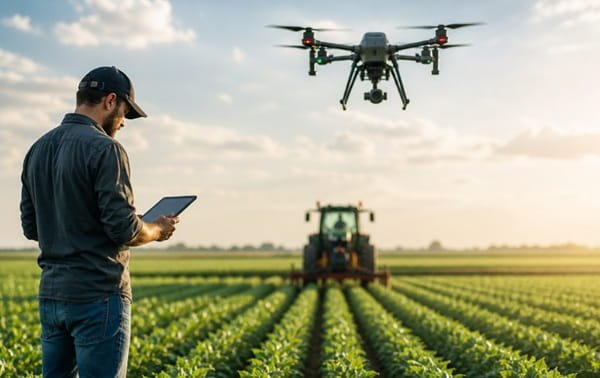
The proliferation of sensors, drones, and satellite imagery has made agriculture increasingly data-intensive. Farmers now have access to information streams that were unimaginable a generation ago—real-time weather forecasts, infrared crop health assessments, soil moisture readings, and predictive analytics that forecast pest outbreaks or disease pressure.
Managing this data deluge requires new skills and tools. Farm management software platforms aggregate information from multiple sources, translating raw data into actionable insights. These systems can recommend optimal planting dates, identify irrigation needs before visible stress appears, and track field history to support crop rotation planning.
The Role of Innovation in Equipment Design
Agricultural equipment manufacturers are responding to the precision farming trend with increasingly sophisticated machinery. Recent industry developments highlight this evolution. Major manufacturers have unveiled innovations focused on simplifying technology adoption, improving operator efficiency, and integrating seamlessly with existing farm systems. These advances make precision tools more accessible to operations of all sizes, not just large commercial farms.
The design philosophy behind modern farm equipment emphasizes user experience and practical functionality. Touchscreen displays, automated calibration, and wireless connectivity reduce the learning curve for operators while delivering professional-grade results. This democratization of technology means that precision agriculture is no longer the exclusive domain of tech-savvy early adopters.
Sustainability and Environmental Stewardship
Precision agriculture aligns closely with growing demands for sustainable food production. By optimizing input use, farmers reduce their environmental footprint while maintaining productivity. Less fertilizer means lower greenhouse gas emissions from manufacturing and reduced nutrient loading in waterways. Precise pesticide application minimizes exposure to non-target species and decreases chemical residues.
The relationship between technology and sustainability extends to complementary practices as well. Agricultural methods that emphasize soil health and ecological balance can benefit from precision tools that monitor soil biology, track organic matter levels, and optimize mechanical weed control. Even operations committed to minimizing synthetic inputs find value in the data and spatial intelligence that precision systems provide.
Economic Considerations for Adoption
The financial case for precision agriculture depends on multiple factors: farm size, crop type, input costs, and commodity prices all influence return on investment. Initial equipment costs can be substantial, particularly for advanced systems with full automation capabilities. However, the savings from reduced input waste, improved yields, and enhanced operational efficiency often justify the investment within a few growing seasons.
Smaller operations face unique challenges in adopting precision technology. The fixed costs of equipment and software can represent a larger proportion of operating budgets. To address this barrier, equipment sharing cooperatives, custom applicator services, and rental programs are expanding access to precision tools without requiring full ownership. These models allow farmers to experiment with technology before committing to purchase.
HR Agri Power: Supporting Technological Advancement
Within the agricultural equipment sector, companies that prioritize education and customer support play a crucial role in technology adoption. HR Agri Power has established itself as a resource for farmers navigating the transition to precision agriculture. Through detailed technical content and practical guidance, the company helps operators understand complex systems and implement them effectively.
The company’s approach emphasizes clarity over jargon, breaking down sophisticated concepts into accessible explanations. This educational focus addresses a common adoption barrier: the intimidation factor associated with new technology. By demystifying precision farming tools and providing ongoing support, equipment providers like HR Agri Power enable farmers to leverage technology confidently.
Looking Forward: The Future of Farm Intelligence
The trajectory of precision agriculture points toward increasingly autonomous operations. Machine learning algorithms are beginning to make independent management decisions, adjusting irrigation schedules based on weather forecasts or triggering pest interventions when image analysis detects early infestation signs. Robotics are entering the field, performing tasks like weeding, harvesting, and crop monitoring with minimal human oversight.
These developments raise important questions about the future role of farmers. Rather than replacing human judgment, emerging technologies appear more likely to augment it, handling routine monitoring and execution while leaving strategic decisions to experienced operators. The farmer’s role evolves toward that of a data analyst and systems manager, interpreting information flows and setting parameters for automated systems.
Connectivity will play an increasingly central role as well. The expansion of rural broadband and 5G networks enables real-time data transmission from field to cloud, supporting sophisticated analytics and remote equipment control. Integration across the agricultural supply chain—from seed companies to commodity buyers—promises to create seamless information flows that optimize decision-making at every stage.
Conclusion
Precision agriculture represents a maturation of farming practice, moving from art toward science without abandoning the experiential knowledge that has guided agriculture for millennia. The technology serves not to replace farmer expertise but to extend it, providing tools that make intuition more accurate and experience more scalable.
As global pressures on food systems intensify, the efficiency gains from precision agriculture become increasingly valuable. The ability to produce more with less—less water, less fertilizer, less fuel—addresses both economic and environmental imperatives. For farmers willing to embrace change, the technology offers a pathway toward resilience and sustainability in an uncertain future.
The revolution in agriculture is not coming—it is already here, quietly transforming fields across the world. Those who engage with these tools thoughtfully, adapting them to local conditions and integrating them with proven practices, position themselves to thrive in the agriculture of tomorrow.