 By Santosh Kumar
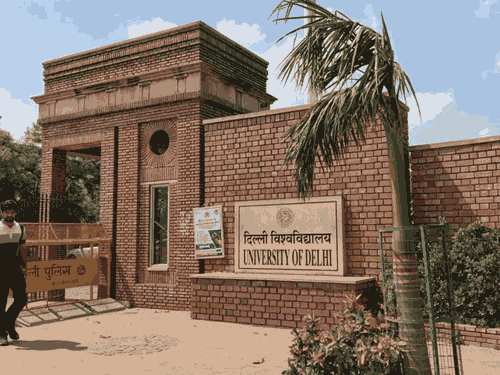
 University of Delhi, universally known as Delhi University or simply DU, is one of the most prestigious and sought-after universities in India. With its iconic North Campus, vibrant South Campus, and an enormous network of affiliated colleges spread across the capital, millions of students aspire to study under its banner every year. Many students, parents, and job seekers often ask: is Delhi University a government or private institution? The answer is unambiguous — Delhi University is a central government university, established by an Act of the Parliament of India and fully funded by the Government of India through the University Grants Commission.
Understanding Delhi University’s status is especially important for students evaluating fee structures and reservation benefits, faculty candidates assessing career opportunities, and students comparing the recognition and prestige of a Delhi University degree.
How Delhi University Was Established
Delhi University was established on 1 May 1922 through the University of Delhi Act passed by the Imperial Legislative Council during the British era. It began with just three colleges — St. Stephen’s College, Hindu College, and Ramjas College — and a few hundred students. From these modest beginnings it has grown into one of the largest and most diverse universities in the world.
After India’s independence, Delhi University was recognised as a central university — meaning it is funded and governed by the central government rather than any state government. The University Grants Commission Act of 1956 further consolidated this framework, placing Delhi University firmly under the UGC’s oversight and central government funding structure.
Delhi University was established to focus on:
- Liberal arts, sciences, and humanities education
- Professional and technical postgraduate programs
- Research and doctoral studies across disciplines
- Affiliating and academically governing colleges across Delhi
- Setting national benchmarks for undergraduate curriculum design
Today Delhi University has over 90 affiliated colleges, 86 academic departments, and nearly four lakh students enrolled across undergraduate, postgraduate, and research programs — making it one of the largest universities in Asia.
Why People Get Confused About Delhi University
Confusion about Delhi University’s status arises primarily because most of its affiliated colleges have distinct individual identities — some are minority institutions, some are government-funded Delhi government colleges, and some are privately managed aided colleges. This diversity of college types under one university umbrella leads many students to question whether the university itself is government or private.
Additionally, because several prominent DU colleges like St. Stephen’s, Jesus and Mary, and St. Xavier’s have Christian minority management, students sometimes assume the university has private or religious ownership.
However, Delhi University itself is fundamentally different from private deemed universities. It is not the same as:
- Private deemed universities like Amity University or Sharda University
- State government universities like Delhi’s own Guru Gobind Singh Indraprastha University
- Privately managed minority institutions affiliated to it
The critical distinction is that Delhi University itself is a central government university, funded by the Government of India through UGC grants, with its Vice Chancellor appointed by the Visitor — who is the President of India.
Is Delhi University a Government Organisation?
Yes, Delhi University is fully a central government institution. The President of India serves as the Visitor of the university — the highest constitutional authority overseeing its functioning. The Vice Chancellor is appointed by the Visitor on the recommendation of a search committee, firmly establishing its governmental character and national importance.
Delhi University functions as:
- A central university under the University Grants Commission
- A statutory institution established by an Act of the Central Legislature
- A government-funded university receiving grants from the Ministry of Education
- One of India’s premier centrally funded institutions of higher education
An Important Distinction — DU vs Its Affiliated Colleges
The most critical point every student must understand is the significant difference between Delhi University as an institution and its affiliated colleges. Delhi University itself is a central government institution, but its affiliated colleges vary widely in ownership and management.
Delhi University’s affiliated colleges fall into three broad categories. First, Delhi government colleges such as Shaheed Bhagat Singh College and Deen Dayal Upadhyaya College are funded and managed by the Government of NCT of Delhi, offering seats at very low fees with full reservation benefits. Second, centrally funded colleges such as Ramjas College and Hindu College receive grants from the central government and the Delhi government. Third, privately managed aided colleges such as St. Stephen’s College and Jesus and Mary College are managed by private or religious bodies but receive government grants for faculty salaries.
Delhi University Structure and Identity
| Feature | Delhi University |
| Full Name | University of Delhi |
| Type | Central Government University |
| Established | 1 May 1922 |
| Visitor | President of India |
| Funding Body | UGC, Ministry of Education |
| Affiliated Colleges | 90+ |
| Accreditation | NAAC A++ Grade |
| Admission Process | CUET (Common University Entrance Test) |
| Direct Government University | Yes |
Conclusion
Delhi University is a central government university, established by an Act of the Central Legislature and fully funded by the Government of India through the UGC. The President of India serves as its Visitor, firmly establishing its national and governmental character. While its affiliated colleges vary in ownership from government-funded to privately managed, the university itself is unambiguously a prestigious central government institution. For students, Delhi University offers the unmatched combination of a government university’s affordability and reservation benefits with the academic prestige of one of Asia’s finest universities. A Delhi University degree remains one of the most recognised and respected academic credentials across India and internationally, opening doors in academia, civil services, law, media, and virtually every professional field.