 By Meghna Sharma
 At Lepakshi, history is written across granite pillars and painted ceilings. The Veerabhadra Temple in Andhra Pradesh is among the finest surviving expressions of Vijayanagara art, yet it remains a place of worship rather than merely an archaeological monument. Its carved halls, remarkable mural paintings and celebrated hanging pillar draw pilgrims, architecture enthusiasts and weekend travellers throughout the year.
Located near Hindupur in Sri Sathya Sai district, the temple stands on a rocky rise called Kurmasaila, or Tortoise Hill. It honours Lord Veerabhadra, a powerful manifestation of Shiva, while neighbouring shrines reflect the region’s wider Shaiva and Vaishnava traditions. A short distance away, a giant Nandi carved from a single granite boulder is another of Lepakshi’s landmarks.
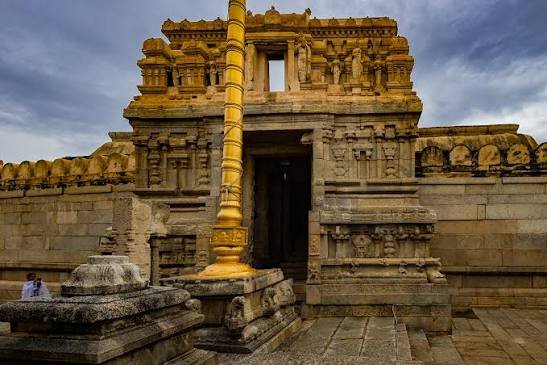
Although the temple’s present appearance is chiefly associated with the sixteenth-century Vijayanagara Empire, its history has older layers. Understanding those layers makes the visit far more rewarding. This guide explains the timings, documented history, legends, transport routes, ideal season and practical arrangements for exploring Lepakshi comfortably.
Lepakshi Temple Timings, Entry Fees and Pujas
The Ministry of Tourism lists the temple as open from 6:00 AM to 6:00 PM. These are overall visiting hours, not a promise of uninterrupted entry into every shrine. Worship, maintenance work and local instructions can affect access to particular inner areas.
Lepakshi Temple Darshan Timings
| Activity | Published timing / visitor guidance |
| Temple visiting hours | 6:00 AM – 6:00 PM |
| Morning visit | 6:00 AM – 11:00 AM is a comfortable choice |
| Afternoon visit | 3:00 PM – 6:00 PM avoids the strongest midday heat |
| General admission | Normally free; confirm notices at the entrance |
| Daily aarti and archana | Exact times should be confirmed with temple staff |
Pujas and Entry Arrangements
Regular worship is offered to Lord Veerabhadra, and devotees may enquire locally about archana, abhishekam and special observances. A current, reliable official list of individual seva timings and charges was not available, so visitors should not depend on amounts or slots advertised by unrelated booking websites. Use the authorised temple counter for any paid offering.
Dress Code, Photography and Visitor Rules
Wear modest clothing suitable for a working temple: full-length trousers or dhoti for men, and a saree, salwar kameez or similarly respectful dress for women. Remove footwear wherever required. Photography rules can vary between courtyards, painted halls and sanctums; check the signs before taking pictures. Do not touch the fragile murals, rub the carvings or try to test the hanging pillar.
Lepakshi Temple History and Religious Significance
An Older Sacred Site Before the Vijayanagara Expansion
Lepakshi did not begin as a completely new sixteenth-century settlement. The shrine occupies Kurmasaila, a low granite hill with a long history of religious use. Architectural features reflect earlier South Indian building traditions, including influences associated with the Cholas, Hoysalas and other Deccan dynasties. A late-fifteenth-century inscription associated with the Papanaseswara shrine shows that worship existed here before the best-known Vijayanagara expansion.
The historical complex developed around three main shrines: Veerabhadra, Papanaseswara, another aspect of Shiva, and Raghunatha, a form of Vishnu. This combination helps explain why Lepakshi is more than a single-sanctum temple. Its changing layout records different patrons, religious traditions and generations of craftsmen.
Virupanna, Veeranna and Emperor Achyuta Deva Raya
The most decisive building phase took place during the reign of the Vijayanagara emperor Achyuta Deva Raya (1529–1542). Local officials and patrons Virupanna and his brother Veeranna are closely associated with the creation and enlargement of the ornate complex. Their support helped transform an established sacred location into a major centre of architecture, ritual and painting.
Stone inscriptions in and around the temple record gifts and endowments that sustained worship. Such grants often supported lamps, food offerings, festivals and maintenance, demonstrating that a large temple depended on an organised economic network as well as artistic skill. The surviving evidence is more reliable for dating construction than later popular stories about individual events.
The Jatayu Legend and the Story of Virupanna
According to a much-loved Ramayana tradition, Jatayu fell at Lepakshi after trying to rescue Sita from Ravana. When Rama found the wounded bird, he is believed to have said “Le, Pakshi,” commonly understood as “Rise, bird.” Another explanation links the place name to the words for a painted or treated eye. These are traditional interpretations rather than settled linguistic history.
A second local legend concerns Virupanna. It claims that the unfinished Kalyana Mandapa resulted from accusations of misusing royal funds and that Virupanna punished himself by blinding his eyes. Visitors are sometimes shown reddish marks connected with this story. The dramatic narrative is part of Lepakshi folklore; it should not be confused with the inscriptional evidence for his patronage.
Murals, Sculptures and the Hanging Pillar
Lepakshi is especially valuable for its sixteenth-century ceiling paintings. Executed on prepared plaster, the murals illustrate episodes from the Ramayana and Mahabharata, the marriage of Shiva and Parvati, and other sacred narratives. Their expressive figures, flowing costumes and carefully arranged scenes provide rare insight into Vijayanagara courtly taste and religious art.
The Natya Mandapa and other pillared halls display musicians, dancers, deities and richly carved ornament. One column is called the hanging pillar because its base does not rest fully on the floor. Nearby stand the spectacular seven-hooded Nagalinga and a large Ganesha sculpture. The unfinished Kalyana Mandapa also reveals the ambition of the temple’s builders.
Outside the main complex, the monolithic Nandi faces towards the temple’s Nagalinga. The combination of sculptures, painting and living worship is internationally recognised: India placed the Veerabhadra Temple and Nandi on its UNESCO World Heritage Tentative List in 2022. This is a proposed nomination, not a completed World Heritage inscription.
How To Reach Lepakshi Temple
Lepakshi lies near the Andhra Pradesh–Karnataka border and is an easy heritage excursion from Bengaluru or Hindupur. Travellers arriving by public transport should plan the final local journey, as the nearest major rail access is outside the village.
| Mode | Access point / route | Approximate distance |
| Air | Kempegowda International Airport, Bengaluru | 100 km |
| Train | Hindupur Railway Station | 15 km |
| Road | Bengaluru city to Lepakshi | 123 km |
| Road | Puttaparthi to Lepakshi | 64 km |
| Local approach | Hindupur to Lepakshi | 15 km |
By Air
Kempegowda International Airport in Bengaluru is the most practical major airport. The district tourism authority places it about 100 km from Lepakshi by road. An advance taxi booking is sensible because this is an intercity transfer, not a short airport ride.
By Train
Hindupur is the nearest useful railway station, about 15 km away. Check train halts before booking and use a local taxi or auto-rickshaw for the remaining journey. Travellers arriving late should arrange onward transport in advance.
By Road
From Bengaluru, travellers typically head north towards the Andhra Pradesh border on NH 44 and continue along the signed local road to Lepakshi. A private car offers the most flexibility for the temple, Nandi and village attractions. Local buses also connect the Hindupur area, although their frequency should be checked before departure.
Best Time To Visit Lepakshi Temple
October to February is generally the most comfortable period for exploring the largely stone-built complex. The open courtyards become hot during summer afternoons, so starting close to opening time makes a noticeable difference.
| Season | Months | What to expect |
| Cooler months | October–February | Best overall conditions for walking and sightseeing |
| Summer | March–May | Strong afternoon heat; arrive early and carry water |
| Rainy season | June–September | Occasional rain and damp stone surfaces; take care on steps |
Important Festivals
Maha Shivaratri, generally observed in February or March, is a significant occasion for Shiva worship and attracts additional devotees. The local annual Brahmotsavam and regional Lepakshi cultural events may also feature religious ceremonies or performances. Their dates vary, so confirm the programme locally before planning travel around a specific procession.
Nearby Attractions in and Around Lepakshi
The first stop should be the monumental Nandi sculpture, a short distance from the main temple. Carved from one granite block and ornamented with stone jewellery, it helps visitors appreciate the scale of Vijayanagara craftsmanship. The village’s Jatayu-themed installations and Moksha Ghat offer additional local stops associated with the Ramayana tradition.
Hindupur, approximately 15 km away, is useful for transport, meals and accommodation. Those spending an extra day in the area can consider the historic Penukonda Fort, but should check its approach and the time needed for a separate excursion. Within the temple itself, allow unhurried time for the Nagalinga, painted ceilings, Kalyana Mandapa and subsidiary shrines rather than treating them as a quick photo stop.
Accommodation and Essential Travel Tips
Lepakshi works well as a half-day heritage visit or a relaxed day trip from Bengaluru. The district tourism website lists an APTDC Haritha Hotel in the area; Hindupur offers additional places to stay. Confirm current operation, room availability and facilities before travelling.
Carry water, a hat and footwear that can be removed easily. Stone floors and exposed areas can be uncomfortable in hot weather. Older visitors may need more time for uneven surfaces and steps. Do not rub the murals or push objects under the hanging pillar; careful preservation is essential to keeping this remarkable temple intact.
Frequently Asked Questions About Lepakshi Temple
Q1. What are the opening and closing timings of Lepakshi Temple?
Incredible India lists 6:00 AM to 6:00 PM. Individual sanctum access may pause for worship or local management requirements.
Q2. Is there an entry fee for Lepakshi Temple?
General visits are normally free. Any specific puja, guide or service charges should be confirmed at authorised counters rather than assumed from third-party listings.
Q3. Who built Lepakshi Temple?
The major sixteenth-century expansion is associated with Virupanna and Veeranna under Vijayanagara emperor Achyuta Deva Raya. The sacred site itself predates that period.
Q4. Why is Lepakshi Temple famous?
It is known for Vijayanagara ceiling murals, sculpted stone halls, the hanging pillar, the seven-hooded Nagalinga and the enormous monolithic Nandi nearby.
Q5. How far is Lepakshi Temple from Bengaluru and Hindupur?
The Sri Sathya Sai district website lists approximately 123 km from Bengaluru city and 15 km from Hindupur. Actual road distances depend on the starting point.
Q6. What is the best time to visit Lepakshi Temple?
October to February generally offers comfortable weather. Visit in the morning for better walking conditions, particularly when travelling with children or older relatives.