 By Santosh Kumar
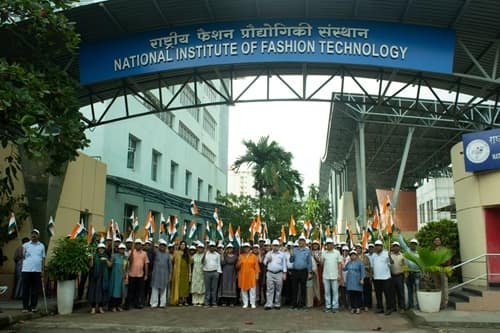
 National Institute of Fashion Technology, universally known as NIFT, is India’s premier institution for fashion design, technology, and management education. With its distinctive campuses spread across major cities in India and its graduates consistently leading the Indian and global fashion industry, many students, parents, and design aspirants often ask: is NIFT a government or private institution? The answer is unambiguous — NIFT is a government institution, established by and operating under the Ministry of Textiles, Government of India.
Understanding NIFT’s status is particularly important for students comparing admission processes and fee structures, design aspirants evaluating the prestige and recognition of a NIFT degree, and candidates exploring career opportunities within NIFT as faculty or administrative staff.
How NIFT Was Established
NIFT was established in 1986 in New Delhi as a collaborative initiative between the Government of India’s Ministry of Textiles and the Fashion Institute of Technology, New York. This international collaboration gave NIFT its foundational academic framework and global orientation, making it one of the earliest institutions in India to offer structured fashion education at a professional level.
For its first two decades, NIFT operated as a society registered under the Societies Registration Act. However, recognising its growing national importance and the need to give it a stronger statutory foundation, the Government of India enacted the National Institute of Fashion Technology Act in 2006, formally establishing NIFT as a statutory body under the Ministry of Textiles. This legislative recognition placed NIFT alongside other prestigious national institutes like the IITs and NITs in terms of its statutory character.
NIFT was established to focus on:
- Fashion design education at undergraduate and postgraduate levels
- Fashion technology and garment manufacturing studies
- Fashion communication and media
- Fashion management and retail business education
- Research and development in textiles and fashion
- Supporting and strengthening India’s textile and apparel industry
Today NIFT operates sixteen campuses across India — in cities including New Delhi, Mumbai, Kolkata, Chennai, Bengaluru, Hyderabad, Gandhinagar, Patna, Raebareli, Jodhpur, Kangra, Kannur, Bhopal, Shillong, Srinagar, and Bhubaneswar — making it the largest network of fashion education institutions in Asia.
Why People Get Confused About NIFT
Confusion about NIFT’s status arises from several directions. First, fashion and design education in India is predominantly associated with private institutes, and the existence of a major government institution in this creative field surprises many people. The prevalence of private fashion institutes like Pearl Academy, INIFD, and JD Institute of Fashion Technology leads students to assume that all fashion education institutions operate privately.
Second, NIFT’s relatively higher fee structure compared to traditional government engineering or medical colleges makes some students question whether it truly carries the financial advantages of a government institution. While NIFT fees are higher than those of IITs or central universities, they remain significantly lower than comparable private fashion institutes offering similar program quality.
Third, because NIFT conducts its own entrance examination independently — the NIFT Entrance Exam — rather than going through a common central government entrance process, it can appear to function as an autonomous or semi-private body.
However, NIFT is fundamentally different from private fashion and design institutes. It is not the same as:
- Pearl Academy, which is a private institution
- Symbiosis Institute of Design, which is part of a private deemed university
- INIFD or JD Institute, which are private franchise-based fashion institutes
- Any private design school operating on a commercial basis
The essential distinction is that NIFT was created by an Act of Parliament, is governed by a Board of Governors chaired by the Minister of Textiles, and receives budgetary support from the Government of India. Its fundamental character, governance, and public mandate are entirely governmental.
Is NIFT a Government Organisation?
Yes, NIFT is fully a government institution. It is a statutory body established under the National Institute of Fashion Technology Act, 2006 and operates under the administrative control of the Ministry of Textiles, Government of India. Its governance structure mirrors that of other national institutes, with the Union Minister of Textiles serving as the President of NIFT’s Board of Governors.
NIFT functions as:
- A statutory national institute under the Ministry of Textiles, Government of India
- A government-funded institution established by an Act of Parliament
- An autonomous body under central government oversight and governance
- The apex institution for fashion education and research in India
Its Director General is appointed through government processes, and its academic and administrative policies are governed by the framework established under the NIFT Act and the rules framed thereunder.
What Does NIFT Offer?
NIFT offers a comprehensive range of undergraduate, postgraduate, and doctoral programs in fashion and design disciplines. Its key academic offerings include:
- Bachelor of Design programs in Fashion Design, Leather Design, Accessory Design, Textile Design, Knitwear Design, and Fashion Communication
- Bachelor of Fashion Technology in Apparel Production
- Master of Design programs in various design specialisations
- Master of Fashion Management program
- Master of Fashion Technology program
- PhD programs in fashion, design, and textile related disciplines
- Executive development and industry training programs
Admissions to all NIFT programs are conducted through the NIFT Entrance Examination, which tests creative ability, general ability, and communication skills, with a situation test for design programs. The entrance process is conducted centrally for all sixteen campuses simultaneously.
NIFT Structure and Identity
| Feature | NIFT |
| Full Name | National Institute of Fashion Technology |
| Type | Statutory Government National Institute |
| Established | 1986 (statutory status from 2006) |
| Governing Act | NIFT Act, 2006 |
| Ministry | Ministry of Textiles, Government of India |
| Number of Campuses | 16 across India |
| Direct Government Institution | Yes |
| Admission Process | NIFT Entrance Examination |
| Accreditation | Recognised by UGC |
| Board of Governors | Chaired by Union Minister of Textiles |
Are NIFT Degrees Recognised as Government Institute Degrees?
Yes, degrees awarded by NIFT carry the recognition and prestige of a central government statutory institute. Since NIFT is established by an Act of Parliament and recognised by the UGC, its degrees are fully valid for all purposes including higher education, government employment applications, and international academic pursuits.
A NIFT degree is widely regarded in the fashion and textile industry as the gold standard of design education in India, comparable in institutional prestige to what an IIT degree represents in engineering. Major Indian and international fashion houses, retail brands, textile companies, and design studios actively recruit from NIFT campuses, and NIFT alumni occupy leadership positions across the global fashion industry.
Are NIFT Jobs Government Jobs?
For candidates seeking careers within NIFT itself as faculty or administrative staff, positions at NIFT are government jobs. Recruitment for teaching and non-teaching positions is conducted through official processes, and employees receive pay and service conditions aligned with central government norms applicable to statutory national institutes.
Faculty positions at NIFT include:
- Professor, Associate Professor, and Assistant Professor roles across design disciplines
- Fashion technology and production faculty positions
- Fashion management and communication faculty roles
Administrative and support staff positions include finance, administration, library, and technical support roles, all recruited through government processes and governed by central government service conditions.
Conclusion
NIFT is a fully government-owned and government-funded statutory national institute, established by an Act of Parliament and operating under the Ministry of Textiles, Government of India. Despite operating in the creative and glamorous field of fashion — a domain heavily populated by private institutes — NIFT’s governance, funding, and public mandate are firmly governmental. For students, NIFT offers the unique combination of a government institute’s credibility and fee advantages with the creative energy of India’s finest fashion education environment. For the Indian textile and apparel industry, NIFT serves as the principal source of trained design, technology, and management talent, making it an indispensable pillar of one of India’s largest and most culturally significant industries.