 By Santosh Kumar
 And now, something which people will not tell you about Indian cooking. It’s not the recipe; it’s the heat. Even if you get all the measurements right, you may end up making dal that tastes weird, tadka that has gone sour somewhere along the way, or rotis which do not rise. In nine out of ten cases, it won’t be what you put into the pan, but how you controlled the heat when it was being cooked. Indian cuisine is precisely what the gas stove was made for. We have just not learnt to cook with it.
The Flame Tells You Everything If You Look
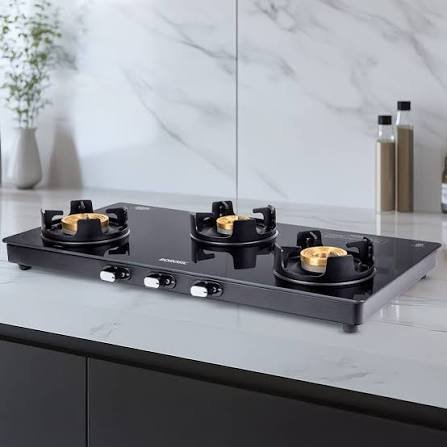
Blue flame, clean burner, small yellow point at the top. That is efficient combustion on a gas stove, and it is the baseline every Indian kitchen should start from.
Instead, most people would observe yellow or orange flames across the entire burner. This shows that there is incomplete combustion of gas, which is wasteful and causes soot buildup on your cookware. Once your cookware starts to have darkened surfaces, it means that the gas stove burner has not been functioning efficiently for ages.
The solution to the problem is simple and inexpensive. Remove the cap from the burner, wash it with soapy water and clean any clogged holes with a thin piece of wire. After drying it and putting it back on the burner, everything will return to normal.
About Tadka
Pay attention to the first second. That is where most tadkas get ruined.
The whole thing takes thirty seconds. Oil in the pan, flame on high, wait for the shimmer. Mustard seeds get added. The first one pops. This is the moment. Drop the flame to medium immediately. Not after they have all popped, right now. Hot oil keeps cooking everything in it for several seconds after you lower the heat.
The taste of mustard seed comes out through popping and will take a few seconds, and then it will continue cooking with a bitter flavour. If you keep the heat of the flame high, you will overcook the seeds, and they will become bitter. This bitter flavour is carried by the oil into your dish. Everything that you are cooking takes on this bitter note from the very first bite.
Exactly the same for stir-frying in a kadai on a gas stove. Heat at the beginning, medium when the ingredients come in, and high again only if necessary at the end.
Slow Cooking Needs Actual Slowness
The cooking time for Dal is 45 minutes, and for dum biryani, it is around an hour. They cannot be sped up in any way by just turning the heat higher.
Do it once and find out. Dal cooked over a medium flame for 25 minutes will turn out lentils which may be cooked but still intact. The texture will not be right. The flavour also will not develop as it should.
The lowest flame that your gas stove can burn at. Add the weight of the heavy-bottomed pot. When making dum, seal the lid with chapati dough and walk away for 25 to 30 minutes. In case the lowest flame is still too high, place a tawa in between.
Rotis and the Puff That Only Gas Delivers
Roti starts on the tawa. Dough firms up; surface browns slightly. Then comes the part you cannot do on any other cooktop. Pick up the half-done roti with tongs and put it directly over the flame. Steam trapped inside heats up almost instantly, and the roti puffs into a round pillow.
This stage alone is why a gas stove still holds its place in most Indian kitchens. Flame should be medium-high. Roti goes over the burner, a few seconds, flip, a few more seconds, done. Fifteen seconds total. Light char marks and a full puff. Dry and no puff means the flame is too low. Burning before puff means the flame is too high.
Dosa Depends on the Tawa Being Exactly Right
Narrow temperature window. Too hot, and the batter browns too fast. Not hot enough, and it refuses to lift cleanly.
This water test always works. Just a few drops on the hot tawa. Sizzling and vaporization in just a couple of seconds indicate batter. Immediate evaporation indicates that it is too hot. Reduce the flame of the gas stove and try again after a few seconds.
In between dosas, the tawa gets even hotter. Pour a little bit of water on the tawa in between the dosas. Helps to bring back the temperature within the desired limit for preparing another dosa.
Conclusion
Each dish requires something different from the same gas burner, and people who make Indian food seem to do everything perfectly since they keep changing the flame subconsciously. Instant switching is required for Tadka. Dum needs minimum sustained heat. Rotis need direct flame. Dosa needs calibrated heat; you keep rechecking. The appliance delivers the control. The cook delivers the awareness. Food comes out right when both are working together.