 By Meghna Sharma
High above Tiruttani town, the temple of Lord Murugan draws devotees up a sacred hill that has been celebrated in Tamil religious tradition for centuries. Thiruthani Murugan Temple is one of the six revered Arupadai Veedu shrines, making it an important pilgrimage destination for worshippers of Subramanya or Kartikeya. The hilltop setting brings a sense of retreat even though the town is well connected by road and rail.
Temple legends associate Tiruttani with Murugan’s return to peace after battle and with his marriage to Valli. These stories are reflected in devotional songs, festival observances and the affection with which devotees approach the deity. The temple becomes particularly busy during major Murugan festivals, when pilgrims arrive from Chennai and different parts of Tamil Nadu.
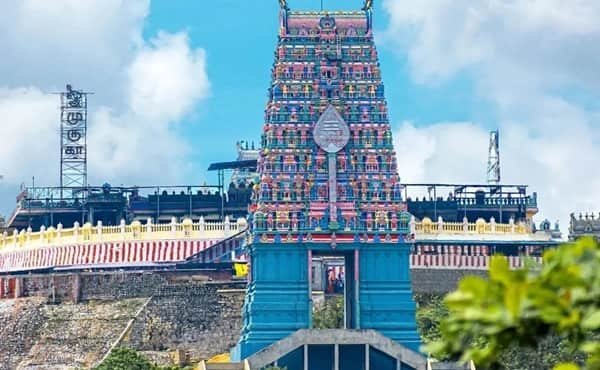
Visitors can choose between climbing the traditional steps and using the road approach, depending on their mobility and available time. Darshan sessions, midday heat and the return journey all deserve attention, especially for elderly pilgrims and families travelling with children.
Thiruthani Murugan Temple Timings, Entry Fees and Pujas
The following schedule is a practical starting point for planning. Opening hours and the moments when worshippers can enter the main prayer area are not always identical. The details that matter most are shown separately so that visitors do not mistake a ritual break for a complete closure.
Thiruthani Murugan Temple Darshan Timings
| Activity / session | Published or indicative time |
| Temple opens | 6:00 AM |
| Public darshan | 6:00 AM – 8:45 PM (ritual breaks possible) |
| Midday closure | No routine full-day closure listed by HR&CE |
| Temple closes | 8:45 PM |
| General entry | Usually free; special services extra |
The official Tamil Nadu HR&CE page explicitly says the hill temple remains open through the day until 8:45 PM. Do not confuse its schedule with other Tiruttani subsidiary temples that close at midday.
Important Daily Pujas and Sevas
Ushathkala, Kalasandhi, Uchikala, Sayaratchai and Ardhajama pujas are integral to Murugan worship. Offerings and ritual access may change on Krittika and other auspicious days.
Ordinary temple access is generally free unless a posted policy states otherwise. Paid archana, abhishekam or special-entry services are separate offerings, and they do not necessarily shorten every queue. Prices change; because a dependable current fee list was not available for every ritual, no speculative ticket figures are given here. Pay only at counters or platforms explicitly authorised by the managing institution.
Dress Code and Visitor Rules
Traditional clothes are advisable. Purchase special seva tickets only from authorised counters and verify current hill transport services.
For most temple visits, a saree, salwar kameez, dhoti or full-length trousers are safer choices than shorts or revealing clothing. Some sanctums require more specific traditional dress. Ask locally about footwear storage, accessible routes and any limitations on photography; never assume that a rule at one temple applies to every other shrine.
Thiruthani Murugan Temple History and Religious Significance
The Hill of Peace After Victory
Thiruthani occupies a special place among the six Arupadai Veedu, the sacred abodes of Lord Murugan. Tamil tradition describes it as the place where Murugan’s anger subsided after the defeat of Surapadman and where the divine warrior came to rest in tranquillity. The name Thanigai is therefore often associated with peace and the cooling of anger. The shrine’s atmosphere differs from Murugan sites chiefly identified with warfare or the sea.
Religious narratives also link the hill to Murugan’s marriage with Valli and to the worship of sages and devotees. These are elements of the temple’s sthala purana, not a chronology of events that historians can independently verify. For pilgrims, however, the stories explain why the hill is visited to seek patience, strength and reconciliation.
Ancient Tamil Devotion and Royal Patronage
The hill appears in traditions and hymns associated with Tamil Murugan worship, including compositions of the poet-saint Arunagirinathar. Its present temple is the result of additions made through several ruling periods, including regional dynasties that patronised the Tiruttani area. A single foundation year or named builder does not adequately explain the complex; as with many South Indian temples, sanctums, entrances and festival arrangements grew at different times.
The town’s location between the Tamil and Telugu cultural regions also shaped its pilgrim routes. Devotees have long approached the hill from nearby settlements and today arrive in large numbers from Chennai, Tirupati and northern Tamil Nadu.
The 365 Steps and the Hilltop Complex
The traditional approach has 365 steps, popularly associated with the days of the year. Walking up them is treated by many devotees as an act of prayer, while the road provides an alternative for people unable to climb. The temple’s gopurams, halls and compact hilltop setting follow the Dravidian architectural tradition, with worship centred on Lord Subramanya.
Saravana Poigai, a sacred tank associated with Murugan, is another important part of the site. Visitors should not confuse the traditional steps with the only possible route: road access makes a visit more practical for elderly pilgrims and families.
Worship and Festival Traditions
Karthigai observances, Thaipusam, Adi Krittikai and Skanda Sashti fill the calendar with special worship and processions. During Adi Krittikai, kavadi offerings and crowds can be especially significant. The temple’s principal distinction is the combination of a revered Murugan legend, a hill pilgrimage and a living Tamil devotional tradition that continues through daily pujas, music and annual festivals.
How To Reach Thiruthani Murugan Temple
Tiruttani, Tiruvallur district, Tamil Nadu can be approached through regional air, railway and road connections. The nearest useful station is not always the station with the greatest number of long-distance trains, so travellers should compare the final road transfer before confirming tickets.
| Mode | Practical access point |
| By air | Chennai International Airport, around 80–95 km |
| By train | Tiruttani Railway Station, a few kilometres from the hill |
| By road | Buses and taxis from Chennai, Tiruvallur and Tirupati |
By Air
Chennai International Airport is the main gateway for pilgrims coming from other states. Continue by road or train, taking into account Chennai traffic.
By Train
Tiruttani station serves regional rail connections and trains on the Chennai–Tirupati corridor. Check stopping patterns; from the station take an auto to the hill approach.
By Road
Road access from Chennai, Tiruvallur and Tirupati is well established. Pilgrims may climb the 365 traditional steps or use the hill road where access is permitted.
Best Time To Visit Thiruthani Murugan Temple
The most comfortable general travel season is November to February. Temperatures, rainfall and daylight conditions affect queueing outdoors, walking between attractions and using public transport. Devotees specifically seeking a festival experience may prefer a busier season, provided they allow time for crowds and altered schedules.
| Season | Visitor conditions |
| November–February | Comfortable for temple visits and outdoor travel |
| March–May | Warm or hot; early visits advisable |
| June–October | Monsoon or post-monsoon conditions vary locally |
Major Festivals
Important annual occasions include Aadi Krittika, Thai Poosam and Skanda Sashti. Such celebrations change the atmosphere considerably: decorated deities, processions or extended worship may be a highlight, but queues and room prices can rise. Families wanting a relatively quiet darshan should prefer an ordinary weekday outside the main festival period.
Nearby Attractions
The places below offer useful context for the temple’s history and the surrounding region. Distances, access arrangements and opening hours vary, so allow time rather than rushing between stops.
- Sacred steps and Saravana Poigai — Explore the traditional hill approach and temple tank when conditions are comfortable, or use the road instead of climbing.
- Veeraraghava Perumal Temple, Tiruvallur — A notable Vishnu shrine that can be included on a longer Chennai–Tiruttani circuit.
- Tirupati region — The larger pilgrimage region lies across the state border; allow a separate day for Tirumala darshan rather than treating it as a nearby quick stop.
Accommodation and Essential Travel Tips
Use hill-road transport if stairs are difficult. On Krittika days, allow substantial time for access and queue management.
Book a room in a convenient town rather than choosing accommodation only by the lowest displayed price. Ask about check-in rules, parking, accessibility and the last local bus. Carry identification, drinking water, essential medicines and a modest amount of cash for small purchases. Where official booking facilities exist, use the genuine temple or church channels rather than agents who promise guaranteed priority access.
Frequently Asked Questions About Thiruthani Murugan Temple
Q. What are the timings of Thiruthani Murugan Temple?
The main published schedule is: temple opens, 6:00 AM. Other sessions appear in the timings table above. The official Tamil Nadu HR&CE page explicitly says the hill temple remains open through the day until 8:45 PM. Do not confuse its schedule with other Tiruttani subsidiary temples that close at midday.
Q. Is entry to Thiruthani Murugan Temple free?
General worship access is normally free. Optional paid rituals or independently advertised events may have charges. Confirm any current fee with authorised staff; a general admission ticket should never be inferred from an unverified travel listing.
Q. What should visitors wear to Thiruthani Murugan Temple?
Wear modest, respectful clothing suitable for the place of worship. Some inner temple areas have stricter traditional dress requirements. Follow onsite notices, particularly about footwear, mobile phones and photography.
Q. How can I reach Thiruthani Murugan Temple by train?
Tiruttani Railway Station, a few kilometres from the hill. Arrange local transport for the last part of the journey, and check the train’s actual station stop before booking.
Q. What is the best time of year to visit Thiruthani Murugan Temple?
November to February is generally comfortable for travel. Festival days such as Aadi Krittika can be memorable but considerably busier.
Q. What else can I visit near Thiruthani Murugan Temple?
Common choices include Tiruttani hill steps and shrine tank, Tiruvallur Veeraraghava Perumal Temple. Allow enough time for queues and the final road transfer rather than assuming everything can be covered quickly.