 By Meghna Sharma
High above the busy streets of Mangalagiri in Andhra Pradesh, devotees gather before a small rock-cut sanctum to witness an unusual offering to Lord Narasimha. Instead of placing sweets or flowers before a conventional idol, the priest pours panakam, a drink made with jaggery and water, into the deity’s open mouth. The gurgling sound heard during the ritual has made Sri Panakala Lakshmi Narasimha Swamy Temple one of the most distinctive Vishnu shrines in South India.
Mangalagiri, meaning “Auspicious Hill,” stands between Vijayawada and Guntur. The sacred hill is associated with three Narasimha shrines: Panakala Narasimha on the hillside, Lakshmi Narasimha at its foot, and Gandala Narasimha towards the summit. The town is also known for its traditional cotton handlooms.
Pilgrims should plan this visit carefully because the Panakala Swamy hill temple closes in the afternoon and does not follow an ordinary evening darshan schedule. The following guide explains its visiting hours, sacred legends, historical monuments, travel routes, festivals and useful arrangements for families.
Panakala Swamy Temple Timings, Entry Fees and Pujas
The most important distinction is between the Panakala Narasimha shrine on the hill and the Lakshmi Narasimha shrine at its foot. Their worship schedules are different. Published hill-shrine schedules generally place darshan from 7:00 AM to about 3:00–3:30 PM; some include concluding rituals up to 4:00 PM.
Panakala Swamy Temple Darshan Timings
| Temple or activity | Typical timings |
| Panakala Narasimha hill shrine – opening | 7:00 AM |
| Morning archana at hill shrine | Around 7:00–7:30 AM |
| Panakam offering and hill darshan | Approximately 7:30 AM–3:00/3:30 PM, with ritual breaks |
| Hill shrine closing | Approximately 3:00–4:00 PM, according to the day’s schedule |
| Lakshmi Narasimha foothill shrine – morning | Approximately 5:00 AM–12:30/1:00 PM |
| Lakshmi Narasimha foothill shrine – evening | Approximately 4:00–8:00/8:30 PM |
| Weekly opening | Generally all days |
The variation between published closing times makes an early morning visit the safest choice. Reach the hill shrine well before 1:00 PM, particularly if you wish to offer panakam. The foothill temple is the one visitors can usually attend in the evening.
Panakam Offering and Special Pujas
The temple’s signature ritual is the offering of panakam, a sweetened drink traditionally used to cool and appease Lord Narasimha. A priest pours it into the deity’s open mouth through a conch or suitable vessel. Devotees hear a characteristic sound, and the remaining offering is returned as prasadam. The belief that the deity accepts a portion of the drink is part of the shrine’s sacred tradition.
Morning archana, Ashtottara Archana and special worship are also associated with the hill temple. The broader Mangalagiri complex holds ceremonies such as Kalyanotsavam, Sahasranamarchana and Narasimha-related homams on designated occasions.
Entry Fee, Seva Charges and Dress Code
Ordinary darshan is generally free. Previously published service lists quote around ₹10 for a panakam offering and ₹100 for special darshan at the upper shrine, but these charges have not been independently verified against a current government fee schedule. Confirm the amount at an authorised temple counter before paying.
Traditional or modest clothing is appropriate. Men may wear a dhoti or full-length trousers; women may choose a saree or salwar kameez. Avoid shorts and clothing unsuitable for worship. Photography and phone-use restrictions can apply near the sanctum, so follow instructions on arrival. Visitors who need help with stairs should ask about the approach road and vehicle access rather than assuming all parts of the complex are step-free.
Panakala Swamy Temple History and Religious Significance
The Story of Lord Narasimha and Namuchi
The hill’s sacred identity is linked to Narasimha, the man-lion incarnation of Lord Vishnu who protects Prahlada in Hindu tradition. Mangalagiri’s local sthala purana adds a different episode involving the demon Namuchi. According to the legend, Namuchi received a boon that he could not be killed by anything wet or dry. After he troubled the gods, Indra attacked him with the help of Lord Vishnu using sea foam, which was neither fully wet nor dry.
The story says Vishnu manifested as Narasimha through the Sudarshana Chakra and destroyed the demon hiding inside the hill. The divine anger that followed was calmed by offerings. Tradition describes nectar in the Krita Yuga, ghee in the Treta Yuga, milk in the Dvapara Yuga and panakam in the Kali Yuga. This explains why the sweet offering remains central to worship. These are religious narratives, not independently documented historical events.
Why Mangalagiri Is Called the Auspicious Hill
The hill is also known in local tradition as Thotadri. Devotees believe Goddess Lakshmi performed penance here, giving the place its auspicious association. Another legend tells of Hrasva Srungi, a prince who chose to remain in prayer and took the form of an elephant-shaped hill to become an abode of Vishnu. The hill’s distinctive outline is still connected with that story.
For Vaishnava devotees, Mangalagiri is traditionally counted among eight major sacred places associated with Lord Vishnu. The coexistence of three Narasimha shrines makes the area more than a single-building pilgrimage site.
Vijayanagara Patronage and Historical Inscriptions
Unlike the ancient legends, Mangalagiri’s later history leaves a more tangible record. Stone inscriptions near the hill approach preserve connections with the Vijayanagara Empire, including the reign of Sri Krishnadevaraya in the early sixteenth century. Accounts of the inscriptions refer to the military campaigns around Kondavidu and to grants made for religious institutions. The ruler’s visit and patronage are significant markers of Mangalagiri’s standing in the region’s religious landscape.
The shrine is also connected in local tradition with Sri Chaitanya Mahaprabhu’s visit. The stairway was improved during the nineteenth century, and the later ghat road made the hill more accessible to pilgrims. The present complex therefore reflects several periods of devotion and public support rather than one securely dated construction event.
The Hill Shrine and the Great Foothill Gopuram
The upper Panakala Narasimha sanctum is architecturally unusual: the revered form focuses on a wide-open mouth set within the rock, rather than a conventional full-length stone image. Its simplicity contrasts with the elaborate Sri Lakshmi Narasimha Swamy Temple at the foot of the hill.
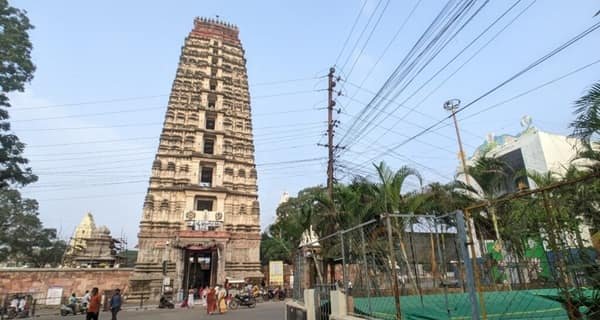
The lower temple is famous for a monumental eleven-storeyed Rajagopuram, approximately 153 feet high. It was erected under Raja Vasireddy Venkatadri Nayudu in the early nineteenth century, commonly dated to 1807–1809. This grand tower belongs to the foothill temple, not the smaller Panakala sanctum higher up the slope. Another Narasimha shrine, Gandala Narasimha, completes the hill’s sacred group.
How To Reach Panakala Swamy Temple
Mangalagiri lies close to Vijayawada and Guntur and is accessible by rail, road and air. Travellers should distinguish the town centre or foothill entrance from the uphill approach to Panakala Swamy.
| Transport | Access point or route | Approximate distance |
| By air | Vijayawada International Airport, Gannavaram | 30–40 km by road |
| By train | Mangalagiri Railway Station | 2–4 km to the temple approach |
| By train | Vijayawada Junction | 15–20 km |
| By train | Guntur Junction | 20–25 km |
| By road | Vijayawada to Mangalagiri | 12–15 km |
| By road | Guntur to Mangalagiri | 20–25 km |
| By road | Hyderabad to Mangalagiri | Around 280–300 km |
By Air
Vijayawada International Airport at Gannavaram is the nearest airport. Taxis are available for the onward journey to Mangalagiri. Travel time varies considerably with traffic around Vijayawada and the chosen approach to the temple hill.
By Train
Mangalagiri has its own railway station, convenient when the train schedule matches your journey. Vijayawada Junction is a major rail hub with broader long-distance connections; Guntur Junction is another useful option. From any station, take an auto-rickshaw or taxi to the hill approach.
By Road
Mangalagiri is connected to Vijayawada and Guntur through major roads and local bus services. APSRTC and private transport provide regional connections. Pilgrims can reach the upper temple using the developed hill road or the traditional steps, subject to local access arrangements. Families with elderly members should enquire about available vehicles for the ascent.
Best Time To Visit Panakala Swamy Temple
October to February is generally the most pleasant season. Cooler mornings make the hillside visit more comfortable, particularly for devotees walking up steps. The hill shrine’s early closing time makes the hour of arrival as important as the season.
| Season | Months | Visiting conditions |
| Winter | October–February | Pleasant mornings; best for a combined hill and town visit |
| Summer | March–May | Very hot afternoons; arrive early and carry drinking water |
| Monsoon | June–September | Green surroundings but slippery steps and occasional heavy rain |
| Festival periods | Phalguna and Narasimha Jayanti season | Rich devotional atmosphere; queues and temporary schedule changes |
Major Festivals
Brahmotsavam, generally observed during Phalguna (February–March), is among the principal annual celebrations. Religious processions and special worship attract pilgrims from neighbouring districts. Narasimha Jayanti, usually in April or May, commemorates Lord Narasimha’s appearance. Vaikuntha Ekadasi and other Ekadasi observances are also important for Vaishnava devotees. Festival programmes and dates change each year, so check the local temple notice before travelling.
Nearby Attractions in Mangalagiri
Sri Lakshmi Narasimha Swamy Temple
At the foot of the same hill, this important shrine rewards visitors with its huge historic gopuram and traditional worship. It is a natural second stop after the Panakala offering, especially because it normally has an evening darshan session.
Gandala Narasimha Swamy Shrine
Nearer the top of Mangalagiri Hill, this smaller shrine completes the traditional group of three Narasimha temples. The ascent may involve additional walking or steps; assess the route before setting off.
Undavalli Caves
Roughly 10–15 km away, the rock-cut Undavalli Caves are an important regional heritage site, noted for their sculptural spaces and reclining Vishnu image. They are a good cultural stop for visitors interested in the history of the Krishna River region.
Kanaka Durga Temple and Prakasam Barrage
Across the river at Vijayawada, the Kanaka Durga shrine on Indrakeeladri Hill is one of Andhra Pradesh’s best-known pilgrimage centres. Nearby Prakasam Barrage offers broad views of the Krishna River. Both attractions fit a day trip from Mangalagiri.
Accommodation and Essential Travel Tips
Visitors can stay in Mangalagiri, Guntur or Vijayawada, where accommodation ranges from budget lodges to family hotels. Vijayawada is a practical base for travellers arriving by air or train and planning multiple nearby attractions.
Start with the hill shrine in the morning, then visit the larger foothill temple. Carry water and sun protection outside the worship area, and wear footwear suited to steps and uneven surfaces. During heavy rain, check access before attempting the ascent. For current government-run temple services and verified bookings, consult the Andhra Pradesh Endowments Department’s Temple Management System; avoid agents claiming guaranteed access.
Frequently Asked Questions About Panakala Swamy Temple
Q1. What are Panakala Swamy Temple darshan timings?
The hill shrine generally opens around 7:00 AM and closes between 3:00 PM and 4:00 PM, with published schedules differing slightly. The foothill Lakshmi Narasimha Temple normally opens in both morning and evening sessions. Reconfirm timings on the day of travel.
Q2. Why is jaggery water offered to Panakala Narasimha Swamy?
According to temple tradition, panakam cools Lord Narasimha after his fierce manifestation. The distinctive pouring ritual produces a gurgling sound, and the remaining drink is distributed as prasadam.
Q3. Is there an entry fee or special darshan ticket?
General darshan is usually free. Older published service lists quote around ₹10 for the panakam offering and ₹100 for special darshan, but current charges need confirmation at the authorised counter.
Q4. Is Panakala Swamy Temple open in the evening?
No ordinary evening darshan is held at the hill shrine. Devotees who arrive after its afternoon closure can instead visit the separate Lakshmi Narasimha Swamy Temple at the foot of the hill during its evening hours.
Q5. How far is the temple from Vijayawada?
Mangalagiri town is approximately 12–15 km from Vijayawada by road. The actual journey depends on where you start and whether you travel to the foothill or upper-hill entrance.
Q6. Can senior citizens reach the hill temple without climbing all the steps?
A road approach to the hill has been developed, so visitors may not need to climb the entire traditional stairway. However, vehicle access and walking requirements near the shrine can vary; ask local staff before visiting with anyone who has mobility difficulties.