 By Meghna Sharma
 Mathura is more than a historic city on the banks of the Yamuna. For millions of devotees, it is the sacred birthplace of Lord Krishna and the heart of Braj, a region where stories from his childhood remain part of everyday religious life. At the centre of this tradition stands Shri Krishna Janmabhoomi Temple, also called the Shri Krishna Janmasthan complex, near Katra Keshav Dev in Mathura, Uttar Pradesh.
Unlike the separate Dwarkadhish Temple in Mathura, Krishna Janmabhoomi is revered for the Garbha Griha, the chamber traditionally identified with the prison cell where Krishna was born to Devaki and Vasudeva. The complex also includes the Keshav Dev shrine and the spacious Bhagavata Bhavan. Its history combines ancient worship, major episodes of rebuilding, and a modern temple created through public devotion.
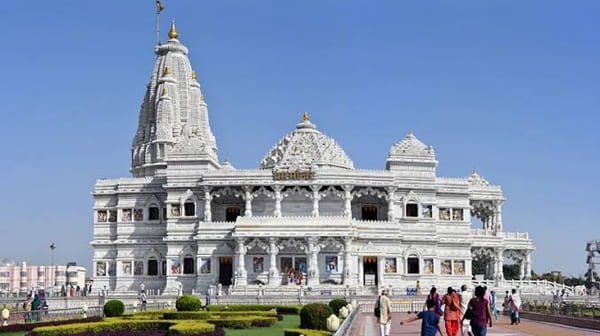
Pilgrims usually combine the shrine with Vishram Ghat, other Mathura temples, and nearby Vrindavan. Understanding the seasonal darshan schedule and strict entry checks will make this important journey considerably easier.
Mathura Temple Timings, Entry Fees and Pujas
Darshan schedules at Shri Krishna Janmabhoomi change between summer and winter. The timings below are commonly published for the main Keshav Dev and Bhagavata Bhavan shrines; individual sanctums and festival ceremonies may follow different hours.
Mathura Temple Darshan Timings
| Activity | Typical timings |
| Summer morning darshan | 5:00 AM – 12:00 noon |
| Summer evening darshan | 4:00 PM – 9:30 PM |
| Winter morning darshan | 5:30 AM – 12:00 noon |
| Winter evening darshan | 3:00 PM – 8:30 PM |
| General entry | Free |
| Opening days | Daily, subject to special arrangements |
The seasonal hours have appeared in published local schedules, but the changeover dates and the Garbha Griha viewing arrangements can vary. Confirm the schedule with the temple authorities near your travel date rather than assuming the entire complex remains continuously open.
Daily Worship and Aarti
Worship centres on Lord Krishna as Keshav Dev, with prayers, offerings of flowers and food, and morning and evening aartis. Mangla Aarti marks the beginning of the devotional day, while Shringar presents the deity in ceremonial dress. Bhog offerings and evening prayers follow the temple’s religious calendar. The exact time and public access for each ritual are not fixed in the publicly available schedules, so visitors should ask at the entrance if they want to attend a specific aarti.
Entry Fees, Security and Dress Code
Ordinary darshan is free. No verified public price list establishes a guaranteed paid VIP or fast-track entry, so avoid purchasing passes from unofficial agents. Mandatory security checks are a central part of the visit, and queues may begin well before the temple entrance.
Mobile phones, cameras, photography equipment and bags are restricted inside the secured complex. Use authorised deposit counters where available, keep your collection token safe, and do not attempt photography. Wear modest clothing, preferably with shoulders and knees covered. Traditional Indian dress is welcome but not compulsory for ordinary darshan. Carry as few belongings as possible and follow instructions from on-site personnel.
Mathura Temple History and Religious Significance
Lord Krishna’s Birthplace in Hindu Tradition
The temple’s religious identity begins with a story preserved in the Bhagavata Purana and other Krishna traditions. King Kansa imprisoned his sister Devaki and her husband Vasudeva after hearing a prophecy that their child would bring about his death. Lord Krishna was believed to have been born inside that prison at midnight, before Vasudeva carried the infant across the Yamuna to Gokul.
At Krishna Janmabhoomi, the Garbha Griha commemorates this sacred birth. Devotees regard the chamber as a place of extraordinary spiritual significance, although the exact identification of an ancient prison room belongs to religious tradition rather than an independently proven archaeological conclusion. A nearby shrine associated with Goddess Yogmaya recalls another important figure in the birth narrative.
Ancient Mathura and the Earlier Temples
Mathura was already a significant urban, commercial and religious centre in ancient India. Its artistic traditions flourished during the Kushana and Gupta periods, and Buddhism, Jainism and forms of Vaishnava worship all contributed to the city’s cultural landscape.
Temple histories credit Vajranabha, a descendant of Krishna, with an early shrine at the Janmasthan site. This is a traditional account. Historian A. W. Entwistle has suggested that an early Vaishnava temple may have existed here around the first century CE, with further development during the Gupta period. An inscription dating to about 1150 CE records the foundation of a Vishnu temple in the Katra Keshav Dev area. These references give the site historical depth without establishing an unbroken chain of surviving buildings from antiquity.
Medieval Rebuilding and the Keshav Dev Temple
Mathura’s temples experienced damage and reconstruction during successive political periods. Historical studies describe serious destruction in the city during Mahmud of Ghazni’s early eleventh-century raid. A later Keshav Dev shrine was also destroyed during the reign of Sikandar Lodi.
A major revival came in 1618, when Raja Vir Singh Deo Bundela of Orchha commissioned a substantial temple during Mughal emperor Jahangir’s reign. Contemporary travellers described its striking red-sandstone architecture and impressive height. In 1670, emperor Aurangzeb ordered this temple demolished, and the Shahi Eidgah mosque was built at the site. The adjoining temple and mosque remain historically sensitive, with questions concerning parts of the premises contested in court. A visitor guide should distinguish documented building history from the religious significance each community attaches to the area.
Rebuilding the Present Temple Complex
The modern Janmasthan complex took shape after Independence. In the 1940s, efforts associated with Madan Mohan Malaviya and industrialist Jugal Kishore Birla helped secure land for a new temple project. The Shri Krishna Janmabhoomi Trust was established in 1951, and construction began in 1953. The principal buildings were developed over subsequent decades, with Bhagavata Bhavan inaugurated in the early 1980s.
Today’s complex contains the intimate birth-chamber shrine, the Keshav Dev Temple and Bhagavata Bhavan, a large hall with Krishna-related devotional imagery and multiple deities. Its modern stone architecture reflects a deliberate effort to create a major public pilgrimage centre around a much older sacred tradition.
How To Reach Mathura Temple
Shri Krishna Janmabhoomi lies in Mathura city, not in Vrindavan or Dwarka. Mathura Junction provides convenient railway access, while the Delhi–Agra road corridor makes the city suitable for a short pilgrimage trip.
| Transport | Nearest point or route | Approximate distance |
| By air | Agra Airport (AGR) to Mathura | 55–60 km by road |
| By air | Delhi airport (DEL) to Mathura | 160–180 km by road |
| By train | Mathura Junction (MTJ) to temple | 3–4 km |
| By road | Agra to Mathura | 55–60 km |
| By road | Delhi to Mathura | 150–180 km, depending on route |
| By road | Vrindavan to Mathura | 12–15 km |
By Air
Agra Airport is geographically closer, but its services may be limited. Delhi’s Indira Gandhi International Airport usually offers a broader flight network. Visitors can continue to Mathura by train, taxi or bus after landing. Check flights and onward transport before choosing the airport.
By Train
Mathura Junction is the most useful railway station for long-distance pilgrims, with services connecting Delhi, Agra and many other Indian cities. Auto-rickshaws and e-rickshaws can take passengers towards the Janmasthan approach area. Traffic diversions or security restrictions may require a short final walk.
By Road
Mathura is connected with Delhi and Agra through major highways, including routes using the Yamuna Expressway. Uttar Pradesh State Road Transport Corporation buses and private operators serve the city. Visitors travelling by car should use designated parking areas instead of trying to drive through congested lanes around the complex.
Best Time To Visit Mathura Temple
October to March is the best period for most pilgrims. Days are generally more comfortable for walking between temples and ghats, although December and January mornings can be cold or foggy.
| Season | Months | Travel conditions |
| Winter | October–March | Comfortable for temple visits; busy during holidays |
| Summer | April–June | Very hot afternoons; choose early morning darshan |
| Monsoon | July–September | Humid, with rain and possible disruption near ghats |
| Major festival periods | Janmashtami and Holi | Exceptional devotional atmosphere, very large crowds |
Important Festivals
Janmashtami is the most important celebration at Krishna Janmabhoomi. The birth of Lord Krishna is marked with devotional singing, special decorations and midnight worship. The city becomes extremely crowded, and access arrangements may differ substantially from ordinary days.
Holi is another major highlight of the wider Braj region. Celebrations extend across Mathura, Vrindavan, Barsana and Nandgaon, combining colour with long-established Krishna and Radha traditions. Govardhan Puja and the Kartik devotional season also attract pilgrims to nearby shrines and parikrama routes.
Nearby Attractions in Mathura
Dwarkadhish Temple: A separate Krishna shrine in Mathura’s old city, known for its traditional Pushtimarg worship and colourful festival observances. Do not confuse it with the Dwarkadhish Temple in Gujarat.
Vishram Ghat: A sacred Yamuna riverfront where pilgrims gather for prayers and evening aarti. It offers a quieter complement to the highly secured Janmasthan complex.
Potra Kund: A historic stepped tank close to Krishna Janmabhoomi, traditionally associated with washing the infant Krishna’s clothes. Allow time to visit respectfully without assuming ritual bathing is permitted.
Government Museum, Mathura: A rewarding stop for travellers interested in Kushana and Gupta sculpture, particularly the distinctive Mathura school of art. Check the museum’s current visiting days and hours separately.
Accommodation and Essential Travel Tips
Mathura has dharamshalas, mid-range hotels and guesthouses around the railway station, temple neighbourhood and main roads. Staying near Mathura Junction can be practical for a short visit, while a base in Vrindavan may suit a longer Braj itinerary.
Allow at least one to two hours for entry checks and darshan on an ordinary day, with more time during festivals. Leave phones and bulky luggage at your hotel when possible. Keep water and medicines for use before or after the security area, and wear footwear that is easy to remove. Families with elderly visitors should ask staff about current assistance arrangements instead of assuming priority access.
Frequently Asked Questions About Mathura Temple
Q1. Which temple is meant by Mathura Temple?
The main article concerns Shri Krishna Janmabhoomi, the sacred Krishna birthplace complex in Mathura. It is different from the city’s Dwarkadhish Temple and from the Dwarkadhish Temple in Gujarat.
Q2. Is entry to Shri Krishna Janmabhoomi free?
Yes. General darshan is free. There is no verified standard paid VIP pass for guaranteed priority entry, so visitors should avoid unauthorised ticket sellers.
Q3. Are phones and cameras allowed inside Krishna Janmabhoomi?
No. Strict security rules restrict phones, cameras, photography equipment and bags inside the protected complex. Deposit restricted items at authorised counters and obey staff directions.
Q4. Can Krishna Janmabhoomi and Dwarkadhish Temple be visited on the same day?
Yes. Both are located in Mathura city, so they can usually be included in one day’s itinerary. Plan around their separate darshan schedules and allow time for local traffic.
Q5. How much time should be kept for Krishna Janmabhoomi darshan?
Allow approximately one to two hours on a normal day. Festival queues, security checks and holiday crowds can extend the visit considerably.
Q6. Is Mathura suitable for a family pilgrimage with senior citizens?
Yes, but careful timing helps. Choose cooler months, keep belongings light and arrange transport close to the permitted drop-off point. Ask the temple’s assistance staff about facilities for people with limited mobility.