 By Saurav Mehra
 Yes, Balochistan is officially part of Pakistan. It is the largest province of Pakistan by land area and forms the country’s southwestern region. However, the political history of Balochistan is complex, and for decades the region has witnessed separatist movements, armed insurgencies, and debates over autonomy, natural resources, and human rights.
Because of this, the question of Balochistan’s status often becomes politically sensitive both inside and outside Pakistan.
Where Is Balochistan?
Balochistan is located in southwestern Pakistan and shares borders with:
- Iran
- Afghanistan
- The Arabian Sea
The provincial capital is Quetta.
Balochistan covers nearly 44% of Pakistan’s total land area, making it the country’s largest province geographically. However, it has a relatively low population because much of the region consists of mountains, deserts, and dry terrain.
Who Are the Baloch People?
The Baloch are an ethnic group with their own language, traditions, tribal culture, and history. Baloch populations are found mainly in:
- Pakistan
- Iran
- Afghanistan
Many Baloch people strongly identify with their regional culture and historical identity.
Historical Background
To understand the controversy, it is important to examine the region’s history before Pakistan was created.
Kalat State Before 1947
Before the partition of British India in 1947, much of present-day Balochistan was ruled by the princely State of Kalat.
Kalat had treaty relations with the British Empire but maintained a degree of internal autonomy.
When British India was divided into India and Pakistan in 1947, princely states were given options regarding accession.
How Did Balochistan Join Pakistan?
The Khan of Kalat initially sought independence after partition. For a short period in 1947–48, Kalat claimed to function independently.
However, in 1948, the ruler of Kalat signed an Instrument of Accession to Pakistan, officially joining the new country.
Pakistan considers this accession legal and final.
But some Baloch nationalist groups argue that the accession was forced or done under political pressure. This disagreement became one of the foundations of later separatist movements.
Is Balochistan Internationally Recognized as Part of Pakistan?
Yes. Internationally, Balochistan is fully recognized as part of Pakistan.
No major country or the United Nations recognizes Balochistan as an independent country.
Maps, treaties, and international diplomacy all treat Balochistan as Pakistani territory.
Why Is There Conflict in Balochistan?
Although officially part of Pakistan, Balochistan has experienced unrest for decades.
Several insurgencies have occurred since 1948. Some Baloch nationalist groups demand:
- Greater provincial autonomy
- More control over natural resources
- Political rights
- Independence in some cases
Natural Resources Issue
Balochistan is rich in:
- Natural gas
- Minerals
- Copper and gold reserves
- Coastal trade routes
Some local groups argue that the province’s resources mainly benefit Pakistan’s central government while local communities remain underdeveloped.
Pakistan rejects these claims and says it has invested heavily in development projects in the province.
Security Situation
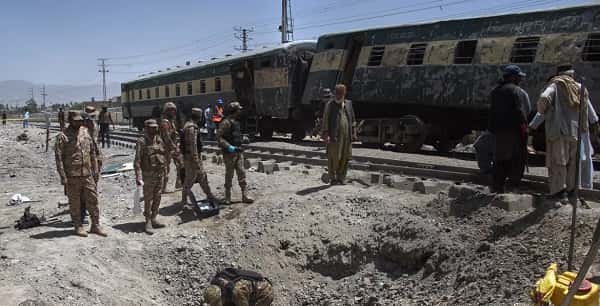
Armed insurgent groups in Balochistan have carried out attacks on:
- Pakistani security forces
- Government infrastructure
- Chinese projects
- Railway lines and energy facilities
Pakistan accuses separatist militants of terrorism and says foreign powers sometimes support instability in the region.
The Pakistani military has conducted large security operations in response.
The China-Pakistan Economic Corridor (CPEC)
Balochistan gained major international attention because of the Gwadar Port project.
Gwadar is a deep-sea port developed with Chinese investment under the China-Pakistan Economic Corridor.
Pakistan views Gwadar as strategically important for trade, energy routes, and economic growth.
However, some separatist groups oppose these projects, claiming local populations do not benefit equally.
Human Rights Concerns
Human rights organizations have raised concerns about:
- Enforced disappearances
- Military operations
- Civilian casualties
- Restrictions on journalists and activists
Pakistan denies systematic abuse and says its operations target armed militants, not ordinary civilians.
The issue remains highly controversial internationally.
Cultural Identity of Balochistan
Despite political tensions, Balochistan has a rich cultural heritage.
The region is known for:
- Tribal traditions
- Folk music and poetry
- Unique clothing styles
- Historic trade routes
- Desert and mountain landscapes
Baloch culture remains an important part of Pakistan’s diversity.
Final Answer
So, Balochistan is officially and internationally recognized as part of Pakistan. It joined Pakistan in 1948 after the accession of the State of Kalat. However, historical disputes, separatist movements, resource politics, and security conflicts have kept the issue politically sensitive for decades.
 Santosh Kumar