 By Meghna Sharma
At Alampur in southern Telangana, Goddess Jogulamba is worshipped beside one of the Deccan’s most remarkable groups of early medieval Shiva temples. The sacred town stands close to the meeting of the Tungabhadra and Krishna rivers. It brings together a revered Shakti Peetha, the sandstone artistry of the Badami Chalukyas and the quieter atmosphere of a pilgrimage town away from the state’s largest cities.
Jogulamba is revered in a fierce form associated with yogic power. The neighbouring Bala Brahmeswara shrine is one of the Nava Brahma temples, a group that helps explain why Alampur is often called Dakshina Kailasam, or the Kailash of the South. The goddess shrine visitors see today is a modern reconstruction, while the adjoining stone temples preserve a much older architectural record.
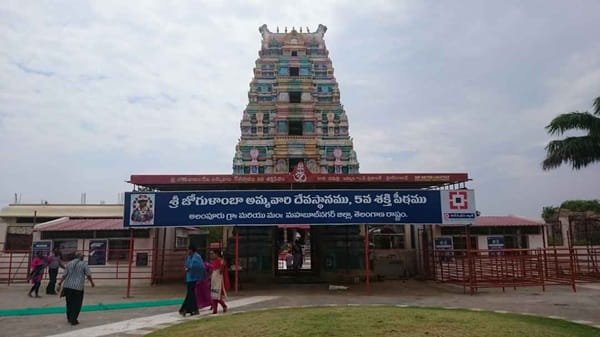
A good visit allows time for both traditions. The following guide explains the differing public schedules, the temple’s history and reconstruction, the significance of its iconography, and the practical approach from Hyderabad, Kurnool and nearby railway stations.
Jogulamba Temple Timings, Entry Fees and Pujas
The main public darshan windows and ritual breaks are listed below. These are planning hours, not a promise of uninterrupted viewing; special festivals, weather and temple notices can alter the normal schedule.
Jogulamba Temple Darshan Timings
| Activity / session | Published schedule |
| Temple administration opening | 6:30 AM |
| District-listed general darshan opening | 7:00 AM |
| Morning access until break | 1:00 PM |
| Midday break | 1:00 PM – 2:00 PM |
| Afternoon and evening | 2:00 PM – 8:30 PM |
| Bala Brahmeswara shrine | 6:00 AM – 8:30 PM; break applies |
The temple administration publishes 6:30 AM to 8:30 PM with a 1:00–2:00 PM break; the district tourism page gives a later 7:00 AM general-access start. Arrive after 7:00 AM if using public darshan.
Important Daily Pujas and Sevas
Regular Kumkumarchana and Devi worship are important to visiting devotees. The adjacent Bala Brahmeswara shrine follows its own Shiva-puja schedule; do not assume a single queue or ticket covers optional sevas at both sanctums.
Ordinary access is usually free, while specified archana or Devi-seva offerings may carry a separate charge. The temple administration publishes a 6:30 AM opening, whereas the district page gives 7:00 AM for public darshan. A 1:00–2:00 PM break is common to both accounts; paying for rituals should be arranged only through authorised counters.
Dress Code and Visitor Rules
Dress respectfully and follow local restrictions around the sanctum. Ritual fees should be paid only at authorised counters.
Modest clothing is appropriate for both Jogulamba and Bala Brahmeswara shrines. Remove footwear as directed and do not touch protected sculptures or carved walls. Photography restrictions may be tighter near sanctums than in the open archaeological precinct, so seek permission before taking pictures.
Jogulamba Temple History and Religious Significance
The Jogulamba Shakti Peetha and the Alampur legend
Alampur is traditionally counted among the eighteen Maha Shakti Peethas of Hindu worship. In the Shakti Peetha narrative, places across the subcontinent became sacred after parts of Goddess Sati’s body fell there while Shiva wandered in grief. The precise body part associated with Alampur varies across regional lists, so it is better to describe the shrine as an established centre of Shakta devotion than to present one disputed version as universal. Jogulamba’s name is commonly linked with Yogulamma, the Mother of Yogis, which captures the shrine’s association with spiritual discipline and protective power.
The goddess’s iconography is strikingly different from gentle maternal forms. Traditional descriptions portray her with untied hair and creatures such as a scorpion, lizard and frog among its adornments, signalling her fierce and transformative character. Local sacred narratives also connect Alampur with Brahma’s penance and Lord Shiva’s granting of creative power. Such stories explain why generations of devotees have treated the riverside settlement as holy, but they should not be confused with the archaeological dates of its surviving temples.
Chalukyan heritage, destruction and modern revival
Those dates are most visible in the Nava Brahma group. Built broadly under the Badami Chalukyas during the seventh and eighth centuries, these sandstone temples record an important phase of early Deccan architecture. Their doorframes, sculpted panels, towers and inscriptions reveal artistic exchanges across regions. Bala Brahmeswara is particularly important because worship continues there, while other structures can be appreciated as historical monuments. The nearby museum displays sculptures and inscribed slabs that illuminate later patronage as well.
The earlier Jogulamba shrine suffered damage during medieval conflicts, and the revered image was preserved in the Bala Brahmeswara complex for a long period. A new goddess temple was consecrated in 2005, restoring a distinct home for Jogulamba worship beside the older Chalukyan monuments. This sequence explains why Alampur has temples of markedly different ages within one sacred setting. Pilgrims should allow time for both the living Shakti shrine and the protected heritage group rather than assuming the rebuilt structure itself is seventh-century Chalukyan masonry.
How To Reach Jogulamba Temple
Alampur lies near the Telangana–Andhra Pradesh border and can be approached from Kurnool or the Hyderabad–Bengaluru highway. Public transport to the wider area is easier to find than transport for the final short distance to the temple; confirm a return taxi or auto before arrival.
| Mode | Practical access point |
| By air | Hyderabad Rajiv Gandhi International Airport, roughly 200 km |
| By train | Alampur Road station, about 9 km |
| By road | Road access from Kurnool and Hyderabad via NH44 |
By Air
Hyderabad Rajiv Gandhi International Airport, roughly 200 km. Flights, connections and transfer times vary. Confirm that the selected airport has a convenient onward taxi or bus link rather than judging suitability by map distance alone.
By Train
Alampur Road station, about 9 km. Check whether the train stops at the stated station and arrange local transport for the final leg, especially if arriving after dark or with elderly relatives.
By Road
Road access from Kurnool and Hyderabad via NH44. Roads near religious sites are sometimes pedestrianised or subject to temporary diversions on festival days. A drop-off point within walking distance can be more practical than trying to drive to the main gate.
Best Time To Visit Jogulamba Temple
The most comfortable general travel season is October to February. Temperatures, rainfall and daylight conditions affect queueing outdoors, walking between attractions and using public transport. Devotees specifically seeking a festival experience may prefer a busier season, provided they allow time for crowds and altered schedules.
| Season | Visitor conditions |
| November–February | Comfortable for temple visits and outdoor travel |
| March–May | Warm or hot; early visits advisable |
| June–October | Monsoon or post-monsoon conditions vary locally |
Major Festivals
Important annual occasions include Sharad Navratri, Dasara and Maha Shivaratri at neighbouring Shiva shrines. Such celebrations change the atmosphere considerably: decorated deities, processions or extended worship may be a highlight, but queues and room prices can rise. Families wanting a relatively quiet darshan should prefer an ordinary weekday outside the main festival period.
Nearby Attractions
A visit to Jogulamba Temple can be combined with several nearby places. Pick attractions according to the time available rather than trying to cover every stop after a long darshan queue.
- Bala Brahmeswara Swamy Temple
- Nava Brahma temple group
- Tungabhadra river and Sangameswara heritage
Before adding a distant attraction, check opening times and the driving route. A religious journey is usually more comfortable when one significant site is explored properly instead of several being rushed.
Accommodation and Essential Travel Tips
Alampur is more convenient by road from Kurnool than as a quick detour from central Hyderabad. Allow additional time for the historical temples.
Book a room in a convenient town rather than choosing accommodation only by the lowest displayed price. Ask about check-in rules, parking, accessibility and the last local bus. Carry identification, drinking water, essential medicines and a modest amount of cash for small purchases. Where official booking facilities exist, use the genuine temple or church channels rather than agents who promise guaranteed priority access.
Frequently Asked Questions About Jogulamba Temple
Q. Why does Jogulamba Temple look newer than the Nava Brahma temples?
The earlier goddess shrine was damaged, and the image was protected elsewhere in the complex. The present independent Jogulamba temple was consecrated in 2005. By contrast, many Nava Brahma stone temples date to the Badami Chalukya period, roughly the seventh and eighth centuries.
Q. Is Bala Brahmeswara Temple part of the same pilgrimage?
Yes. Bala Brahmeswara is a major Shiva shrine in Alampur’s historic Nava Brahma group and is traditionally visited with Jogulamba. However, its ritual timings and optional sevas may differ, so treating the two sanctums as one uninterrupted darshan queue is a mistake.
Q. Why is Alampur called Dakshina Kailasam?
The title reflects the settlement’s strong association with Lord Shiva, the cluster of Brahma-named shrines and its sacred river setting. It is a devotional designation used in local tradition, not the name of a distinct temple or a formal historical administrative title.
Q. Can visitors see early Chalukyan carvings beyond the main shrine?
Yes. Several temples in the Nava Brahma group preserve sculpted doorways, pillars and stone reliefs. The Alampur archaeological museum also displays important heritage material, though museum visiting days and holiday closures should be checked separately from temple darshan.
Q. What does the fierce form of Goddess Jogulamba represent?
In local Shakta worship, her formidable appearance is associated with protection, spiritual power and the ability to overcome harmful forces. Animals and other symbols in her hair belong to the deity’s particular iconographic tradition. They are not directions for devotees to handle or offer such creatures.
Q. Is bathing at the river confluence part of a compulsory ritual?
Some pilgrims regard the river landscape as sacred and may perform prayers near the water. A bath is not a requirement for ordinary temple darshan. Water levels and currents can be dangerous, particularly after heavy rainfall, so follow local access and safety restrictions.