 By Editor
 Robots are machines designed to perform tasks automatically with the help of computer programming and artificial intelligence. They are widely used in industries, healthcare, space research, defense, education, and even households. Robots can perform repetitive, dangerous, and complex tasks with speed and accuracy. As technology advances, robots are becoming more intelligent and capable of handling work that once required human effort. While robots offer many benefits, their growing use has also raised concerns about employment, human dependency, and ethical issues. Therefore, it is important to understand both the advantages and disadvantages of robots.
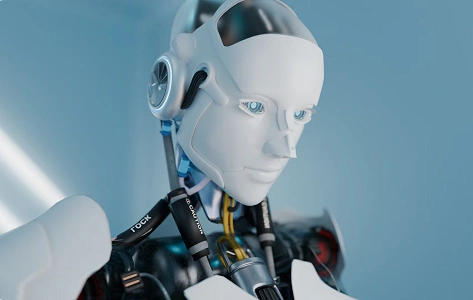
Advantages of Robots
1. High Efficiency and Speed
One of the biggest advantages of robots is their ability to work with high speed and efficiency. Robots can perform tasks much faster than humans without getting tired. In factories, robots can assemble products continuously, increasing production and saving time.
2. Accuracy and Precision
Robots are highly accurate and can perform tasks with great precision. This is especially important in industries like electronics, automobile manufacturing, and medicine, where even a small error can cause serious problems. Robots reduce mistakes and improve the quality of work.
3. Can Work Continuously
Unlike humans, robots do not need rest, sleep, or breaks. They can work 24 hours a day, seven days a week. This makes them extremely useful in industries that require continuous production, such as manufacturing plants and power stations.
4. Useful in Dangerous Environments
Robots can work in hazardous conditions where humans cannot safely operate. They are used in mines, nuclear plants, disaster zones, deep-sea exploration, and space missions. This helps protect human lives from dangerous situations.
5. Helpful in Medical Field
Robots play an important role in healthcare. Surgical robots assist doctors in performing complex operations with high precision. Robots are also used for patient care, rehabilitation, medical testing, and delivering medicines in hospitals.
6. Reduces Human Workload
Robots take over repetitive and tiring tasks, reducing physical strain on humans. This allows people to focus on creative, managerial, and problem-solving work. In households, robots help with cleaning, cooking assistance, and security.
7. Increases Productivity
The use of robots increases overall productivity. Industries can produce more goods in less time and at lower cost. This leads to economic growth and better availability of products for consumers.
8. Consistent Performance
Robots perform tasks in the same manner every time. They do not suffer from mood changes, stress, or lack of concentration. This consistency is valuable in jobs that require uniform quality and repeated actions.
9. Useful in Education and Research
Robots are increasingly used in education to teach students about science, programming, and technology. In research, robots help conduct experiments, collect data, and explore unknown areas, supporting innovation and discovery.
Disadvantages of Robots
1. Unemployment and Job Loss
One of the most serious disadvantages of robots is job loss. As robots replace humans in factories, offices, and service sectors, many workers lose their jobs. Low-skilled and repetitive jobs are especially at risk, leading to unemployment and economic inequality.
2. High Initial Cost
Robots are expensive to design, build, and install. Small businesses and developing countries may not be able to afford advanced robotic systems. Maintenance, repairs, and software updates also add to the cost.
3. Lack of Human Intelligence and Emotions
Robots can only perform tasks for which they are programmed. They lack creativity, emotional understanding, and human judgment. Robots cannot think independently or handle unexpected situations as effectively as humans.
4. Dependence on Technology
Overuse of robots can make humans overly dependent on machines. People may lose important skills and become less active. This dependence can be harmful if systems fail or technology breaks down.
5. Technical Failures and Errors
Robots depend on software and hardware systems. If there is a technical fault, programming error, or power failure, robots may stop working or behave unpredictably. Such failures can cause financial loss or safety risks.
6. Ethical and Moral Issues
The use of robots raises ethical questions. For example, using robots in warfare can lead to moral concerns about decision-making and responsibility. There are also debates about privacy when robots collect and store personal data.
7. Limited Flexibility
Robots are designed for specific tasks. If a task changes, robots need reprogramming or modification. Humans, on the other hand, can easily adapt to new situations and learn new skills quickly.
8. Environmental Impact
Manufacturing robots requires energy and raw materials. Electronic waste generated from outdated or damaged robots contributes to environmental pollution if not properly managed.
9. Reduced Human Interaction
In service sectors like customer support, education, and care services, replacing humans with robots can reduce personal interaction. This may affect emotional connection, communication skills, and social relationships.
10. Security Risks
Robots connected to networks can be vulnerable to hacking and cyberattacks. If robots are misused or controlled illegally, they can cause serious harm, especially in sensitive areas like healthcare, transportation, and defense.
Role of Robots in the Future
Robots are expected to play a larger role in the future. With advancements in artificial intelligence, robots will become smarter and more adaptable. However, it is important to use robots responsibly. Proper laws, ethical guidelines, and skill development programs are needed to ensure that robots support humans rather than replace them completely.
Conclusion
Robots have made life easier by increasing efficiency, safety, and productivity in many fields. At the same time, issues like unemployment, high costs, and ethical concerns cannot be ignored. The real challenge lies in balancing the use of robots with human needs and values.