 By Meghna Sharma
At the edge of the Arasur hills in northern Gujarat, Ambaji Temple is a major centre of worship dedicated to Goddess Amba. Pilgrims come from Gujarat, Rajasthan and beyond to seek the blessings of the Divine Mother at one of the best-known Shakti Peetha sites. Its location near the state border, lively temple streets and strong tradition of community pilgrimage give Ambaji a distinct identity.
The shrine is unusual because the central focus of worship is a sacred yantra rather than an ordinary sculpted idol. Legends associated with Goddess Sati and the nearby Gabbar Hill help explain the devotion attached to this landscape. Festivals such as Bhadarvi Poonam transform the town into a gathering place for large numbers of worshippers, while quieter days offer a gentler pace for prayer and exploration.
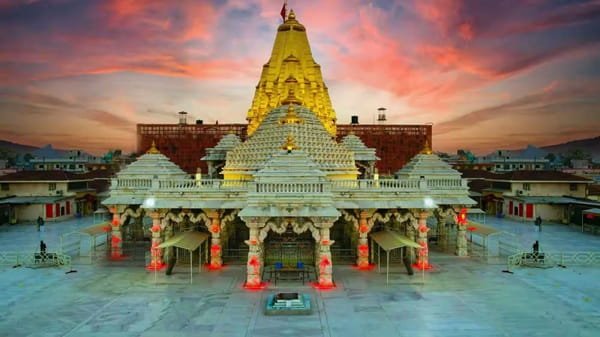
Since darshan sessions can be interrupted by rituals and special observances, it helps to check the day’s temple schedule before travelling. Visitors may also wish to allow time for Gabbar Hill, local transport and accommodation, particularly when combining Ambaji with a wider Gujarat pilgrimage.
Ambaji Temple Timings, Entry Fees and Pujas
The following schedule is a practical starting point for planning. Opening hours and the moments when worshippers can enter the main prayer area are not always identical. The details that matter most are shown separately so that visitors do not mistake a ritual break for a complete closure.
Ambaji Temple Darshan Timings
| Activity / session | Published or indicative time |
| Morning aarti, indicative | 7:30 AM – 8:00 AM |
| Morning darshan, indicative | 8:00 AM – 11:30 AM |
| Afternoon darshan, indicative | 12:30 PM – 4:30 PM |
| Evening aarti, indicative | 7:00 PM – 7:30 PM |
| Night darshan, indicative | 7:30 PM – 9:00 PM |
The official temple website displays a date-specific timetable. These were published for an October 2026 day and may not apply unchanged throughout winter or festival seasons. Check the official daily timing display.
Important Daily Pujas and Sevas
Morning and evening aartis, regular worship and distribution of Mohanthal prasad are distinctive aspects of the pilgrimage. The sacred yantra is treated according to the temple’s established ritual conventions.
Ordinary temple access is generally free unless a posted policy states otherwise. Paid archana, abhishekam or special-entry services are separate offerings, and they do not necessarily shorten every queue. Prices change; because a dependable current fee list was not available for every ritual, no speculative ticket figures are given here. Pay only at counters or platforms explicitly authorised by the managing institution.
Dress Code and Visitor Rules
Follow restrictions around viewing the yantra and photography. Use the authorised temple trust channel for current schedules and prasad information.
For most temple visits, a saree, salwar kameez, dhoti or full-length trousers are safer choices than shorts or revealing clothing. Some sanctums require more specific traditional dress. Ask locally about footwear storage, accessible routes and any limitations on photography; never assume that a rule at one temple applies to every other shrine.
Ambaji Temple History and Religious Significance
Shakti Peetha Tradition and the Goddess of Arasur
Ambaji is one of Gujarat’s most revered centres of Goddess worship. In the Shakti Peetha tradition, the site is connected with the story of Sati, whose body was carried by Shiva after her death at Daksha’s sacrifice. Different traditions identify different parts of Sati’s body with particular holy places; at Ambaji, popular belief associates the sacred landscape with her heart. This is religious tradition rather than an event established by historical evidence.
The goddess is known here as Arasuri Amba, reflecting the Arasur hills near the Gujarat–Rajasthan border. Devotion spreads beyond one building into Gabbar Hill, which many worshippers regard as the original seat of the goddess. A visit to Ambaji therefore often includes both the main town shrine and the hilltop sacred place.
A Sanctum Without an Anthropomorphic Idol
Ambaji’s most notable religious feature is that the main sanctum does not contain a conventional sculpted image of the Goddess. Worship is offered to the Shri Visa Yantra, regarded as the representation of her divine energy. The Banaskantha district administration confirms that this yantra is the central object of worship and that photography of it is prohibited.
Because the yantra is treated as sacred and not freely displayed for ordinary viewing, visitors should not expect to photograph or inspect its lines. The form of worship emphasises Shakti as a presence beyond a human-shaped image, a theological idea central to several traditions of goddess devotion.
Temple Development and Regional Patronage
Ambaji grew as a pilgrimage town through centuries of support from local rulers, devotees, traders and charitable institutions. The present shrine includes renovated marble surfaces and prominent gold-plated architectural details, but these visible materials are not a reliable date for the first worship at the site. Local histories connect the cult of Arasuri Amba with the older religious geography of the Aravalli foothills.
The surrounding settlement developed dharamshalas, markets and pilgrim services to accommodate visitors arriving on foot. The annual Bhadarvi Purnima fair has been especially important in keeping those traditional routes alive.
Purnima, Navratri and Gabbar Hill
Full-moon days are significant for Ambaji devotees, while Navratri brings nine nights of goddess worship, garba and large crowds. During Bhadarvi Purnima, many visitors walk from their hometowns to the shrine as an act of devotion. Gabbar Hill offers a complementary sacred journey, reached by steps or, when operating, a ropeway. Together, town temple and hill form a pilgrimage landscape rather than an isolated monument.
How To Reach Ambaji Temple
Ambaji, Banaskantha district, Gujarat can be approached through regional air, railway and road connections. The nearest useful station is not always the station with the greatest number of long-distance trains, so travellers should compare the final road transfer before confirming tickets.
| Mode | Practical access point |
| By air | Ahmedabad airport, around 170–190 km |
| By train | Abu Road Railway Station, about 20–25 km |
| By road | GSRTC buses and taxis via Palanpur, Mount Abu and Abu Road |
By Air
Ahmedabad airport offers the broadest flight options. The onward journey is long enough to justify a planned taxi or an intercity bus connection.
By Train
Abu Road is a convenient railhead, especially for trains from Rajasthan and Gujarat. Arrange onward transport to Ambaji across the state border.
By Road
GSRTC and private buses operate from Palanpur, Abu Road and other regional towns. During Bhadarvi Purnima, processions of walkers and traffic diversions can make journeys much slower.
Best Time To Visit Ambaji Temple
The most comfortable general travel season is October to March. Temperatures, rainfall and daylight conditions affect queueing outdoors, walking between attractions and using public transport. Devotees specifically seeking a festival experience may prefer a busier season, provided they allow time for crowds and altered schedules.
| Season | Visitor conditions |
| October–March | Pleasant to cool, suitable for longer walks |
| April–June | Very hot days; choose early worship |
| July–September | Rain and humidity; road disruption possible |
Major Festivals
Important annual occasions include Bhadarvi Poonam fair, Navratri and Poshi Poonam. Such celebrations change the atmosphere considerably: decorated deities, processions or extended worship may be a highlight, but queues and room prices can rise. Families wanting a relatively quiet darshan should prefer an ordinary weekday outside the main festival period.
Nearby Attractions
The places below offer useful context for the temple’s history and the surrounding region. Distances, access arrangements and opening hours vary, so allow time rather than rushing between stops.
- Gabbar Hill — Traditionally regarded as the original seat of the Goddess; reach it by the marked stairs or a ropeway if operating.
- Kumbhariya Jain Temples — Historic Jain shrines valued for intricate marble carvings and an important stop for travellers interested in regional architecture.
- Mount Abu and Dilwara Temples — A longer detour across the Rajasthan border with prominent Jain monuments and a contrasting hill-station landscape.
Accommodation and Essential Travel Tips
A weekend or festival crowd can make timings much less predictable. Check hill transport if accompanying elderly relatives.
Book a room in a convenient town rather than choosing accommodation only by the lowest displayed price. Ask about check-in rules, parking, accessibility and the last local bus. Carry identification, drinking water, essential medicines and a modest amount of cash for small purchases. Where official booking facilities exist, use the genuine temple or church channels rather than agents who promise guaranteed priority access.
Frequently Asked Questions About Ambaji Temple
Q. What are the timings of Ambaji Temple?
The main published schedule is: morning aarti, indicative, 7:30 AM – 8:00 AM. Other sessions appear in the timings table above. The official temple website displays a date-specific timetable. These were published for an October 2026 day and may not apply unchanged throughout winter or festival seasons. Check the official daily timing display.
Q. Is entry to Ambaji Temple free?
General worship access is normally free. Optional paid rituals or independently advertised events may have charges. Confirm any current fee with authorised staff; a general admission ticket should never be inferred from an unverified travel listing.
Q. What should visitors wear to Ambaji Temple?
Wear modest, respectful clothing suitable for the place of worship. Some inner temple areas have stricter traditional dress requirements. Follow onsite notices, particularly about footwear, mobile phones and photography.
Q. How can I reach Ambaji Temple by train?
Abu Road Railway Station, about 20–25 km. Arrange local transport for the last part of the journey, and check the train’s actual station stop before booking.
Q. What is the best time of year to visit Ambaji Temple?
October to March is generally comfortable for travel. Festival days such as Bhadarvi Poonam fair can be memorable but considerably busier.
Q. What else can I visit near Ambaji Temple?
Common choices include Gabbar Hill and ropeway area, Kumbhariya Jain Temples. Allow enough time for queues and the final road transfer rather than assuming everything can be covered quickly.