 By Santosh Kumar
 Opening a trading account today takes less time than ordering food online. That’s exactly the problem — with dozens of apps competing for your attention, picking the wrong one can quietly cost you money through hidden fees, poor execution, or a platform that crashes when markets move fast. Here’s how to choose sensibly in 2026.
Start With Regulation, Not Features
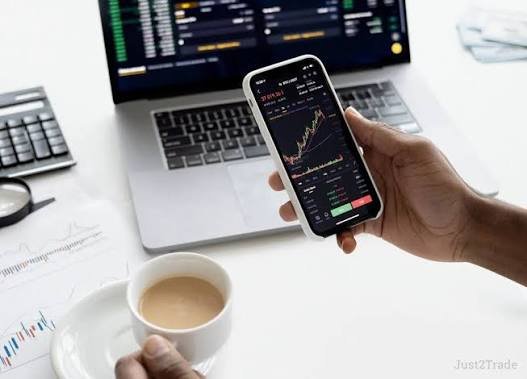
Before comparing screens and charts, confirm the basics. Safety is effectively equal across SEBI-registered apps — your shares sit with CDSL or NSDL, client funds are segregated, and two-factor authentication is mandatory. This means the “which app is safest” question matters less than most marketing suggests, as long as you stick to SEBI-registered brokers.
Under SEBI rules, dematerialized shares are held directly with government-regulated central depositories under your unique BO-ID, which protects your assets even if a broker’s app goes down. So your first filter isn’t “which app looks nicest” — it’s “is this broker SEBI-registered, with shares held at CDSL or NSDL in my name.” Skip anything that fails this test, no matter how polished the interface.
India’s regulatory system now oversees more than 9 crore demat accounts, reflecting how large and mature the retail market has become. That scale is good news — it means competition has pushed most mainstream apps toward similar baseline safety standards. Your decision now comes down to fit, not fear.
Match the App to How You Actually Trade
Different investors need different tools. Broadly:
Long-term, buy-and-hold investors should prioritise low delivery charges and a clean mutual-fund experience over flashy charting. Several apps now charge zero brokerage on equity delivery trades, so buy-and-hold investors mainly pay unavoidable statutory charges — STT, stamp duty, exchange fees, SEBI charges, and GST — plus a small fee when shares are sold from your demat account.
Active intraday and F&O traders need speed, depth of charting, and order types like GTT (good-till-triggered). This is where flat-fee, high-volume platforms with strong app stability tend to be favoured by frequent traders, since execution speed and uptime during volatile sessions matter more than a pretty dashboard.
Beginners benefit most from simplicity — an uncluttered order screen, in-app learning modules, and mutual funds bundled with stock investing, so there’s one less app to juggle while you’re still learning the basics.
Algo and API-based traders should check that a broker offers a SEBI-approved API connection. Retail algorithmic trading is legal in India only through such approved routes, with mandatory risk controls like order-rate limits and daily loss limits built in at the broker level.
Look Past the Marketing on “Biggest” vs “Best”
App rankings you’ll see this year often lead with active-client counts — and different sources highlight different leaders depending on when the data was pulled, with Groww, Zerodha, and Angel One frequently named among the top three by user numbers. Being the largest broker doesn’t automatically mean it’s the best broker for you. A platform with millions of casual investors can still feel clunky for someone doing frequent options trades, and vice versa.
Understand the Real Cost of Trading
Zero-brokerage marketing can be misleading if you don’t read the fine print. For F&O and intraday trades, many discount apps charge a flat fee per executed order rather than a percentage — this adds up quickly if you trade often. Always check for:
- Brokerage per order (delivery vs. intraday vs. F&O may differ)
- Account maintenance charges (AMC) on your demat account
- DP (depository participant) charges on sell transactions
- Fund transfer or withdrawal charges
A Sobering Number Worth Remembering
Before you get excited about intraday or options trading specifically, consider one data point: SEBI’s own research indicates that roughly nine out of ten individual F&O traders lose money. A trading app is a tool, not a strategy — no interface, however fast, changes those odds on its own. If you’re new, practising on a virtual trading simulator before committing real capital is a sensible habit, regardless of which app you eventually choose. PaperTradingApp
A Simple Checklist Before You Download
- Confirm SEBI registration and depository tie-up (CDSL/NSDL)
- Match the app to your actual trading style, not the one with the best ad
- Compare full fee structures, not just headline “zero brokerage” claims
- Test customer support responsiveness before funding a large amount
- Check app stability during high-volume market hours, not just in a demo
FAQs
Q. Is it safe to use any SEBI-registered trading app?
Yes. Once a broker is SEBI-registered, your shares are held with CDSL or NSDL under your own BO-ID, and fund segregation plus two-factor authentication are mandatory regulatory requirements — not optional features.
Q. Should I choose the app with the lowest brokerage?
Not necessarily. Low headline brokerage can be offset by other charges like AMC, DP fees, or slower execution during volatile sessions. Compare the total cost for your specific trading pattern, not just one number.
Q. Can beginners use the same app as active F&O traders?
Most can, but the experience differs. Beginner-friendly apps emphasise simple order screens and educational content, while active-trading apps prioritise advanced charting, order types, and execution speed — features a first-time investor may not need yet.
Q. Is algorithmic trading through a mobile app legal in India?
Yes, but only through SEBI-approved broker API connections, with mandatory risk controls such as order-rate and daily loss limits. Using unapproved third-party strategy services can lead to account restrictions.
Q. Does the “biggest” app mean it’s the “best” one for me?
No. Active-client rankings change depending on the data source and period, and a large user base doesn’t guarantee the platform suits your specific trading style, segment, or experience level.
Q. What’s one thing every new investor should do before trading real money?
Practise with a paper-trading or simulator account first, and remember that most individual F&O traders lose money — a fast app doesn’t change the underlying odds.