 By Editor
 Maharashtra is a large state with diverse regions, varying climates, and distinct ways of living. So you will notice that clothing here changes slightly from place to place. But the core traditional style has stayed strong over time. People have simply adapted it to daily work, weather and festivals. The clothes here were not made to impress first, they were made to live in. Even today, these outfits carry a quite pride that you can feel the moment you see them.
Maharashtra Traditional Dress for Women
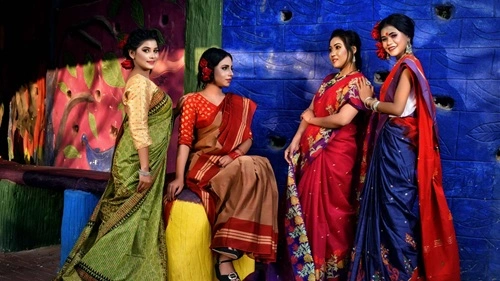
1. Nauvari Saree
One of the most well-known dresses in Maharashtra is the Nauvari saree.
“Nauvari” means nine yards. The saree is tied in a way that allows free movement of the legs. You will often see it tucked between legs, almost like a dhoti. This style didn’t come from fashion. It came from work. Women worked in farms, did house chores and moved around the village. So they needed a saree that didn’t restrict walking or running.
The Nauvari is usually worn with a fitted blouse, hair tied up and simple jewelry or a nose ring depending on the occasion. During festivals like Gudi padwa, Ganesh Chaturthi, and dance forms like Lavani the Nauvari is still proudly worn.
2. Paithani Saree
If the nauvari is everyday strength, the paithani saree is for celebration. Paithani sarees are woven in Paithan (Aurangabad region). The fabric is usually silk, and the border and pallu have detailed designs like:
1-Peacocks
2-Parrots
3-Flowers
4-Geometric Patterns
A real Paithani can take weeks to make. It is often gives as a wedding gift or passed down from mother to daughter. It is not just clothing. It is something emotional in the family.
3. Daily Wear
Today many women wear 6 yards sarees, salwar suits, kurtis, or jeans and tops in cities.But during family functions, religious events, and weddings, you will still see Nauvari, and Paithani being worn proudly.
Maharashtra Traditional Dress for Men
1.Dhoti and Kurta
For men in Maharashtra, the traditional clothing has always been about comfort and practicality. The most common outfit is the dhoti and kurta. The dhoti is a long piece of cloth wrapped around the waist and legs, tied in a way that makes walking and working easy.
The kurta is usually made of light cotton, loose enough to deal with the heat and humidity.
In villages men often tie the dhoti slightly shorter while working in the fileds, while for temple or gatherings it is tied more neatly. This simple combination has stayed the same for generations because it suits the climate and the lifestyle perfectly.
2. Pheta
Another important part of traditional attire is the Pheta. It is also known as the pagdi or turban. It is worn on the head and is a symbol of respect and pride. A bright saffron or red pheta is often used in celebrations and weddings. while a white one may be worn during religious events.
Each religion has its own style. Puneri pagadi has a firm, upright shape, while the Kohlapuri pheta is more rounded and flowing. The moment someone ties a pheta, the outfit looks more formal and dignified. It has always been a way of saying that the day holds importance.
3. Sadra
Over time, as cities grew and different influences arrived, men also started wearing shirts,sadra or a short coat along with their traditional outfit.
Festivals and weddings today often see men in sherwanis, kurta pajama sets, or indo western suits. However, the dhoti and kurta paired with pheta still remain the most traditional and culturally rooted attire. During the cultural events, family ceremonies, and village celebrations, this outfit instantly brings back the sense of connection to heritage and simplicity.
Other Accessories
Accessories for men are usually light. Sometimes a rudraksha or tulsi mala around the neck for spiritual reasons, and Kolhapuri chappals for footwear. These leather sandals are sturdy, airy, and perfect for long days of walking in hot weather. Just like the clothing, the footwear and accessories are born from daily life and experience rather than fashion trends.
Overall, Clothing in Maharashtra has changed with time, but it’s roots are still visible. The styles are simple, practical and connected to everyday life. Whether it is a Paithani in a wedding trunk or a Nauvari worn during festivals each piece carries memory and meaning. These clothes don’t just decorate the body they carry the culture.