 By Editor
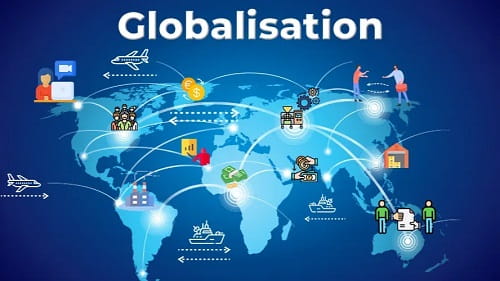
 Globalization refers to the process through which countries of the world become more connected with one another. It involves the movement of goods, services, capital, technology, ideas, and people across national borders. Because of globalization, events happening in one part of the world can easily affect people living in another. Over the past few decades, globalization has grown rapidly due to advances in transportation, communication, and technology. While globalization has brought many benefits, it has also created several serious challenges. Therefore, it is important to understand both its advantages and disadvantages.
Advantages of Globalization
1. Growth of International Trade
One of the major advantages of globalization is the expansion of international trade. Countries can now buy and sell goods and services across borders more easily than before. This allows nations to specialize in producing what they are best at and trade for the rest. As a result, consumers enjoy a wider variety of products at lower prices.
2. Economic Development
Globalization has helped many developing countries grow economically. Foreign companies invest in these countries, set up industries, and create job opportunities. This leads to increased income levels, better infrastructure, and improved living standards. Countries like India and China have experienced significant economic growth due to globalization.
3. Spread of Technology
Through globalization, modern technology spreads quickly from developed nations to developing ones. Advanced machines, software, medical equipment, and communication tools become accessible worldwide. This improves productivity, education, healthcare, and overall efficiency in many countries.
4. Employment Opportunities
Globalization creates new job opportunities by encouraging foreign investment and business expansion. Multinational companies hire local workers, providing employment and training. People also get chances to work abroad, gaining exposure and better salaries.
5. Cultural Exchange
Globalization promotes interaction among different cultures. People learn about new languages, food habits, music, traditions, and lifestyles. This cultural exchange increases awareness, tolerance, and understanding among people of different nations.
6. Improved Standard of Living
Due to access to better products, services, and technology, the standard of living has improved for many people. Affordable goods, improved healthcare, better education, and modern facilities have become more widely available.
7. Global Cooperation
Globalization encourages countries to work together on global issues such as climate change, terrorism, health crises, and trade policies. International organizations and agreements help nations cooperate and find common solutions.
Disadvantages of Globalization
1. Unequal Economic Growth
Although globalization has benefited many countries, its advantages are not equally distributed. Developed nations often gain more than developing ones. Within countries, rich people and large companies benefit more, while small businesses and poor workers struggle to compete.
2. Loss of Local Industries
Local and small-scale industries often suffer due to competition from multinational corporations. Cheaper imported goods can replace locally produced items, forcing small businesses to shut down and leading to unemployment in traditional sectors.
3. Exploitation of Workers
In many developing countries, workers are paid low wages and made to work in poor conditions to reduce production costs. Labor laws are sometimes ignored, and workers’ rights are not properly protected in the race for profit.
4. Environmental Damage
Globalization has led to increased industrial activity, transportation, and resource extraction. This causes pollution, deforestation, climate change, and depletion of natural resources. Many companies prioritize profits over environmental protection.
5. Cultural Homogenization
While globalization promotes cultural exchange, it can also weaken local cultures. Global brands, Western lifestyles, and foreign media often dominate, causing traditional customs, languages, and values to fade, especially among younger generations.
6. Brain Drain
Skilled professionals from developing countries often migrate to developed nations in search of better opportunities. This leads to a shortage of talent in their home countries, affecting sectors like healthcare, education, and research.
7. Economic Dependence
Many developing countries become dependent on foreign investment and global markets. Economic crises in one part of the world can negatively impact other countries. This dependence reduces national control over economic policies.
8. Threat to National Sovereignty
Global trade agreements and international institutions sometimes limit a country’s ability to make independent decisions. Governments may be forced to follow global rules even if they do not fully suit their national interests.
Conclusion
Globalization has reshaped the modern world by connecting nations economically, socially, and culturally. It has created opportunities for growth, development, and cooperation, while also bringing challenges such as inequality, environmental damage, and cultural loss. Its impact depends largely on how wisely it is managed and balanced.