 By Santosh Kumar
 Steel Authority of India Limited, universally known as SAIL, is one of the largest and most iconic industrial enterprises in India. With its massive integrated steel plants spread across multiple states and its steel products forming the backbone of India’s infrastructure, construction, and manufacturing sectors, many students, job seekers, and industry observers often ask: is SAIL a government or private company? The answer is unambiguous — SAIL is a government-owned public sector undertaking, a Maharatna Central Public Sector Enterprise under the direct ownership and control of the Government of India.
Understanding SAIL’s status is particularly important for candidates evaluating PSU career opportunities through SAIL’s recruitment processes, investors tracking India’s steel and metals sector, and researchers studying the evolution of India’s public sector industrial base.
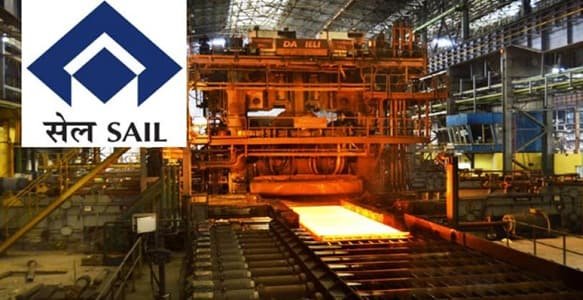
How SAIL Was Established
SAIL’s story is deeply intertwined with India’s post-independence industrial vision. After independence, the Government of India recognised that building a strong steel industry was fundamental to the nation’s economic self-sufficiency and industrial development. Steel was identified as a core sector that could not be left entirely to private enterprise given its strategic importance to national defence, infrastructure, and heavy industry.
The foundations of what would become SAIL were laid in the 1950s when the government established integrated steel plants at Bhilai in Chhattisgarh with Soviet assistance, Durgapur in West Bengal with British collaboration, and Rourkela in Odisha with German technical support. These three plants, set up under the Second Five Year Plan, represented India’s first serious foray into large-scale steel production.
SAIL was formally incorporated as a holding company on 24 January 1973 to consolidate and manage these government-owned steel plants under a single corporate umbrella. Over the following decades SAIL expanded further, adding the Bokaro Steel Plant in Jharkhand and acquiring several other steel and related facilities, growing into the integrated steel giant it is today.
SAIL was established to focus on:
- Production of flat and long steel products for infrastructure and manufacturing
- Meeting India’s growing demand for steel across construction and engineering sectors
- Supporting national defence requirements through speciality steel production
- Generating employment in industrially underdeveloped regions of India
- Developing ancillary industries and supplier ecosystems around its plant locations
- Contributing to India’s technological self-reliance in heavy industry
Today SAIL operates five integrated steel plants, three special steel plants, and a number of subsidiary and joint venture companies, with a combined crude steel production capacity of over 21 million tonnes per annum, making it one of the largest steel producers in Asia.
Why People Get Confused About SAIL
Confusion about SAIL’s ownership status arises primarily because it is listed on Indian stock exchanges — BSE and NSE — and competes in the open market alongside private steel producers like Tata Steel, JSW Steel, and ArcelorMittal Nippon Steel India. This commercial and competitive environment makes SAIL appear similar to a private sector company in its market behaviour.
Additionally, because SAIL operates as a corporation with its own board of directors, publishes quarterly financial results, and manages its own commercial and procurement decisions, it can give the impression of operating independently of government control in day-to-day functioning.
However, SAIL is fundamentally different from privately owned steel companies. It is not the same as:
- Tata Steel, which is part of the privately owned Tata Group
- JSW Steel, which is owned by the private JSW Group
- ArcelorMittal Nippon Steel India, which has foreign and private ownership
- Any privately promoted steel company listed on Indian exchanges
The essential distinction is that the Government of India holds approximately 65% equity in SAIL, giving it full majority ownership and complete control over SAIL’s strategic direction, leadership appointments, and major business decisions. A stock market listing does not alter this fundamental government ownership.
Is SAIL a Government Organisation?
Yes, SAIL is fully and unambiguously a government organisation. It holds the prestigious Maharatna status — the highest classification awarded to central public sector enterprises in India — which is granted only to PSUs that meet stringent criteria of revenue scale, profitability, and operational significance. SAIL is one of only a handful of companies in India to hold this distinction.
SAIL functions as:
- A Maharatna Central Public Sector Enterprise under the Government of India
- A company under the Ministry of Steel, Government of India
- A government-majority-owned listed company with approximately 65% government equity
- The largest government-owned steel producer in India
Its Chairman and Managing Director and other board level appointments are made by the Government of India through the Ministry of Steel, and its major capital expenditure and strategic decisions are subject to government approval processes applicable to Maharatna CPSEs.
What Does SAIL Do?
SAIL is an integrated steel producer operating across the entire steel value chain from raw material sourcing through finished product delivery. Its core areas of operation include:
- Production of hot rolled and cold rolled flat steel products
- Manufacturing of long products including rails, structural steel, and wire rods
- Production of plates for shipbuilding, defence, and pressure vessel applications
- Manufacturing of pipes and tubes for oil and gas sector applications
- Production of speciality and alloy steels through its special steel plants
- Mining of iron ore, coking coal, limestone, and dolomite through captive mines
- Generation of power through captive power plants at its integrated steel complexes
- Research and development through the Research and Development Centre for Iron and Steel at Ranchi
SAIL’s steel rails are the backbone of Indian Railways, and its structural steel supports countless infrastructure projects across the country, giving it an unmatched role in India’s physical development.
SAIL Structure and Identity
| Feature | SAIL |
| Full Name | Steel Authority of India Limited |
| Type | Maharatna Central Public Sector Enterprise |
| Incorporated | 24 January 1973 |
| Ministry | Ministry of Steel, Government of India |
| Government Equity | Approximately 65% |
| Listed On | BSE and NSE |
| Direct Government Organisation | Yes |
| Steel Production Capacity | 21+ MMTPA |
| Major Plants | Bhilai, Durgapur, Rourkela, Bokaro, Burnpur |
| Headquarters | New Delhi |
| Recruitment | SAIL own recruitment (written test and interview) |
| Employee Pay Scale | IDA pay scales (PSU norms) |
Are SAIL Jobs Government Jobs?
Yes, SAIL jobs are considered prestigious PSU jobs and are among the most sought-after positions in India’s manufacturing and heavy industry sector. Recruitment at SAIL is conducted through its own competitive processes, primarily through written examinations and interviews for various engineering and management disciplines.
Typical positions offered under SAIL recruitment include:
- Operator cum Technician Trainee roles in plant operations
- Attendant cum Technician Trainee positions
- Junior Manager positions across engineering disciplines
- Management Trainee roles in technical and non-technical streams
- Nurse and medical officer positions in SAIL hospitals
- Administrative and finance management roles
Employees at SAIL receive IDA-based pay scales with performance-linked incentives, medical facilities through SAIL’s own hospital network, housing in SAIL townships adjacent to its plant locations, education facilities for children through SAIL-run schools, and other perquisites standard across Maharatna CPSEs. SAIL’s township model — where employees live, work, and access healthcare and education within an integrated community — is one of the most comprehensive welfare systems offered by any PSU in India.
SAIL’s Role in Regional Development
One of the most distinctive aspects of SAIL as a government enterprise is its deep role in regional development. Its integrated steel plants are located in some of the more industrially underdeveloped regions of India — Bhilai in Chhattisgarh, Rourkela in Odisha, Durgapur in West Bengal, and Bokaro in Jharkhand — and have served as engines of economic development for these regions over decades.
SAIL plants have generated direct and indirect employment for hundreds of thousands of people, developed ancillary industries, built urban infrastructure in previously undeveloped areas, and contributed significantly to the tax revenues and economic output of their host states. This regional development mandate is a hallmark of SAIL’s character as a government public sector enterprise and distinguishes it from purely profit-driven private steel companies.
Conclusion
SAIL is unambiguously a government-owned Maharatna Central Public Sector Enterprise, fully controlled by the Government of India through the Ministry of Steel. Despite competing in the open market alongside private steel giants and being listed on stock exchanges, its approximately 65% government equity firmly establishes its PSU character. For job seekers, SAIL offers prestigious and stable PSU careers in one of India’s most historically significant industrial enterprises, complete with comprehensive township-based welfare benefits. For the nation, SAIL remains a strategic pillar of India’s industrial self-reliance, infrastructure development, and regional economic growth — a living embodiment of the vision of planned industrial development that shaped modern India.